
Today in News History
On June 19, several notable moments in the history of News stand out. In 1934, Gérard Latortue, Haitian politician, 12th Prime Minister of Haiti (died 2023) was born. In 1939, Bernd Hoss, German footballer and manager (died 2016) was born. In 1964, Brent Goulet, American soccer player and manager was born. In 1972, Brian McBride, American soccer player and coach was born. In 1979, José Kléberson, Brazilian footballer was born. In 1980, Nuno Santos, Portuguese footballer was born. In 2007, Terry Hoeppner, American football player and coach (born 1947) passed away. In 2009, Mass riots involving over 10,000 people and 10,000 police officers break out in Shishou, China, over the dubious circumstances surrounding the death of a local chef. In 2010, Manute Bol, Sudanese-American basketball player and activist (born 1962) passed away. In 2013, Gyula Horn, Hungarian politician, 37th Prime Minister of Hungary (born 1932) passed away. Together, these milestones provide historical context for today's news news and ongoing narratives.
World Cup or not, high performers get these 3 things wrong about pressure
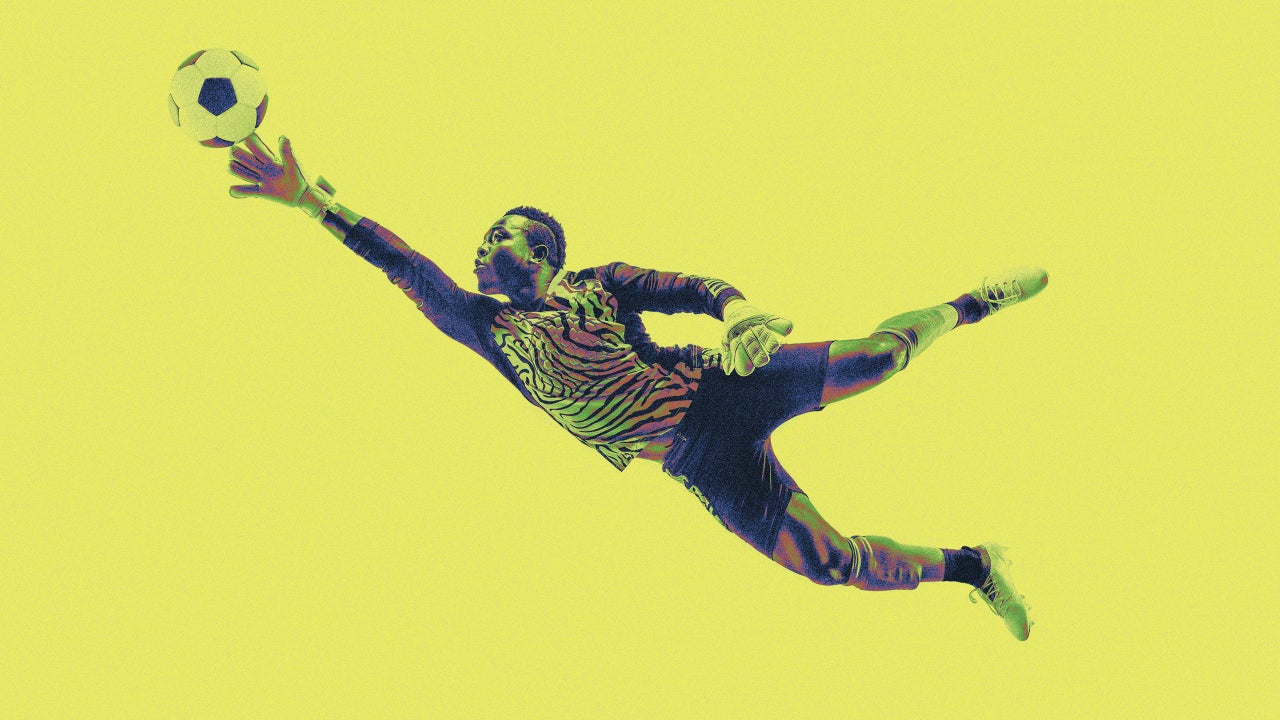
If you have watched a goalkeeper face a penalty kick, you know you are watching 0.3 seconds of pure attentional reckoning. The goalkeeper who dives before the ball is struck did not panic or fail to lean on their training. Their attention was misplaced. The stress of the situation pulled their attentional system toward irrelevant information, triggering a highly instinctive reaction before the moment had even arrived. I have watched this pattern repeat itself for nearly two decades working in professional and Olympic sport. The competitors who crack under pressure do not fail to meet the moment because they lack talent or preparation. They fail because the mental strategies they rely upon, the ones that feel most intuitive, are built on flawed assumptions. But let us not judge. Most of us do the same thing in our careers and our daily lives. Here are three of the most common flawed assumptions we have found in even the best performers when it comes to performing under significant and sustained pressure, and what the science shows instead. 1. Confidence Is Something We Should Chase Most of us want to feel more confident. We know that when we feel confident, we tend to perform at our best. So, it is entirely understandable that we chase that feeling as a strategy for improving our performance. Most of our leaders reinforce this pattern. When a sales team hits a rough patch, the instinct from the sidelines is almost always the same: They need more confidence. It sounds right. It feels right. But it misunderstands what confidence actually is. Confidence is not the engine of performance. It is a byproduct of it. Trying to manufacture it directly is like trying to fall asleep by concentrating on falling asleep. The harder you chase it, the further away it gets. Think about the last time you genuinely felt confident. It almost certainly was not because you told yourself to be confident. Confidence arrived on its own, quietly, as a byproduct of solid preparation and consistent execution. Confidence, like joy, ebbs and flows. It is an emotional state shaped by our environment, our internal narrative, and the quality of our recent performance. And like any emotional state, it can shift quickly and without warning. That is precisely why chasing it is a common trap. Many high performers have become expert at performing confidence without actually experiencing it. They attempt to look the part. They project certainty, deflect feedback, and present themselves as put together. And for a while, in lower-stakes moments, it works. But when the pressure is acute or sustained, the gap between attempted confidence and felt confidence becomes a liability. Attention drifts toward noticing that gap, and performance follows it down. The takeaway: Stop chasing confidence. The fix lives somewhere else entirely. 2. Positive Thinking Will Get Us Through Positive self-talk can meaningfully influence performance. But there is a ceiling to what it can do when the pressure is genuine and sustained. Our brains have not evolved to differentiate between types of threat. A charging predator and a career-defining presentation register through the same neurological system. Physical threats to our survival, social threats to our standing, and ego threats to our identity all trigger the same survival response. Because to the brain, a threat is a threat. When that response activates, neural resources are redirected toward speed and survival. Blood flow is reduced to the prefrontal cortex, the region responsible for planning, decision-making, and sustained focus. The very part of the brain we rely on to perform on demand is the first to be compromised by stress. And it is precisely this hardwired response that positive thinking cannot reliably override. In that state, reaching for a positive affirmation does something counterintuitive. In most cases, the harder we reach for confidence, the more aware we become of its absence. The takeaway: The fix is not positive thinking. It is something more trainable and more reliable. 3. Mental Toughness Is Something You Either Have or You Do Not Every high-stakes environment, whether a playoff game, a board presentation, or a career-defining negotiation, produces a moment where someone steps up and delivers. And the story we tell ourselves afterward is almost always the same: They just had it. They were clutch. The concept of mental toughness as a fixed trait has done more damage to the development of performers than almost any other assumption in the field. When we treat resilience and mental fortitude as something we are either born with or not, we transform every performance breakdown into a character verdict. The executive who stumbled in the board presentation? Not mentally tough enough for the role. The athlete who missed the big shot? Did not have it. This framing is not only inaccurate, it is actively harmful to how organizations develop their people. After thousands of hours working inside high-pressure environments, one pattern has stood out to me with remarkable consistency: Those who deliver under pressure are not fundamentally different from their peers in talent or drive. The takeaway: The difference between performers who deliver and those who do not is not character. It is a skill. And skills can be built. What This Actually Is These misconceptions share a common thread. Confidence, positive thinking, and mental toughness are all outcomes, not inputs. Chasing them directly is like trying to fall asleep by concentrating on falling asleep. The harder we reach, the more elusive they become. The input, the actual driver of performance under pressure, is attention. Where it goes, why it goes there, and whether we have a trained system for directing or bringing it back to performance-critical information is what separates performers who show up in big moments from those who do not. Attention is not a personality trait. It is not a focus gene that some people have and others do not. It is a system. And like any system, it responds to deliberate training. The organizations investing in attentional management are not just developing stronger individuals. They are building a collective capacity for performance that shows up when the stakes are highest. In an attention economy, where so many things are engineered to pull focus away from what matters most, the ability to direct and recover attention deliberately may be the most durable competitive advantage most leaders and organizations are not yet building. The performers and organizations who understand this, and who build a mental framework around it, will be the ones who consistently deliver when it matters most. Not because they are wired differently. Because they trained attention intentionally.
Narrative Intelligence Brief
This article was published by Fast Company, a source frequently categorized with a lean left bias based in United States of America. Our narrative intelligence engine continuously monitors coverage from this outlet to track framing, bias, and rhetorical patterns. Our initial algorithmic scan of this specific piece did not flag high-confidence rhetorical techniques, suggesting a generally straightforward reporting style or neutral framing. By understanding the editorial perspective of Fast Company, readers can better contextualize the information presented and compare it across our broader media matrix to find the real narrative.
More from Fast Company
June 19, 2026
Are stores open on Juneteenth? Holiday hours for Walmart, Costco, stock markets, banks, and more
June 19, 2026
Conservatives are dying at higher rates than liberals. A new study points to mistrust in medicine
June 19, 2026
How Roku became way more important than you realize
June 19, 2026
Waffle House is winning the World Cup
June 19, 2026
BYD will pay every last cent for any damage caused by its autopilot
Analysis Methodology
This narrative analysis was generated using the CoDataLab Global Intelligence Engine. Our proprietary AI scans thousands of cross-border sources to identify sentiment patterns, framing techniques, and potential media bias. While AI provides the data-driven foundation, our objective is to empower readers with additional context beyond the standard headline.The content displayed above is a structured summary designed for rapid information processing. For the full original report, please visit the source outlet.More Coverage
Discussion


