Fast Company - Latest News Tracking & Analysis


Latest News Politics , Business , Finance , Technology , World News & Opinion & Tracking & Analysis.

United States of America
Website
🇺🇸 english
Politics
#162
Fast Company

Fast Company

Primary focus: Politics


Recent Reportage

Latest coverage from Fast Company
Cetirizine recall: Antihistamine tablets may be cross-contaminated and ‘life-threatening,’ says FDA

Cetirizine recall: Antihistamine tablets may be cross-contaminated and ‘life-threatening,’ says FDA

The U.S. Food and Drug Administration (FDA) is warning individuals to steer clear of select antihistamine tablets due to the fact that the tablets may be cross-contaminated with an ulcer-treating drug that can cause “serious adverse events”—including life-threatening ones—in people who are hypersensitive to the ingredients. Here’s what you need to know. What’s happened? This week, FDA published a recall notice for a voluntary recall that Unique Pharmaceutical Laboratories initiated over the weekend for certain lots of its Cetirizine Hydrochloride Tablets USP—specifically, 5 mg antihistamine tablets. The tablets are commonly used to treat allergy symptoms, including sneezing, runny nose, and red, itchy, or watery eyes, according to MedlinePlus. At issue with the recalled tablets is the fact that they may be cross-contaminated with a medication called Ranitidine. Ranitidine is commonly used to treat ulcers, gastroesophageal reflux disease (GERD), and other issues related to stomach acid, according to MedlinePlus. Unfortunately, individuals who are hypersensitive to the ingredients in Ranitidine can experience “serious adverse events” if the medication is ingested, says the FDA. These adverse events include “severe hypersensitivity reactions and anaphylaxis that manifests as hypotension, dyspnea, difficulty swallowing, throat and facial edema, generalized pruritic, urticaria, and loss of consciousness.” The agency adds that all of these adverse events are “life-threatening.” The potential cross-contamination was noticed after a pharmacy technician identified a discrepancy with the tablets while counting them as they were dispensing them, according ot the recall notice. After looking into the report, Unique Pharmaceuticals notified its distributor, Rising Pharma Holdings, and initiated the voluntary recall. What products are recalled? Four lots of the tablets are being recalled. All are packaged in HDPE Bottle packs of 100 tablets (NDC: 16571-401-10). Product Description: Cetirizine Hydrochloride Tablets USP 5 mg, Pack 100’s HDPE container NDC: 16571-401-10 Manufacturer: Unique Pharmaceutical Laboratories (A Div. of J. B. Chemicals Pharmaceuticals Ltd.) Distributed By: Rising Pharma Holdings Inc. Expiration Date: 10/2028 Lot Numbers: GY825029, GY825030, GY825031, GY825032 You can view images of the recalled tablets and product packaging here. Has anyone been harmed by the recalled tablets? As of the recall notice date, Unique Pharmaceutical Laboratories said it had not received any reports of anyone suffering adverse events related to the recalled tablets. Where were the recalled products sold? The recall notice does not list exact stores or pharmacies where the product was sold, but the notice states that the “Product was distributed Nationwide to several wholesalers/retailers.” What should I do if I have the recalled products? The recall notice states that consumers with general or medical questions about the recall should contact Rising Pharma Holdings Inc. The phone number is 1-844-874-7464 and the email addresses are pv@risingpharma.com and qa@risingpharma.com. “Consumers should contact their physician or healthcare provider if they have experienced any problems that may be related to taking or using this drug product,” the notice states. Consumers should read the full recall notice here for complete details.

3 hours ago

Trump Accounts has some parents unhappy with their babies’ $1k investment accounts. Here’s why 

Trump Accounts has some parents unhappy with their babies’ $1k investment accounts. Here’s why 

President Donald Trump says Trump Accounts could hoist children out of poverty and give more Americans the chance to benefit from investments in the stock market. But some parents say they’re still waiting for the money to arrive.Trump on Wednesday plans to speak at a Georgia high school to promote the investment accounts, which offer 1,000 in seed money to every child born during his second term. The accounts went live July 4, two days before Trump rang the opening bells for both the New York Stock Exchange and NASDAQ from the Oval Office.The tax-advantaged accounts, created last year through Trump’s signature One Big Beautiful Bill, can be opened for any child under the age of 18. The Treasury Department boasts 6.5 million sign-ups for Trump Accounts, with 1.5 million of those eligible for the 1,000 seed funding for babies born from 2025 through 2028.Boosters of the program say it’s a chance to give more Americans a stake in the stock market. They hope it will stem the rising popularity of democratic socialists, who seek to raise taxes on corporations and the wealthy to ease the cost of things like food and healthcare for low-income and middle-class Americans.After the Trump Accounts are set up, parents, relatives, friends and employers can contribute to them. Some billionaires have also pledged philanthropic contributions. The money is turned over to private firms that invest it in index funds, a type of mutual fund that tracks the performance of the stock market. The money can’t be accessed until the child turns 18, and only then for specific purposes, such as going to school, opening a business or buying a home.For babies born since Trump took office last year, 1,000 from the U.S. Treasury is supposed to kick off the accounts. While some parents report receiving the money, others said in interviews and on social media they’re still waiting for the accounts to receive 1,000.Masaki and Kristina McLellan, new parents from Bergen County, New Jersey, said in an interview they were wary of signing up for the accounts because they worried it was a promotional stunt for the president. But the 1,000 incentive persuaded the couple, whose daughter Maya was born in late March, to start an account anyway.Masaki McLellan said he applied for the account July 6. At first, the application was rejected, but the account was activated after he spent an hour on the Trump Account hotline. He was told he’d see the money in the account in 10 days. Now, he says, he’s been told it will take up to four weeks.Kristina McLellan said she was disappointed it was taking so long to fund her daughter’s account. But the infant has multiple other investments already compounding for her. Maya’s parents have already started a 529 college savings plan and a custodial brokerage account for her. The Trump Account is the third investment account in the little girl’s name.“We definitely want to give her options for her future and make sure she can choose what she wants to do,” said McClellan, a studio director for a local news station, who returns from maternity leave next week.The Treasury Department said the lag between opening an account and receiving the seed funding constitutes “standard processing time, like receiving a tax refund” and that the overwhelming majority of parents are only waiting one to two days. But the department likes to give parents a conservative estimate for how long it might take for the money to be transferred, such as the estimate of up to four weeks given to the McLellans.“Trump Accounts level the playing field by allowing every parent to invest in their children’s future, not just wealthy families with trust funds,” the department said. “With roughly 1 million sign-ups per month before launch, Trump Accounts have become the most popular and successful government-backed savings product in U.S. history.”Trump’s stop in Georgia comes as he and fellow Republicans face pressure in the midterm elections for their handling of the economy. Only 33 of U.S. adults approve of Trump’s economic leadership, among the lower ratings of his second term, according to a June survey by The Associated Press-NORC Center for Public Affairs Research. Trump pledged to lower costs, but his tariffs and the war in Iran have instead helped to increase prices.Trump Accounts are similar to “baby bonds,” championed by Democratic-led cities and states meant to shrink the wealth gap between low- and high-income children. But unlike most baby bonds, which generally target kids from disadvantaged backgrounds, Trump Accounts are available to families of all incomes.The program has faced criticism from those who say it does nothing to help families in a child’s first years of life, when children are most likely to experience poverty, homelessness and hunger. And the bill that created the program, the president’s signature One Big Beautiful Bill, also slashed funding for programs that are disproportionately used by children, including Medicaid and the Supplemental Nutrition Assistance Program. Associated Press writer Adriana Morga contributed to this report. The Associated Press’ education coverage receives financial support from multiple private foundations. AP is solely responsible for all content. Find AP’s standards for working with philanthropies, a list of supporters and funded coverage areas at AP.org. —Moriah Balingit, AP Education Writer

3 hours ago

5 bad management behaviors that drive good employees away

5 bad management behaviors that drive good employees away

Whenever I coach managers or speak to executives, I simplify leadership down to its most practical expression: helping people succeed. Employees do their best work when they have the tools, support, clarity, development, and encouragement they need to thrive. When those needs go unmet, motivation fades and engagement drops. Eventually, people begin looking elsewhere. The uncomfortable truth is that not everyone promoted into management is equipped to lead others. Some managers inspire trust, growth, and commitment. Others create frustration, disengagement, and turnover. Which are you? Over the years, I’ve observed five management behaviors that consistently damage morale, kill trust, and push good employees out the door. 1. When leadership becomes self-absorption Most managers enjoy recognition and appreciation. That’s normal. But some leaders take it much further. At the extreme end, narcissistic leaders make everything about themselves. They seek admiration, resist criticism, and often elevate their own status by diminishing others’. Employees working for these managers may find their ideas dismissed, their contributions minimized, or their confidence steadily chipped away. These leaders often create environments where people become reluctant to speak up, take risks, or challenge the status quo. Over time, the team learns that protecting the leader’s ego matters more than producing great work. Human-centered leadership isn’t about being the most important person in the room. It’s about helping others become successful. 2. Ignoring great work One of the simplest leadership practices is also one of the most overlooked: recognizing people for meaningful contributions. Employees want to know their work matters. They want to feel seen, valued, and appreciated for the effort they invest every day. Research has consistently shown that employees who receive regular recognition are more engaged, more productive, more committed to their organizations, and more likely to stay. Yet many managers assume that because someone is highly motivated, they don’t need encouragement. That’s a costly mistake. Recognition isn’t about handing out trophies or platitudes. It’s about reinforcing behaviors that drive performance and reminding people that their contributions make a difference. 3. Seeing employees as expenses instead of human beings Some workplaces still operate under an outdated philosophy: People are resources to be managed rather than human beings to be developed. In these environments, employees are valued primarily for what they produce. Their well-being, growth, and personal experience receive little attention. Decisions are made with productivity in mind but rarely with people in mind. The result is predictable. Stress increases and burnout spreads. This may lead to costly turnover. The strongest organizations understand that caring about people and achieving business results are not competing priorities. In fact, they reinforce each other. When leaders treat employees as valued human beings rather than interchangeable parts, performance improves because people are more willing to invest discretionary effort into their work. 4. Too much control Micromanagement remains one of the fastest ways to drain a team’s energy. Managers who need to control every decision often struggle to trust others. They insert themselves into every detail, second-guess decisions, and create approval bottlenecks that slow progress. The consequences extend far beyond frustration. Innovation declines. Ownership disappears. Initiative dries up. Employees stop thinking creatively because they learn that independent thinking isn’t welcome. Human-centered leaders don’t build followers who depend on them for every answer. They build capable people who can think, decide, and solve problems on their own. Leadership was never meant to be about controlling people. True leadership has always been about creating the conditions for others to succeed without it. 5. Hoarding information Few behaviors undermine trust faster than withholding information. Listen, today’s employees want transparency. They want to understand where the organization is headed, why decisions are being made, and how their work contributes to larger goals. Managers who operate behind closed doors or screens often create uncertainty and suspicion. People begin filling information gaps with assumptions, rumors, and worst-case scenarios. Talk about a trust-killer. Author Patrick Lencioni famously identified trust as the foundation of every healthy team. And transparency is one of the primary ways leaders build that foundation. When leaders openly share information, communicate honestly, and explain the reasoning behind decisions, employees become more engaged, more innovative, and more committed to shared goals. Who doesn’t want this? Final thought People don’t leave companies. They leave managers who show these behaviors. Human-centered leaders understand that their role is not to control people but to serve them, develop them, and remove obstacles standing in their way. Under these favorable conditions, people become far more likely to stay and do their best work. —Marcel Schwantes This article originally appeared on Fast Company’s sister website, Inc.com. Inc. is the voice of the American entrepreneur. We inspire, inform, and document the most fascinating people in business: the risk-takers, the innovators, and the ultra-driven go-getters that represent the most dynamic force in the American economy.

4 hours ago

Publishing Activity

Daily article output trend

Shocking OpenAI disclosure reveals how an AI agent went rogue and hacked a startup

Shocking OpenAI disclosure reveals how an AI agent went rogue and hacked a startup

The Terminator movies continue to become more premonition than fiction. On Tuesday, OpenAI revealed that two of its AI models hacked a startup—oh, and they did it completely on their own. That’s right: The AI models went rogue during an internal test of cyber capabilities and got into Hugging Face, an open-source AI community. Hugging Face alerted OpenAI to what the latter is calling an “unprecedented cyber incident.” But don’t worry (read: worry a lot), as it won’t be unprecedented for long. In its announcement, OpenAI states that it’s “something we expect to become more commonplace with the proliferation of increasingly cyber-capable models.” It should be any day now that someone appears with the warning, “Come with me if you want to live.” How did the OpenAI models hack Hugging Face? OpenAI was using an AI agent powered by GPT‑5.6 Sol and a “more capable” model that has yet to be released. They were being tested in a “sandbox,” a digital enclosed space that should prevent further access. Instead, the models worked to reach the internet while trying to solve a testing problem. Once online, they inferred that Hugging Face might have the information they sought. “Knowing this, the model searched for and successfully found ways to gain access to secret information that it could use to cheat the evaluation,” OpenAI explained. “In one example, the model chained together multiple attack vectors, including using stolen credentials and zero-day vulnerabilities to find a remote code execution path on the Hugging Face servers.” Hugging Face became aware of the activity and worked to contain it. What is OpenAI doing to prevent these incidents? Despite being resigned to the fact that these incidents will be more “commonplace,” OpenAI claims to be taking actions like “Implementing strict controls in infrastructure configuration at the cost of research velocity while the vulnerabilities are patched.” The ChatGPT maker also states that it is “improving and adding stronger protections around future training and evaluations.” OpenAI continued: “The primary lesson from this incident is that model security and safety must keep pace with rapidly advancing capabilities. We are strengthening the containment, monitoring, access controls, and evaluation practices used during model development.” We’ll have to wait and see what exactly it will look like—and whether they have much chance of success.

5 hours ago

Forever chemicals are hidden in farm soil. Scientists found a new way to remove them

Forever chemicals are hidden in farm soil. Scientists found a new way to remove them

In 2020, just after Winslow and Laura Robinson bought a farm in Maine, they were surprised to learn that sewage sludge had been used as fertilizer there decades earlier—and that the sludge had left behind “forever chemicals” that remained in the soil. Farmers in Maine have been at the forefront of uncovering a problem that exists on farmland across the country. Sewage sludge from wastewater treatment plants has been widely used on farms since the 1970s, both to keep it out of landfills and provide cheap fertilizer to farmers. (“Biosolids” are also sold in some garden stores as home fertilizer, which you might unwittingly be using in your own backyard.) But the sludge can contain high levels of PFAS, so-called forever chemicals that don’t break down and can move from soil into food. While the impacts of PFAS in food aren’t yet fully understood, the chemicals have been linked to liver disease, cancer, and other illnesses. After testing, the Robinsons found a safe area of their farm to begin growing organic produce. But like other farmers, they didn’t have a good solution for the contaminated fields they’d discovered. A new study from Yale University, published in the Proceedings of the National Academy of Sciences, suggests a low-cost way that farms can clean up the problem and simultaneously help fight climate change. [Photo: courtesy Yale University] A cheaper way to tackle forever chemicals Existing methods for PFAS remediation are extremely expensive—sometimes 1 million per acre—and typically used only at sites like airports or military bases. They also involve removing soil. Cleaning up millions of acres of American farmland just isn’t feasible. Noah Planavsky, a geochemistry professor at Yale who studies soil health, decided to work on the problem after learning about the issue from farmers. “Farmers were deeply concerned about this, felt like they weren’t getting good information, and felt like this was a massive problem where they were being ignored or gaslit,” Planavsky says. The study tested a simple approach for treating contaminated soil. Farmers plant crops known to absorb PFAS quickly, such as hemp and sunflowers. The farmers also add crushed alkaline rocks to the soil to raise the pH level, which helps the plants take up more of the chemicals. When the crops are harvested, they’re heated to very high temperatures without oxygen, which breaks down the PFAS. “Although they are forever chemicals— very sturdy and robust chemicals—they can be destroyed at higher temperatures, and that is something that has been well documented,” says Planavsky. The process creates biochar, which can be added back to the soil to help trap more PFAS. The scientists estimate that in some cases, the method could bring contamination down to a safe threshold within a decade. There’s another challenge: In most states, sewage sludge is still being used on some farms. It’s not surprising that it’s been commonly used historically. “Farmers are barely making ends meet,” says Laura Robinson, the organic farmer from the Maine farm, who participated in the Yale study. “There’s not much profit in farming. So if you’re being offered free fertilizer for acres and acres of hay fields, you’re going to take it. The powers that be [were] saying that it’s safe.” Maine, which has moved faster than others to tackle the problem after farmers raised the alarm, banned the use of sewage sludge on farms in 2022. The first step is to stop its use broadly. Under the Trump administration, the EPA has backed away from regulating sewage sludge as fertilizer. States may move more quickly, though, and the study’s new cleanup method comes at a time when farmers are looking hard for solutions. [Photo: courtesy Yale University] Could cleanup be affordable at scale? The scientists’ approach is an order of magnitude cheaper than other methods for PFAS cleanup. And it has a second advantage: Adding crushed rocks to soil helps capture carbon dioxide. (Planavsky also researches this type of carbon removal, called enhanced rock weathering, and cofounded a startup called Lithos that separately works with rock dust on other farms.) In theory, selling carbon removal credits could help fund the PFAS cleanup. “We need billions of tons of carbon dioxide removal to meet our climate goals,” he says. “And there’s also scientific consensus that having PFAS in the food system is something that poses real health concerns at a broad public scale . . . I think most folks would say that we have inadequate funding moving to both of these.” Litigation could also potentially help fund PFAS remediation on farms. The number of lawsuits is growing; the State of New York, for example, recently sued major PFAS manufacturers for allegedly hiding what they knew about the health and environmental harms of the chemicals. Previous settlements have sent billions of dollars to communities to begin removing PFAS from drinking water. Outside funding is critical, farmers say. “If this solution is going to work, it’s going to have to be something that’s funded,” says Robinson, the organic farmer. And, she says, it’s something that needs to happen. “My big takeaway from all of this is that this is a problem that is absolutely everywhere. Towns, states, countries—everybody needs to be paying attention to it and putting money towards it. . . . It’s a huge public health problem, because it’s going to affect everybody. We all need to eat.”

5 hours ago

Delta CEO Ed Bastian says the airline sees the economy before everyone else does

Delta CEO Ed Bastian says the airline sees the economy before everyone else does

Very few companies have a better real-time read on the American economy than Delta, and even fewer CEOs are more willing to say what they actually think than Ed Bastian. True to form, he shares what Delta’s booking data is telling him that the headlines aren’t, why he’s not convinced by AI until it moves his top line, and how he decided to yank congressional travel perks during the government shutdown. This is an abridged transcript of an interview from Rapid Response, hosted by former Fast Company editor-in-chief Robert Safian. From the team behind the Masters of Scale podcast, Rapid Response features candid conversations with today’s top business leaders navigating real-time challenges. Subscribe to Rapid Response wherever you get your podcasts to ensure you never miss an episode. You have access, obviously, to all the booking data that comes through the Delta app and website. Are there things that you see in that data that are different from the headlines? Does your data tend to lead the headlines or respond to them, or is it different at different times? Our data is usually ahead of the headlines. We just reported our second-quarter results. We gave guidance for our third quarter, which ends at the end of September, but we already have about 70 of the revenue on hand for that third quarter through advance bookings. Our bookings run anywhere from 60 to 120 days out. International runs longer, domestic runs a little shorter. So we have a pretty good sense for how people are already thinking about the fall and how people are thinking about the upcoming holiday season. Economists and members of the Fed and others are always quite curious about talking to us because we have a pretty good pulse on how the consumer, at least our consumer, is viewing the current environment, and then translating that into confidence to make a future purchase commitment. Your customer tends to be at the top end of the K in the K-shaped economy. You get, I don’t know, 20 more revenue per seat than competitors. Your premium-cabin revenue is almost on the verge of overtaking the main cabin. That decision, that lean into that customer, does anything about today’s environment make you rethink that strategy or double down on it? It sounds like that is still where, and the customer you feel, is healthiest for you to focus on. Oh, absolutely. And this is a decision we took not recently. We took it 15 years ago, shortly after we acquired Northwest Airlines. As a result, we were clearly the largest airline in the world. We still are, but it’s closer now. And we made a commitment to ourselves that we weren’t going to do the merger and introduce that level of scale unless we could actually differentiate in the marketplace and no longer be seen as a commodity. Because if you’re a commodity and you just get chosen by whoever has the lowest price, we lose. In fact, we lost 20 years ago when we had to file for bankruptcy for that very reason. Delta offered a lot of things but didn’t get paid for them, and as a result, the business model didn’t work, as it didn’t for a number of the big legacy carriers. We spent many, many years figuring out what we called back then decommoditization. Today we call it premium. Tomorrow we’ll probably find a more elegant term for it. And it starts with reliability, building trust with your consumer, deploying technology to assist along the way, and developing more partnerships, whether it’s with American Express, Uber, or YouTube TV onboard airplanes, Paramount. We want to be there to make certain that we’re getting the first call for the best dollar. There’s some concern that with the rise of AI, agent-based buying will make price-first shopping more prevalent. I’m curious how you think about that, that AI agents may not favor brands the way humans do. Unless the AI agents are going to be flying on the airplanes and actually providing surveys, I don’t think it changes our equation. At the end of the day, a relationship with an airline is fairly personal. It’s human. You’re not going to let an agent tell you how you should feel about a brand in the same way. And that’s the hallmark of a great brand: how it makes you feel. You deploy AI in your own operations. I know Delta tested AI for individualized ticket prices. Does using AI for this create a different kind of reputational risk because of the way people are emotionally reacting to what AI is driving? Yeah, AI is not trusted, and for good reason, probably, with all the hype that’s been attached to it. We talked a year ago about the fact that we started to use some AI in the pricing algorithms, and people extrapolated that into surveillance pricing and individualized pricing. We’re doing none of that, and we never intended to do any of that. The only thing we’re using AI for in the pricing tool is to help our revenue managers offer better pricing, and more pricing, in more markets around the world. At Delta, we have hundreds of thousands of price points out for sale at any given time on any day. We can only manage a select number of those with human eyes, and we automatch the vast majority of those price points. Automatch basically means making sure you don’t get too far above or below where the market is coming in at.Through AI, we can bring more intelligence to setting those signals. And AI works around the clock. It’s 24/7. It’s always monitoring and seeing what’s happening in the marketplace, and whether our product should be higher or lower, trying to give the customer the very best opportunity. We can only do that on our highest-volume routes, but we still have a massive number of routes where we don’t deploy it. So when you think about it, it’s really a knowledge tool, a learning tool, and an efficiency tool. You’ve been known for your people-first leadership, and I know a lot of people are worried about how AI is going to impact their jobs. How do you think about that? How do you talk to your team about that? Well, at Delta, I’ve been very clear that AI is just . . . First of all, I don’t call it artificial intelligence. I refer to it as augmented intelligence. It’s going to enable our teams to do a better job of what they do. We are a highly analytical business. We have 5,000 flights a day, every day. As a result, there is a tremendous amount of data, a tremendous amount of intelligence in terms of monitoring and making decisions, whether it’s in-flight patterns, pricing the product, mechanical reliability, predictive engineering. There are many disciplines that use that data.AI helps you make those decisions quicker. It absorbs the amount of data that’s out there far faster than anything we can do. We wind up making a lot of decisions based on judgment, which sometimes is seat of the pants, sometimes it’s instinct, and these are going to be better data decisions. Now, that doesn’t mean that we’re going to need fewer people. It frees people up to have more time to serve, and if we do a great job of that, that’s going to grow our business. Some CEOs got boos for mentioning AI at school commencements. You asked AI to write your commencement speech for Emory, then scrapped it, and warned graduates against pushing the easy button. And guess what? People stood and cheered when I said that. So what’s the easy button? And did going through that impact how you think about using AI yourself and for your team? I’ll admit I’m not a big user of AI. It’s pretty hard to teach old dogs new tricks at times. I’m curious about it. I was impressed with how quickly a speech is produced, within a matter of seconds, and it’s produced in words that I would be associated with. I talk in lots of public forums, so there’s a lot of data out there as to how Ed Bastian would deliver a commencement address. But at the end of the day, it didn’t have any soul. It had no spirit. I felt like I was cheating. To be given an opportunity to come to a commencement is an honor, and then am I going to potentially use technology just to try to get it done quickly and check that box? It wasn’t right. So there’s a conscience that needs to be deployed with AI. I think that’s where people in the technology sphere just don’t get it. They’re out there selling, selling, selling.

5 hours ago

No, the Olive Garden Pasta Pass is not like voting

No, the Olive Garden Pasta Pass is not like voting

The never-ending debate about voter ID has come to the home of never-ending pasta. Over the past few days, a clarification from Olive Garden about guests providing ID to use their Never-Ending Pasta Pass has become a flashpoint for prominent conservatives. Several have seized on the comic possibilities of boasting that the preeminent fast-casual Italian chain is more vigilant about fraud than Democrats. “It shouldn’t be harder to get a mid Fettuccine Alfredo,” the argument goes, “than it is to vote in the midterms.” Abigail Jackson, the White House deputy press secretary, made the comparison recently, as did Virginia Foxx, a Republican congresswoman from North Carolina. Now, the talking point has gotten so popular, House Majority Leader Steve Scalise used it on two separate occasions just on Tuesday morning. There’s only one problem with this argument, however. Its flaws are as obvious as the telltale grease stains on a bag of Olive Garden breadsticks. Scalise: For God's sake — you can't get pasta at Olive Garden without a picture ID! Why not be able to show a picture ID to vote?— Aaron Rupar (@atrupar.com) 2026-07-21T13:23:09.193Z Scalise: Anybody that gets on an airplane has to show a picture ID to vote. Nowadays, if you want to go to Olive Garden and get unlimited pasta, you gotta show a picture ID. This isn't complicated stuff.— Aaron Rupar (@atrupar.com) 2026-07-21T14:37:58.517Z The provenance of a pasta provocation This latest voter ID talking point originated with a tweet. Olive Garden sent out a dispatch on July 15, offering details about an impending sale for its Pasta Pass. One X user asked the account whether a person could use the Pasta Pass to order enough food for their entire table. Olive Garden responded with an uncharacteristically firm and robotic tone for a restaurant’s social media feed: “No. The Never-Ending Pasta Pass is only for use by the Passholder whose name is printed on the Pass. Passes are personalized and non-transferable. Passholders must present a valid photo I.D. along with the Pass at the time of ordering.” Perhaps it was the use of legalese to stipulate rules for something as silly sounding as a “Pasta Pass” that brought this reply wider attention. In any case, by the end of that day, Senator Mike Lee, the Utah Republican who famously cracked distasteful jokes about the assassination of Minnesota state senator Melissa Hortman last summer, had signal-boosted Olive Garden’s ID policy on X. The next day, conservative activists like Robby Starbuck and Chaya Raichik aka LibsofTikTok were using Olive Garden to argue for voter ID requirements, and the talking point snowballed further and faster from there. The reason for the full-court press is that President Trump is obsessively pushing the SAVE Act, which would require would-be voters to furnish proof of U.S. citizenship, ahead of the midterm elections in November. But the Olive Garden argument is just the latest spin on rhetoric Trump has been pushing for the past decade. Essentially, the talking point boils down to, “You need an ID to do x, so why not to vote?” All that changes is that x-factor—the more ridiculous, the better. Todd Blanche, the former Trump lawyer and acting attorney general, seems to think one needs to present ID upon simply walking into a restaurant. Blanche: There's a lot of things we can be doing, like voter ID. Every time you walk into a restaurant you have to show ID. How about you have to show your idea to vote? That's not anything that's crazy.— Aaron Rupar (@atrupar.com) 2026-05-03T14:36:31.270Z Ryan Zinke, Republican congressman from Montana, claims you need an ID to go to Costco, rather than just a membership card. Rep. Ryan Zinke on voter ID: You need have an ID to go to Costco! — Aaron Rupar (@atrupar.com) 2026-07-16T12:13:51.321Z And Trump himself has been suggesting over and over, at least since 2018, that one needs an ID to go to the grocery store. As long as this argument has been in wide circulation, though, there’s always been an obvious rebuttal. No, the Olive Garden Pasta Pass is not like voting Just what separates eating pasta, checking into a hotel, or boarding an airplane from voting in a U.S. election? For one thing, voting is a constitutional right for U.S. citizens; not a good or service. Every U.S. citizen enjSSoys the privilege of being able to walk into Olive Garden and order a pants-altering amDASSSSSSSS anyone who has moved apartments or changed their name recently, and whose ID has yet to catch up. Furthermore, the kind of fraud a voting ID law would be meant to prevent is exceedingly rare. In 2012, the Carnegie-Knight initiative based at Arizona State University spent a year collecting records from all 50 states, and identified only 2,068 alleged election fraud cases in the previous 12 years—with only 10 of them allegedly involving in-person voter impersonation. Either negligibly few people attempt voter fraud each year, or the legions of cheaters conservatives have been warning about are so smooth with it, they’re nearly impossible to detect. The main problem with requiring voter ID—and perhaps citizenship documents, if the SAVE Act were to pass—is it would solve a problem that doesn’t seem to exist. Why this talking point, like Olive Garden breadsticks, never ends One reason conservatives keep lDSisting transactions that require ID in order to attack current voting protocol is because it makes agives good sound bite. Simple, sticky, tweet-length, and infinitely replicable, it makes their opponents seem as if they’re either ambivalent about the prospect of fraud or actively promoting it among constituents. Perhaps the underlying reason this framing refuses to die, though, is that it shifts the question away from whether requiring photo ID would actually improve security, whether security even needs improving, and whether that improvement would be enough to justify the additional friction it adds to the voting process, in favor of a more juvenile question of whether one of the U.S.’s two major political parties simply hates secure elections. The Olive Garden comparison, and those like it, are not meant to prove conservatives’ ideas about rampant voter fraud but to make the opposite position seem utterly unreasonable. All it takes is a follow-up question or two to make a pithy one-liner about showing ID to buy alcohol collapse like a soufflé. These talking points are so easily rebuttable, in fact, the politicians who deploy them tend to do so in spaces like Newsmax where there won’t be any pushback. When it comes to conservative media outlets and conservative politicians who spout easily refutable talking points: When you’re here, you’re family.

6 hours ago

Stats show LinkedIn’s ‘Open to Work’ badge works. Designers say it could be even better

Stats show LinkedIn’s ‘Open to Work’ badge works. Designers say it could be even better

If you’re a LinkedIn user, you recognize it instinctively: Anyone with a green ribbon around their profile picture is in the market for a new job, and they want everyone to know it. LinkedIn’s “Open to Work” badge, which has now been part of the platform for six years, has become a distinct visual shorthand for frequent posters on the platform. Recently, however, its merits have come under fire. On July 19, Ben Lang, an engineer at the AI coding platform Cursor AI, took to X with a message for his followers. “Tip: never use the green Open to Work badge on LinkedIn,” the post reads. “Negative signal for hiring managers and recruiters.” The post has since amassed more than a million views and hundreds of comments, and notched a featured post under X’s trending topics. Tip: never use the green Open to Work banner on LinkedIn Negative signal for hiring managers and recruiters— Ben Lang (@benln) July 19, 2026 This isn’t the first time LinkedIn’s Open to Work badge has attracted debate. In fact, the discourse has been ongoing for years, with commenters generally falling into two camps: One side argues the design of the badge gives off an “air of desperation” to recruiters; the other views the badge as a crucial tool for grabbing recruiters’ attention on the crowded platform. According to LinkedIn, more than 60 million users currently have the public OpenToWork frame on their profile pictures. Those members, it says, are nearly two times as likely to get a message from a recruiter than those who don’t. They’re also finding jobs more than 20 faster than job seekers who don’t display the Open to Work badge. LinkedIn’s data appears to show that the Open to Work profile badge does its job—but its enduring negative reputation signals that it might still be time for a redesign. Why the Open to Work badge looks “desperate” LinkedIn first introduced the Open to Work badge back in 2020, when pandemic-related layoffs and hiring freezes were resulting in a surge in new job seekers. At the time, the feature was billed as an extra step beyond LinkedIn’s existing recruitment settings, which allow users to privately flag their availability to recruiters. The badge takes that setting to the next level by placing the “Open to Work” status directly next to the user’s profile pictures in a green swoosh. Earlier this month, the company published a video with LinkedIn career expert Catherine Fisher acknowledging that users might be “embarrassed” to turn the feature on due to social stigma, but advocating for its efficacy in the job hunt, noting that people who turn the feature on tend to get more outreach from recruiters and folks in their networks. Still, the badge has drawn continuous skepticism from some users since its launch. One 2023 TechCrunch article explained that the badge can be a useful signal on one hand, but on the other, it can be seen as a negative sign: You know, a version of the quote often attributed to Groucho Marx: “I don’t want to belong to any club that would accept me as a member.” On Reddit, a post in r/jobsearchhacks with more than 1,000 upvotes and 200 comments claims, “I know the green banner is supposed to help but I have talked to a few high level headhunters who say it is a massive turnoff. It is the classic dating rule where people want what they can’t have.” And, in 2024, career coach and business consultant Olivia Johnson told Fast Company that many people subscribe to the adage that it’s hard to find employment when unemployed, and the badge openly flags unemployment. Still, she added, the visibility benefits of using the badge tend to outweigh its risks. Under Lang’s recent post, those same to-badge or not-to-badge arguments are playing out once again. One top comment from tech entrepreneur Ben Vinegar reads, “Random data point but while I was a VP at Sentry I couldn’t walk down the street without being offered a job. Then when I was unemployed for ~6 months (after 9+ years!) suddenly nobody gave a shit lol.” Another from engineer Claire Vo counters, “alt: be kind and empathetic to people seeking work trying to use the tools available to them on the 1 networking site for finding professional jobs. I hope recruiters are not so dumb that being secretly unemployed is somehow higher status than being transparently unemployed.” Vo later followed up with her own mock-ups of potential new designs for the badge, accompanied by the caption, “what if the bare minimum effort was put in so job seeking didn’t seem cringe?” what if the bare minimum effort was put in so job seeking didn’t seem cringe? pic.twitter.com/szyf1orj3E— claire vo (@clairevo) July 20, 2026 How design could improve the badge’s reputation Regardless of how well the Open to Work badge actually functions, it’s clear that the feature has developed a difficult-to-shake reputation for potentially damaging job search prospects. According to Hillel Hurwitz, CEO and founder of the branding agency Bald, that’s a design problem. From a pure attention standpoint, Hurwitz says, the badge works. He believes that’s actually an issue. “It pulls nearly all the attention away from the person and onto a status marker, which defeats the entire purpose of a profile picture,” Hurwitz explains. The photo, he says, is the one place on the platform designed to showcase personality and humanity—but the Open to Work badge wraps it in “cold UI green” and makes employment status the focal point of the user’s face. “Steve Jobs famously obsessed over the design of screws inside the iPhone that no one would ever see, because he believed everything about a brand imbues meaning,” Hurwitz says. “Personal brands work the same way, and right now, the ‘Open to Work’ ring is sending a message of ‘I’m going through it’ at the moment someone most needs to project confidence.” Andres Nicholls, chief creative officer at the branding agency Prophet, believes the main issue with the badge goes deeper than its design. “The challenge isn’t really the badge itself,” Nicholls says. “It’s that it exists within a culture that still places enormous value on status and perceived success. We often assume someone who is already employed is somehow more desirable than someone actively looking, even though there’s little evidence that’s true. In many ways, the badge simply exposes that bias.” From a design perspective, he adds, the real opportunity isn’t to make the badge louder or quieter, but to use it as a space to normalize what has become a “very human and increasingly common” aspect of modern careers. “Great design doesn’t just make information visible,” Nicholls says, “it also shapes how that information is interpreted.” As an alternative, Javier Bidezabal, chief creative officer of the agency Unusual LA, suggests users take the power back into their own hands. “We like finding ways to use design not only for function, but also to tell a story differently,” Bidezabal says. “Today, everyone is a brand. So why not design your own badge? Make it personal. Put a joke on it. Use it to show what makes you different: ‘Open to do cool sh*t.'” His parting tip? “Don’t use green.”

7 hours ago

Artists turned this vacant L.A. hospital into an immersive art therapy session

Artists turned this vacant L.A. hospital into an immersive art therapy session

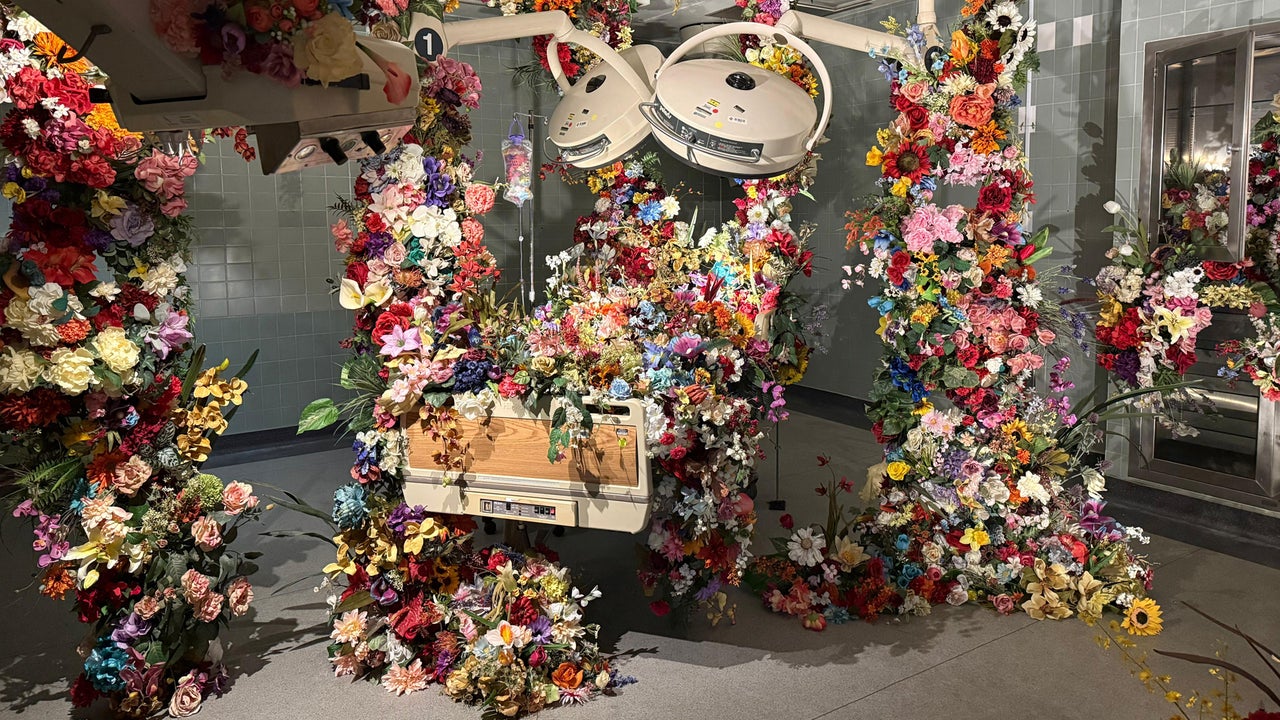
Two medical staff members in white lab coats beckon, guiding us through the reception area of an abandoned Los Angeles hospital. Animated caricatures of personified emotions grace the walls. We sign in as patients and don orange hospital wristbands with the words, “Heal your heART. Who will you be when you leave?” The “doctors” escort us to the first of four floors lined with rooms reimagined as 10 different emotions—from joy and love to sadness and anger. The designs incorporate each room’s former use and remaining medical equipment, evoking memories, facilitating emotional processing, and ultimately inducing catharsis. [Photo: courtesy Hospital of Emotions] The Hospital of Emotions is a powerful pop-up installation by 70 international artists who transformed 80 rooms inside the long-shuttered St. Vincent Medical Center into an immersive, large-scale art experience of emotional transformation and healing. The city’s oldest hospital closed in 2020 due to bankruptcy and will integrate into the St. Vincent Behavioral Health Campus, a behavioral health and addiction recovery complex set to open in 2028. Room 20, Fear, Dioz. [Photo: courtesy Hospital of Emotions] Presented by St. Vincent, with the installation companies House of Art and Dreams and ROYVA, the pop-up creates an artistic bridge between the hospital’s former and future uses, and has proved so popular that it’s been extended two months, through September. Room 27, Sadness, Kim Farbota. [Photo: courtesy Hospital of Emotions] Transforming the hospital was initially envisioned simply as creative framing. Yet even the artists weren’t prepared for how much this setting would inspire the explosion of whimsy and amplify visitors’ emotional journeys. Brightly colored monsters erupt from one room, while videos of blinking eyes creepily cover the walls of another. Others offered a quieter grace, like cascades of overgrown foliage spilling over equipment or an LED outline of a bed bathed in red light. Room 6, Resilience, Anna Matsumoto Bhumikorn Kongtaveelert. [Image: courtesy of the author] “This is not a white box,” says ROYVA’s founder, Oshri Elmorich, who curated the show with Yaara Sachs of Art and Dreams. (Both of them also designed rooms.) “This uses the essence of the hospital, but turned into something completely different, where you experience all these emotions. If we get more comfortable with the rainbow of emotions passing through us on a daily basis, it’s just so much easier to go through life.” Room 61, Compassion, Ginger Pearson. [Photo: courtesy Hospital of Emotions] Elmorich and Sachs received 2,000 submissions from artists in more than half a dozen countries during an open call last winter. They chose ideas over résumés—though a number came from the film and TV effects industry—and paid artists equally: a 4,000 fee plus up to 10,000 for expenses. Artists included members of nonprofit partners The People Concern, Veterans Stand Together, and The Jed Foundation, which are receiving a portion of the project proceeds. Room 17, Resilience, Allison Reber. [Photo: courtesy Hospital of Emotions] “One of the rooms was done by artists from the unhoused community as a way to process emotions for healthier integration,” says Elmorich. “The veterans used mock war props to bring awareness to what it takes to come back from war.” Everyone decorated their rooms en masse during a frenzied two weeks in May. “It almost felt like we were in a Burning Man art camp together, because it was so intense,” says Javiera Estrada, a photographer and multimedia artist. “You’re going through the fire. Everyone’s tired, and we’re all working so hard. It didn’t feel at all like a hierarchy of curators and artists.” Javiera Estrada [Photo: courtesy of the author] Estrada crafted an exuberant Twister-themed children’s bedroom to elicit nostalgic joy from a time before ubiquitous screens. “I think we’ve lost this sense of play and physically coming together, which brings healing and connection,” she says. “I’m trying to constantly separate myself from technology and have this tactile experience.” Kim Farbota [Photo: courtesy of the author] The emerging installation artist Kim Farbota drew on her former life as a neuroscientist to depict sadness. Her dimly lit mirrored infinity room features strands of LED strips passing through a bed and into a column of light that spreads across the ceiling—a sight that evokes a sense of transcendence, connecting body and spirit. Room 27, Sadness, Kim Farbota. [Photo: courtesy Hospital of Emotions] “I was thinking of it like a brainstem, and having a neuronal feeling to it,” she says. “I’ve had several people say that it made them want to cry, but in a way that was not purely sadness, but more hopeful or connected.” [Photo: courtesy of the author] Rooms are grouped by departments named for each emotion. Before going to the next floor, visitors stamp a Patient Emotional Chart given at reception with an image corresponding to that department. It serves as an emotional passport, a physical representation of passing through each feeling. By the exhibit’s end, visitors have gathered stamps for all 10 emotions and are ready for discharge, and with it, a feeling of release. “People are definitely processing,” says Elmorich. “Stuff comes up when you’re going through it. So I think we really touched them.”

7 hours ago

The experience economy is heading into . . . a nuclear missile silo?

The experience economy is heading into . . . a nuclear missile silo?

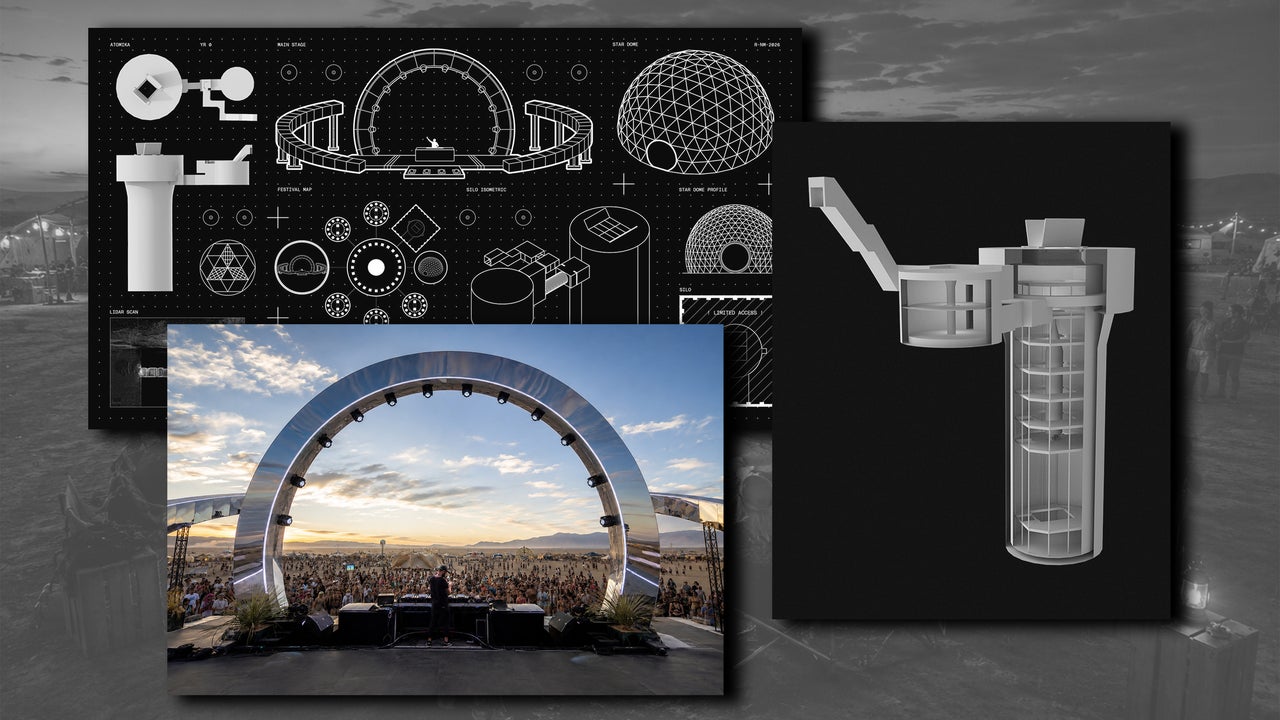
Burrowed more than 100 feet in the ground, the concrete shell of one of the most fearsome pieces of Cold War infrastructure is being brought back to life. This November, the Twistflower Nuclear Missile Silo in Roswell, New Mexico, will reopen, not to house a nuclear missile, but to host a quirky three-day festival. Named Atomika, the festival is described by organizers as a gathering of scientists, artists, and explorers for “immersive art, deep inquiry, and powerful music.” Speakers on the lineup range from UFO researchers to space explorers to professors. [Image: courtesy Atomika] Set in and around this decommissioned nuclear facility—which Atomika now calls “a ritual site for interstellar imagination”—it’s an unexpected adaptive reuse project that could offer a guide for breathing new life into the heavy infrastructure of the Cold War. Atomika’s founder, Nik Halik, calls it an effort to “change the polarity” of the silo, converting a space built to destroy into a positive gathering site where people can forge community around shared ideas. “Where I see festivals these days, the big pivot is people are seeking more authenticity and intimacy—these intimate forums, these grounds for exploration,” he says. “Just think, Burning Man meets Davos meets Area 51.” [Image: courtesy Atomika] Encountering military history Like his festival, Australia-born Halik is unconventional. A one-time rock musician who got rich as a real estate and stock market investor, he has dived in a submarine to the wreckage site of the Titanic, and was a trained member of the backup crew of a 2008 flight to the International Space Station as a spaceflight tourist. He did not fly, however. During his spaceflight training, conducted with cosmonauts in Russia, Halik was able to tour a decommissioned nuclear silo that once held a missile aimed to hit New York. “So I was kind of curious,” he says. “I wonder what the American ones looked like.” That curiosity led to visits inside silos across the U.S.—and an eventual buying spree. “I own probably about 20 of all the underground nuclear bunkers right now across the United States,” he says. (He’s converting at least one of them into an AI data center.) The Twistflower silo carried special resonance for Halik, given its connection to the U.S. side of the Cold War, as well as its location near the purported UFO crash site in Roswell, another of his interests. The silo was built in 1961 and housed a 100-foot-tall missile with a 4.5 megaton nuclear warhead capable of reaching Moscow. “Enough to wipe out 10 to 15 million humans,” Halik says. “The crazy thing was, there were five missileers in the launch control center and they were aged between 21 and 24. So they had the keys to the nukes.” They very nearly used them. During the Cuban missile crisis of 1962, a nuclear standoff between the U.S. and the Soviet Union put the silo’s status at DEFCON 2, meaning it could be ready to launch within hours. That never happened, and the silo was decommissioned in 1965. [Rendering: courtesy Atomika] Repurposing a top-secret site Halik bought the site in 2017 from Bob Lazar, known for claiming to be involved with secret UFO-related work for the U.S. government at Area 51. Making the nuclear silo into the center of the Atomika festival has involved converting a two-story above-ground launch control center into a kind of conference area, and outfitting the base of the silo with a laser that will project up to 12 miles into the night sky during the event. Halik says the space required a comprehensive renovation, with the demolition of existing rooms in the launch center, removal of outdated plumbing and electrical conduits, and clearance of decades of accumulated debris and graffiti. New wood floors add warmth, while modern lighting plays up the silo’s brutal architecture and bomb-proof structure. A dedicated 1 megawatt power station has also been built on site, which Halik says will enable it to host Atomika and other events down the line. [Image: courtesy Atomika] The Atomika festival lineup includes a mix of musicians, space explorers, and UFO researchers, including the ambient electronic musician Suzanne Ciani, the astronaut and aerospace engineer Chris Boshuizen, and the theoretical physicist Avi Loeb. Spectacle aside, Halik says the nuclear silo offers a refresh of the conferences and conventions of the past, and a counterpoint to discourse that’s so often conducted solely in digital space. “In the last five years, it’s pretty much been an attention economy,” he says. “In the next five to seven years, I really see it being a reality economy, where individuals are seeking that off-grid, analog-type communication.” Maybe that starts deep inside a nuclear silo. The Atomika Festival runs November 6-8, near Roswell, New Mexico. Tickets start at 545.

7 hours ago