
Today in News History
On June 19, several notable moments in the history of News stand out. In 1301, Prince Morikuni, shōgun of Japan (died 1333) was born. In 1922, Hitachiyama Taniemon, Japanese sumo wrestler, the 19th Yokozuna (born 1874) passed away. In 1933, Viktor Patsayev, Kazakh engineer and astronaut (died 1971) was born. In 1947, John Ralston Saul, Canadian philosopher and author was born. In 1957, Jean Rabe, American journalist and author was born. In 1963, Laura Ingraham, American radio host and author was born. In 1978, Garfield's first comic strip, originally published locally as Jon in 1976, goes into nationwide syndication. In 1986, Aoiyama Kōsuke, Bulgarian sumo wrestler was born. In 2008, Barun Sengupta, Bengali journalist, founded Bartaman (born 1934) passed away. In 2019, Etika, American YouTuber and streamer (born 1990) passed away. Together, these milestones provide historical context for today's news news and ongoing narratives.
How Roku became way more important than you realize
Narrative Analysis: Bandwagon
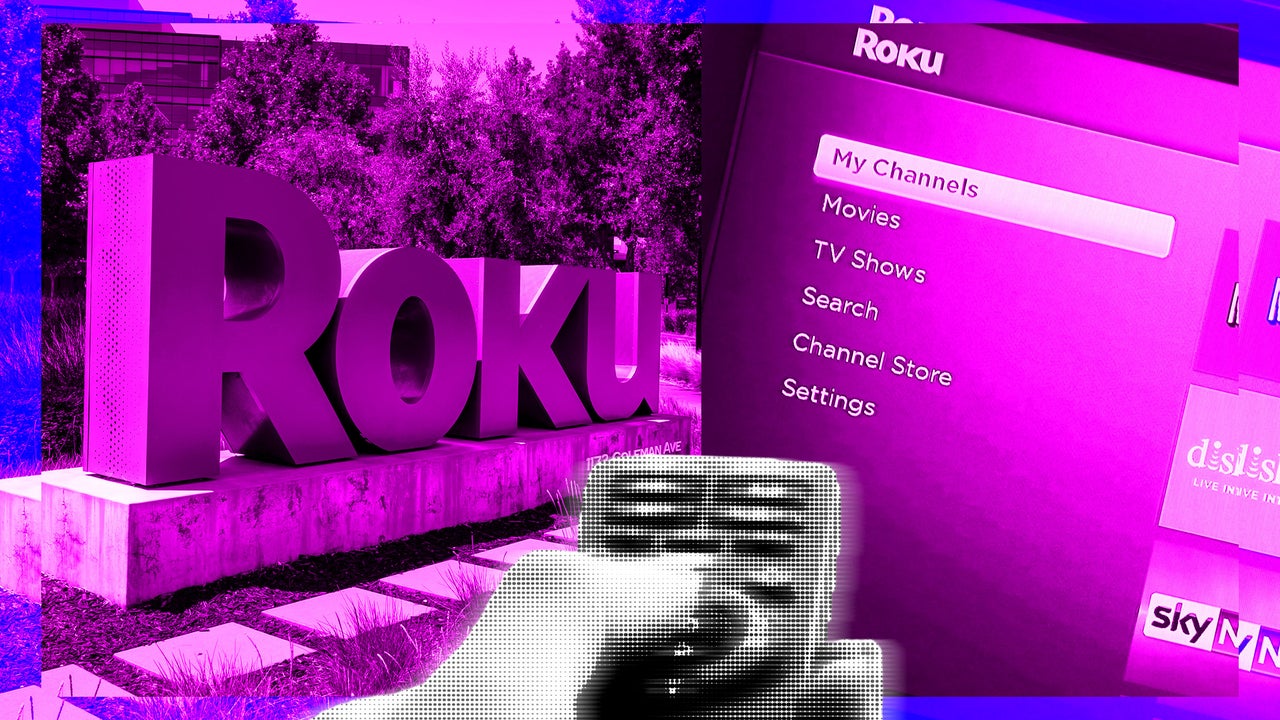
Hello again from Fast Company and welcome back to Plugged In. Last Friday, Reuters’ Echo Wang, Milana Vinn, and Dawn Chmielewski reported that Roku, the maker of the dominant streaming platform for TVs, was exploring its strategic options, including selling itself. That exploration didn’t take long. On Monday, news broke that Fox Corp. would acquire the company for 22 billion, a transaction expected to close in the first half of next year. Best known for its eponymous news and sports cable operations, Fox already owns the free streaming service Tubi. Adding Roku would turn the company into a significantly bigger force in TV—the third- or fourth-largest provider by audience share, depending on whether the proposed Paramount-Warner Bros. Discovery merger is consummated. Roku offers apps for every major streaming service plus its own service, the Roku Channel, which is not a single free channel but more than 500 of them. Fox says it intends to preserve this openness, and that Roku founder and CEO Anthony Wood will assume an unspecified “ongoing role” at the combined operation. It’s tough to imagine the company being misguided enough to tamper with Roku’s brand, whose long-standing association with easy streaming is one of the assets Fox is buying. Assuming the deal gets done, it’s entirely possible that from the outside, there will be no glaring signs that Roku has been sucked into the Murdoch machine. Still, it would mark the end of an era. Fox—or any old-school media giant—could never have built anything resembling Roku on its own. Even in Silicon Valley, it’s a unique, improbable success story. I can’t think of another that’s even roughly comparable. The company’s origins are so thoroughly forgotten that even its own account of its history memory-holes most of them. Back in the 1990s, Wood had founded ReplayTV, which launched a digital video recorder in 1997. I was totally smitten with mine, and still think it was superior to TiVo, which debuted at the same trade show, 1999’s CES. But Replay flamed out after Wood sold it in 2001. In August 2003, I was invited to a product briefing from a new startup Wood had founded—Roku. The product in question was a box that displayed high-quality still images, such as reproductions of fine art, on HDTVs. Given that the number of HDTV-equipped households numbered in the low millions at the time—not including mine—it struck me as tackling a niche, not the roots of a business I’d be writing about 23 years later. Over the next few years, Roku expanded into internet radios and hardware for driving digital signage. But it wasn’t clear whether the company was going much of anywhere until a strange interlude gave it a transformative opportunity. As Austin Carr wrote in a 2013 Fast Company article, Netflix CEO Reed Hastings commissioned Wood to design a streaming player for his company, then best known for its DVD rentals by mail. In December 2007, it was on the cusp of shipping. Then Hastings had an abrupt change of heart. Instead of betting everything on its own box, Netflix would aim to get its nascent streaming service on all the devices people used to consume video. He turned the player over to Roku to sell on its own. At first, it was still called the Netflix Player, because playing Netflix’s then-sparse streaming library was all it did. Soon, it also had access to video from Amazon. And then Hulu, HBO, Crackle, Pandora, Angry Birds, and on and on, until its collection of apps numbered in the hundreds. In 2012, it streamed a billion hours of content, which seemed like an impressive figure at the time. (In 2025, it was more than 145 times larger.) Roku never lacked for competition. Other startups launched their own boxes. Behemoths such as Amazon and Google entered the fray. Eventually, almost every TV came with built-in streaming, potentially rendering the company’s platform superfluous. All along, though, Roku didn’t just stay afloat—it managed to dominate the category its box had helped create. That was partially through extreme cost discipline. After introducing its original player at 100, it kept making cheaper and cheaper devices, eventually releasing a streaming stick for 30. It became an impulse item, which helped make it a household name. But Roku didn’t just thrive because it was cheap. It adeptly consumerized video streaming, a process which—it’s now easy to forget—was fairly nebulous and technical in its early days. Its user interface and stubby little remote control were leagues ahead of those that TV makers cooked up on their own. And starting in 2014, it offered them as part of a platform that manufacturers could embed in their sets. Dozens of brands did. Nine years after that, it began selling TVs under its own brand, too. Because selling inexpensive hardware was a razor-thin-margin sort of business, Roku cannily monetized its ever-expanding user base in other ways. From early on, streaming services could pay for placement on its home screen or even get dedicated buttons on its remote. In 2017, the company launched the Roku Channel, which became the U.S.’s most popular free streaming service, allowing it to scale up its ad business. When Roku customers signed up for paid services from their boxes, it processed the transaction using its Roku Payments service and collected a fee. Last year, Wood told me that he’d always seen selling Roku-enabled hardware in droves as a necessary building block for a services business, not a company in itself. Almost everyone in the consumer electronics industry pursues a similar strategy. But Roku might have executed on it better than any other outfit founded in this century, albeit sometimes in ways that have tried its users’ patience. If Roku has been more adroit and influential than it’s usually given credit for, it might be in part because the company has never been much for self-puffery. Wood is one of the plainest-spoken CEOs I’ve ever met—in that same 2025 conversation, he told me that the company was willing to “slightly” degrade user satisfaction if it helped pay the bills for free content, that its manufacturer partners probably weren’t thrilled that it competed with them by selling Roku-branded TVs, and that its modest Roku Originals lineup of exclusive content existed at least in part because advertisers didn’t react well to the pitch, “Hey, the Roku Channel has a whole bunch of reruns of Bewitched.” In 2022, when Roku introduced a line of smart home products, such as video doorbells and security cameras, Wood was equally direct about the fact that it was white-labeling devices made by Wyze, with Roku providing differentiation on the software and security front. The company still offers smart home gear, which I take as a sign that its brand is flexible enough to resonate with consumers on products that have nothing to do with TV. In retrospect, however, that expansion did not mark a dramatic broadening of Roku’s ambitions. Mostly, it’s still plugging away at making streaming affordable and approachable. Its focus has served it well in a world where most of its rivals have always treated the unglamorous details of getting video in front of eyeballs as a sideline. Why Fox coveted Roku is no mystery. The company’s revenues are still deeply tied to affiliate fees and other elements of TV’s past. Roku will radically bolster the digital broadcasting toehold that Fox established with Tubi when it acquired the platform in 2020. Whether Fox can make the most of its new asset, as TV continues to change in unpredictable ways, remains to be seen. But if Roku manages to keep on being Roku, I wouldn’t bet against it. You’ve been reading Plugged In, Fast Company’s weekly tech newsletter from me, global technology editor Harry McCracken. If a friend or colleague forwarded this edition to you—or if you’re reading it on fastcompany.com—you can check out previous issues and sign up to get it yourself every Friday morning. I love hearing from you: Ping me at hmccracken@fastcompany.com with your feedback and ideas for future newsletters. I’m also on Bluesky, Mastodon, and Threads, and you can follow Plugged In on Flipboard.
Narrative Intelligence Brief
This article was published by Fast Company, a source frequently categorized with a lean left bias based in United States of America. Our narrative intelligence engine continuously monitors coverage from this outlet to track framing, bias, and rhetorical patterns. In this specific piece, our systems detected the potential use of the "Bandwagon" technique. This narrative approach is often used to shape reader perception by highlighting specific emotional or rhetorical angles. By understanding the editorial perspective of Fast Company, readers can better contextualize the information presented and compare it across our broader media matrix to find the real narrative.
More from Fast Company
June 19, 2026
Public media is struggling under Trump. L.A.’s KCRW may have found the way forward
June 19, 2026
The journey to a no-compromise foldable smartphone
June 19, 2026
15 must-read business books by black authors that will help you thrive professionally
June 19, 2026
Claude is becoming more agentic. Amanda Askell is thinking through what that means
June 19, 2026
How to take a vacation as a solopreneur
Reliability Insights
P
Technique: Bandwagon
System analysis detected use of specific narrative techniques in this piece.Analysis Methodology
This narrative analysis was generated using the CoDataLab Global Intelligence Engine. Our proprietary AI scans thousands of cross-border sources to identify sentiment patterns, framing techniques, and potential media bias. While AI provides the data-driven foundation, our objective is to empower readers with additional context beyond the standard headline.The content displayed above is a structured summary designed for rapid information processing. For the full original report, please visit the source outlet.More Coverage
Discussion
"die"
11 soldiers and 2 civilians dead as gunmen attack airport in Niger’s capital

Mine pit tragedy: Bosome Freho Assembly orders owner’s arrest after woman, child die

‘Evil monster’ will die in prison for sex abuse and murder of adopted baby
