
Today in News History
On June 19, several notable moments in the history of News stand out. In 1179, The Battle of Kalvskinnet takes place outside Nidaros (now Trondheim), Norway. Earl Erling Skakke is killed, and the battle changes the tide of the civil wars. In 1306, The Earl of Pembroke's army defeats Bruce's Scottish army at the Battle of Methven. In 1910, Sydney Allard, English race car driver, founded the Allard Company (died 1966) was born. In 1947, Pan Am Flight 121 crashes in the Syrian Desert near Mayadin, Syria, killing 15 and injuring 21. In 1951, Ayman al-Zawahiri, Egyptian terrorist (died 2022) was born. In 1982, Chris Vermeulen, Australian motorcycle racer was born. In 2007, The al-Khilani Mosque bombing in Baghdad leaves 78 people dead and another 218 injured. In 2009, Mass riots involving over 10,000 people and 10,000 police officers break out in Shishou, China, over the dubious circumstances surrounding the death of a local chef. In 2009, Tomoji Tanabe, Japanese engineer and surveyor (born 1895) passed away. In 2018, The 10,000,000th United States Patent is issued. Together, these milestones provide historical context for today's news news and ongoing narratives.
BYD will pay every last cent for any damage caused by its autopilot

BYD, the China-based maker of electric vehicles, has done something no automaker has dared to do: It’s promising to pay every bill—repairs, property damage, medical costs—when its God’s Eye autonomous driving system causes an accident. No price ceiling. No fine print. No blame-shifting to the driver. No insurance claim that haunts you for years. Just a review of the car’s system logs, and you get your back covered till every expense derived from the accident has been satisfied. While this guarantee is currently limited to one year, and is available only in China, it’s still a wow moment that the autonomous driving industry has been waiting for—and dreading, depending on which side of the Pacific you’re parked on. [Image: BYD] Take Tesla, which has spent eight years promising full autonomy. The company sold “Full Self-Driving” as a feature buyers could purchase for up to 15,000 on top of the car’s base price. This came with the promise that over-the-air (OTA) updates would eventually make the car capable of driving itself without any human involvement. It never delivered. Tesla is facing a potential liability of up to 14.5 billion in lawsuits globally, alleging false advertising, autopilot crash liability, and securities fraud. This could explain why the company has been quietly editing its original purchase agreements—remotely changing “Full Self-Driving” to “Full Self-Driving (Supervised),” language that did not exist when buyers signed and paid. In many cases, the original contracts are now inaccessible, the links leading to invalid web pages, leaving owners who are seeking refunds for the autonomous driving capability they were promised unable to retrieve the very documents that prove what Tesla originally sold them. Meanwhile, BYD has been covering the actions of its full self-parking feature since July 2025, in the same way it will do now with its cars driving autonomously in the city. The first practical test of the policy occurred days after it came into effect: In August 2025, the owner of a Denza Z9GT—a BYD premium sub-brand—was using the autonomous parking feature to enter an underground garage when a small retractable ground lock failed to retract. The system didn’t detect it, and the car’s undercarriage scraped across it. The owner called BYD after-sales in an anxious state, unsure whether the guarantee would hold. Three BYD staff arrived, pulled the vehicle’s data logs, and delivered an instant verdict: “Nothing to discuss—free repair.” Starting on May 28, BYD has extended the same policy to City Navigation, the God’s Eye 5.0 feature that handles urban route guidance without driver input. The City Navigation guarantee covers 12 months—starting from vehicle delivery for new buyers or from the moment an existing owner installs the qualifying OTA update—unlike the Intelligent Parking guarantee, which runs for the lifetime of the vehicle. Both absorb all financial consequences: vehicle repair, third-party property damage, personal injury, with no monetary ceiling and zero impact on the driver’s own insurance record. Sadly for BYD drivers worldwide, both are currently China-only. The BYD autonomous driving platform is displayed during the 30th Guangdong-Hong Kong-Macao Greater Bay Area Auto Show on June 8, 2026. [Photo: Stringer/Anadolu/Getty Images] So easy it’s almost offensive The claims process goes like this: When an accident occurs during smart parking or City Navigation, the owner contacts BYD’s after-sales service directly, not their insurer. BYD sends technicians to inspect the scene and pull backend vehicle data, which logs virtually every action the system took during the incident. If the data confirms the system was active and at fault due to an algorithm error or sensor failure, BYD covers all costs with no argument. In a multiparty accident, traffic authorities first determine responsibility. Then, if the BYD system is found at fault, BYD pays. If the other party is at fault, their insurer pays. If backend data shows the driver was manually in control when the incident occurred, BYD does not pay. The company says the goal is to push autonomous driving. According to BYD, after the parking guarantee launched in July 2025, smart parking usage among God’s Eye owners jumped from 21 to 93. This increased usage generates more edge-case data, which feeds back into improving the AI models faster than any competitor that cannot afford to accept liability. [Image: BYD] The City Navigation guarantee didn’t take long to prove itself either. Within days of the May 28 announcement, the Chinese auto industry outlet Gasgoo reported the first confirmed City Navigation payout. A Denza Z9GT in City Navigation mode collided with another vehicle, failing to trigger emergency avoidance. The driver, Ms. Chen, manually braked, but only after the car had made a mistake, according to the vehicle log. According to the company, it leads every automaker in China—domestic or foreign—in vehicles running an intelligent driving system, with 3.15 million units on the road. On those vehicles, the system now takes the wheel for more than half of all miles driven: a 50.91 autonomous usage rate. That’s an enormous real-world data pool feeding a system BYD clearly believes in enough to insure unconditionally. As BYD’s CEO, Wang Chuanfu, put it at the launch: “The first half of electrification is all about batteries, while the second half is all about [AI chips and software].” A prototype of the Tesla Cybercab in San Jose in March 2026. Tesla claims the vehicles will not have a steering wheel or pedals when they are launched on the market. [Photo: Andrej Sokolow/picture alliance/Getty Images] Meanwhile, at Tesla Tesla introduced its self-driving package as a standalone software add-on in 2016, promising buyers that over-the-air updates would eventually make their car capable of driving itself without any human involvement. For eight years, across every vehicle it sold, Tesla made no mention anywhere in its sales agreements that a human would need to remain in control. Buyers paid up to 15,000 for a package the company explicitly named Full Self-Driving (FSD) while they marketed it as a path to complete autonomy. It was only in March 2024, when Tesla released software version 12.3.3, that the product got its new “Supervised” add-on, and for the first time the accompanying legal text acknowledged that owning it did not mean owning a car that could drive without human oversight. By September 2025, Tesla had abandoned its original promise, redefining FSD with language vague enough for the current supervised system to satisfy. While BYD stands behind its autonomous driving software with full financial liability—unlimited in cost, albeit limited to 12 months for City Navigation—Tesla has been doing the opposite. The EV publication Electrek reports, through multiple affected owners, that Tesla retroactively altered previously signed Full Self-Driving purchase agreements to insert the “supervised” language. In many cases the original documents have been made unreachable—the links lead to invalid pages—leaving owners unable to access the contracts that prove what Tesla originally sold them. Incidentally, Musk himself confirmed that cars produced between 2016 and 2023, which had these contracts, are physically incapable of achieving unsupervised FSD due to hardware limitations. Tesla has no concrete plan to retrofit them. It’s a startling contrast with the Chinese car maker. One company is offering unlimited financial liability for its autonomous driving decisions, backed by a claims process with real documented payouts, and using every incident to make its AI smarter. The other is retroactively rewriting contracts and confirming its flagship hardware can never deliver what customers paid for. Unless something structurally radical happens in the American auto industry, that is not a product gap. It is a trust gap. That trust, as BYD’s parking adoption numbers show, is the thing that actually makes people let the car drive—and the only thing that can push humanity towards a true full self-driving world.
Narrative Intelligence Brief
This article was published by Fast Company, a source frequently categorized with a lean left bias based in United States of America. Our narrative intelligence engine continuously monitors coverage from this outlet to track framing, bias, and rhetorical patterns. Our initial algorithmic scan of this specific piece did not flag high-confidence rhetorical techniques, suggesting a generally straightforward reporting style or neutral framing. By understanding the editorial perspective of Fast Company, readers can better contextualize the information presented and compare it across our broader media matrix to find the real narrative.
More from Fast Company
June 19, 2026
Public media is struggling under Trump. L.A.’s KCRW may have found the way forward
June 19, 2026
The journey to a no-compromise foldable smartphone
June 19, 2026
15 must-read business books by black authors that will help you thrive professionally
June 19, 2026
Claude is becoming more agentic. Amanda Askell is thinking through what that means
June 19, 2026
How to take a vacation as a solopreneur
Analysis Methodology
This narrative analysis was generated using the CoDataLab Global Intelligence Engine. Our proprietary AI scans thousands of cross-border sources to identify sentiment patterns, framing techniques, and potential media bias. While AI provides the data-driven foundation, our objective is to empower readers with additional context beyond the standard headline.The content displayed above is a structured summary designed for rapid information processing. For the full original report, please visit the source outlet.More Coverage
Discussion
"die"
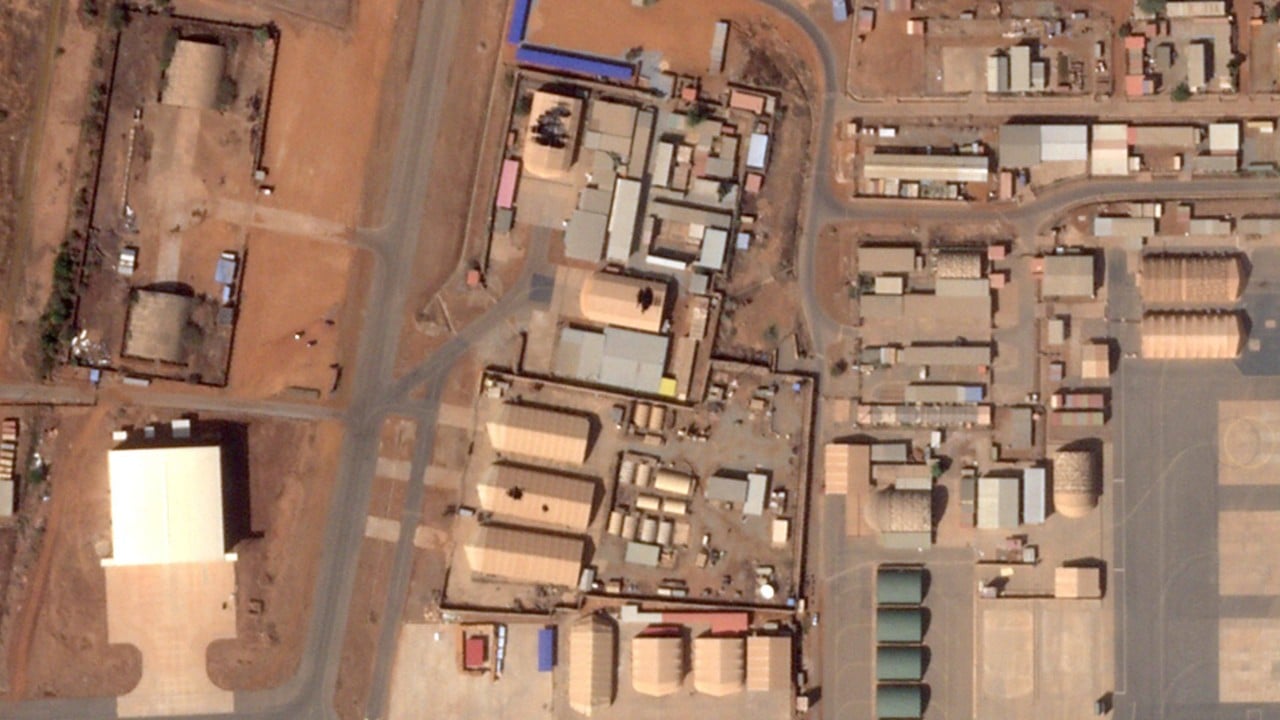
11 soldiers and 2 civilians dead as gunmen attack airport in Niger’s capital
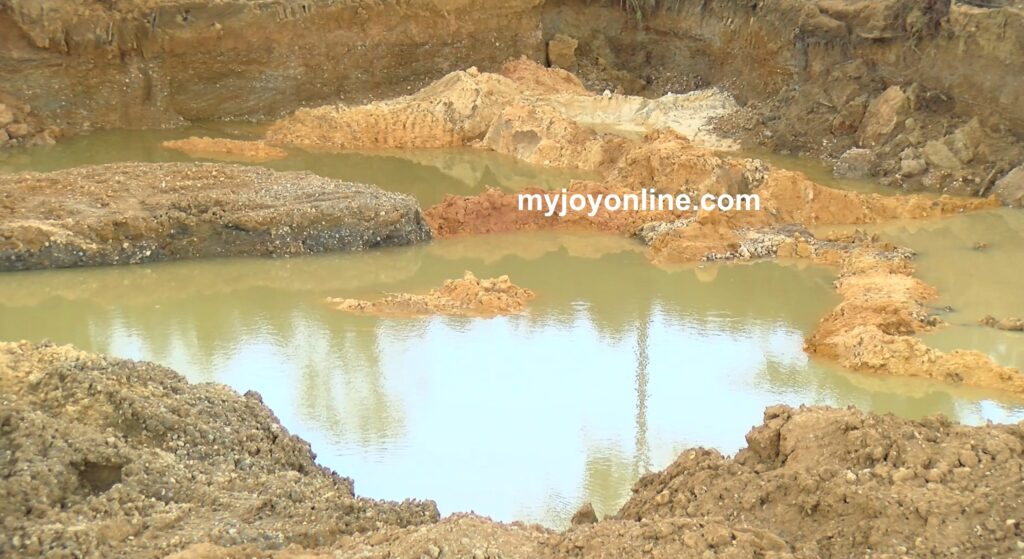
Mine pit tragedy: Bosome Freho Assembly orders owner’s arrest after woman, child die
‘Evil monster’ will die in prison for sex abuse and murder of adopted baby
