Today in News History
On June 17, several notable moments in the history of News stand out. In 1571, Thomas Mun, English writer on economics (died 1641) was born. In 1719, Joseph Addison, English essayist, poet, playwright, and politician (born 1672) passed away. In 1937, Ted Nelson, American sociologist and philosopher was born. In 1940, George Akerlof, American economist and academic, Nobel Prize laureate was born. In 1942, Mohamed ElBaradei, Egyptian politician, Vice President of Egypt, Nobel Prize laureate was born. In 1949, John Craven, English economist and academic was born. In 1959, Lawrence Haddad, South African-English economist and academic was born. In 1960, The Nez Perce tribe is awarded $4 million for 7 million acres (28,000 km2) of land undervalued at four cents/acre in the 1863 treaty. In 1966, Mohammed Ghazy Al-Akhras, Iraqi journalist and author was born. In 2019, Gloria Vanderbilt, American artist, author actress, fashion designer, heiress and socialite (born 1924) passed away. Together, these milestones provide historical context for today's news news and ongoing narratives.
Jeff Bezos says AI will cause “labor scarcity,” not job loss
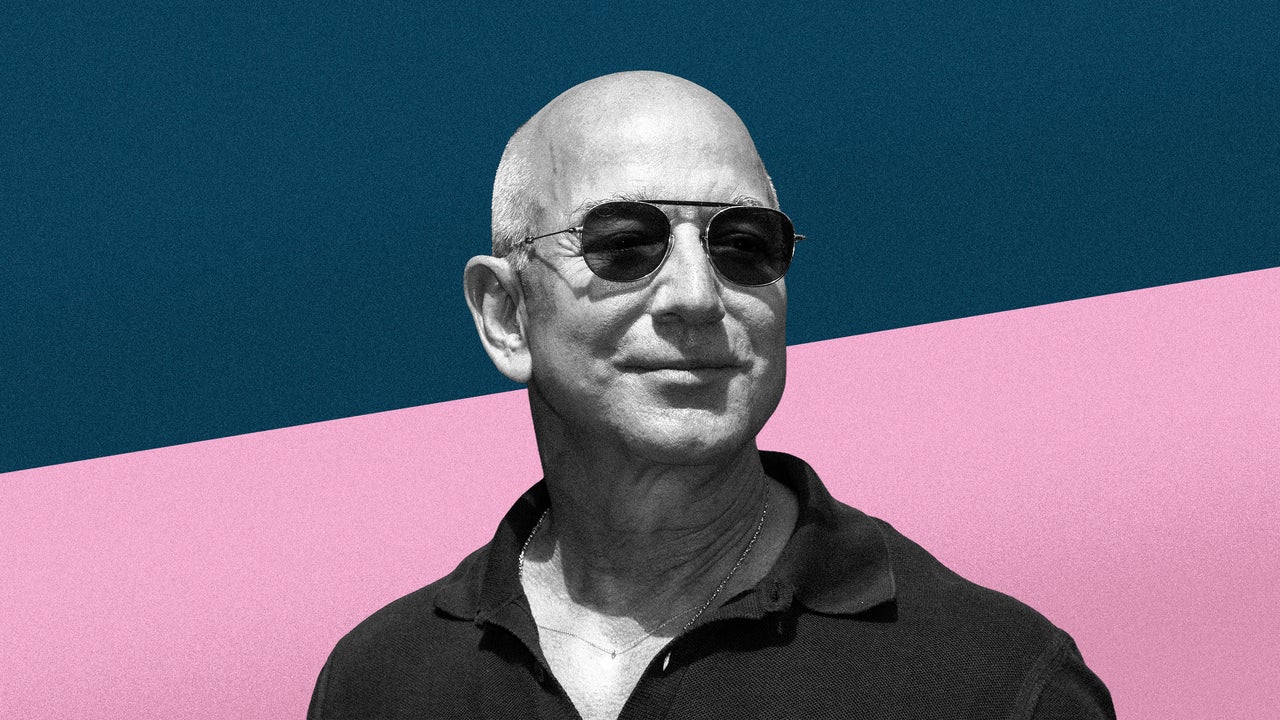
Jeff Bezos hears those widespread fears about AI causing job loss—and he thinks those doomers are looking at the future all wrong. “I know there’s a lot of concern in general about AI and job loss,” Bezos said in a recent CNBC interview. “I have a very different view. I think what’s actually going to happen is we’re going to have labor scarcity as a result. People are going to have to work hard.” “I know why people are pessimistic. They’re pessimistic because a bunch of smart people are telling them to be pessimistic, but those people are wrong,” Bezos added. “When you have productivity—and this could be very significant productivity in the economy—that is going to raise the standard of living.” Bezos has been staunch in his belief that AI will result in the opposite of job loss, instead resulting in a shortage of human labor. In May, he said that AI pessimists were “dead wrong,” adding that the tech would “elevate” young workers and allow people to get work done at “a higher level.” With the productivity gains and expanded economy that will result from AI innovation, Bezos believes there will be more demand for human work than there currently is supply. AI startup Prometheus cofounder and co-CEO Vik Bajaj agreed with Bezos’ sentiment during the interview. “Companies occasionally create jobs, but what really creates jobs is invention,” Bajaj said. “Inventions are based on dreams, but invention means that you actually make the dream a reality.” Bezos’ and Bajaj’s Prometheus officially launched in November with 6.2 billion in funding. TechCrunch recently reported that the company raised an additional 12 billion at a 41 billion valuation in a funding round led by Bezos, JPMorgan Chase, Goldman Sachs, BlackRock, DST Global and Arch Venture Partners. The company is building AI tools that speed up engineering work, or what it calls an “artificial general engineer.” “We will have more engineers; we will have more jobs in engineering and manufacturing as a result of inventing more,” Bajaj added. Bezos’ theory might be difficult to convince others of, especially considering Amazon—where he is the largest individual shareholder and executive chairman—has cut thousands of roles as it embraces AI and aims to reduce middle management layers. In October, the company laid off 14,000 corporate workers and later cut another 16,000 roles in January under CEO Andy Jassy. CEOs seem to be split on their stances on AI job loss. OpenAI’s Sam Altman previously warned that AI would make jobs disappear, but he recently said he was wrong about his timeline and prediction. Last year, Anthropic’s Dario Amodei said that AI could wipe out 50 of entry-level white-collar jobs. Others, like Nvidia’s Jensen Huang, have brushed aside AI as a “lazy” excuse for layoffs. Amid these conflicting views, a new Reuters/Ipsos survey found that 53 of its 4,531 respondents were worried that they or someone in their household would lose a job due to AI. The only thing that everyone seems to agree on is that AI is, in fact, changing work. Whether it’s changing for the best is still up for debate.
Narrative Intelligence Brief
This article was published by Fast Company, a source frequently categorized with a lean left bias based in United States of America. Our narrative intelligence engine continuously monitors coverage from this outlet to track framing, bias, and rhetorical patterns. Our initial algorithmic scan of this specific piece did not flag high-confidence rhetorical techniques, suggesting a generally straightforward reporting style or neutral framing. By understanding the editorial perspective of Fast Company, readers can better contextualize the information presented and compare it across our broader media matrix to find the real narrative.
More from Fast Company
June 17, 2026
Elon Musk’s Twitter deal looked like a $44 billion disaster. Now, his investors stand to make a 200% return—thanks to a brilliant (and controversial) M&A move
June 17, 2026
Why employers should treat domestic violence as a workplace issue
June 16, 2026
Jeff Bezos says AI will cause ‘labor scarcity,’ not job loss
June 16, 2026
Work-life balance doesn’t exist for working parents
June 16, 2026
Canva only hires people with these 2 traits—why they matter amid the AI shift
Analysis Methodology
This narrative analysis was generated using the CoDataLab Global Intelligence Engine. Our proprietary AI scans thousands of cross-border sources to identify sentiment patterns, framing techniques, and potential media bias. While AI provides the data-driven foundation, our objective is to empower readers with additional context beyond the standard headline.The content displayed above is a structured summary designed for rapid information processing. For the full original report, please visit the source outlet.More Coverage
Discussion