Today in News History
On June 17, several notable moments in the history of News stand out. In 1836, The formation of the London Working Men's Association gives rise to the Chartist Movement. In 1888, Alexander Friedmann, Russian physicist and mathematician (died 1925) was born. In 1914, Eleanor Sokoloff, American pianist and teacher (died 2020) was born. In 1920, Hemanta Mukherjee, Indian singer and music director (died 1989) was born. In 1946, Karen Dunnell, English statistician and academic was born. In 1977, Duncan Hames, English accountant and politician was born. In 1995, The Astronomy Picture of the Day website is launched. In 1998, Fred Wacker, American race car driver and engineer (born 1918) passed away. In 2012, Jorge Lankenau, Mexican banker and businessman (born 1944) passed away. In 2013, Khondakar Ashraf Hossain, Bangladesh poet and academic (born 1950) passed away. Together, these milestones provide historical context for today's news news and ongoing narratives.
Work-life balance doesn’t exist for working parents
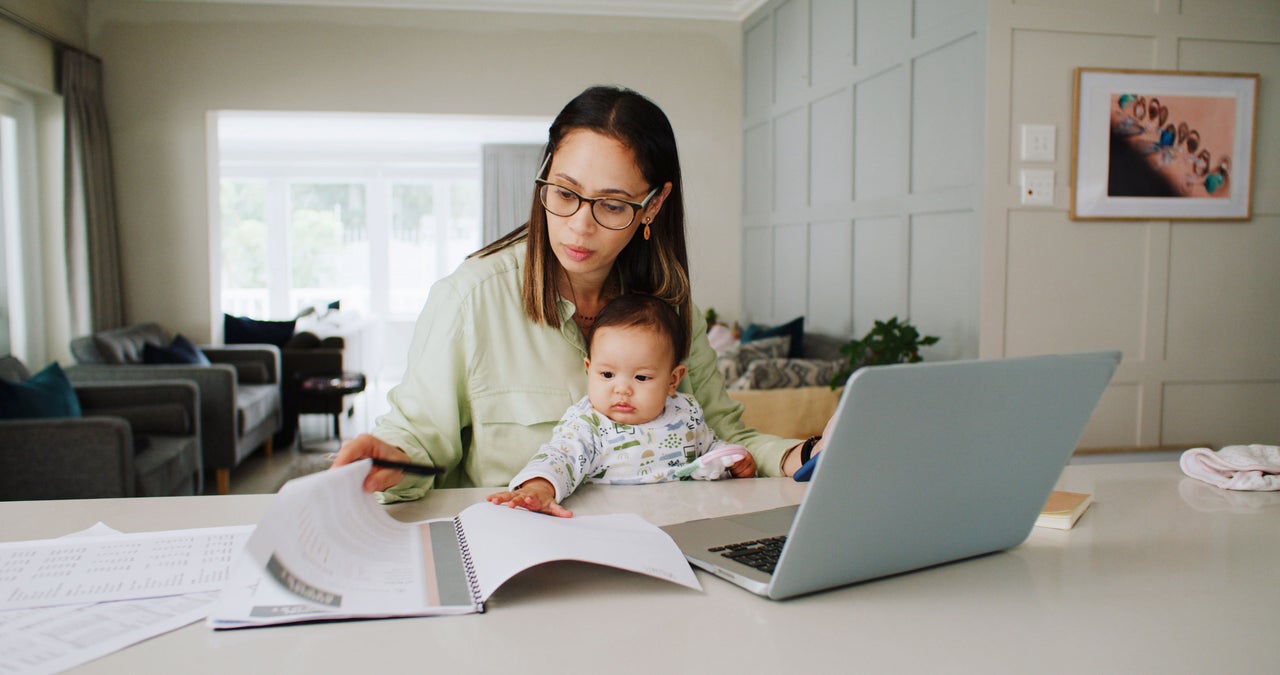
If work-life balance is hard to come by for many American workers, then it’s virtually impossible to achieve for working parents. A new study from the Pew Research Center captures just how porous the boundary is for parents who are struggling to juggle work and life. For the majority of parents, their caregiving responsibilities bleed into work—and vice versa. In a survey of 2,242 working parents in the U.S., Pew found that among those who worked full time, 70 said they took care of parenting-related tasks while on the job, and 59 handled work responsibilities while with their children. Over half of them said it was a challenge to balance work with family life and that their job made it harder to be a good parent. Nearly as many parents—45—said it was difficult to advance in their career as a parent. Even when parents worked part-time, over half said work-life balance was hard to come by. Working mothers are, of course, having a more difficult time striking a balance. A whopping 81 of women surveyed said they dealt with parenting tasks while at work, and a significant portion of them (38) reported doing so very often. On the whole, women were more likely to feel the strain of balancing work with parenting obligations—though men also reported facing the same challenges in relatively high numbers. Plenty of fathers (62) also said they took care of parenting tasks while on the job, and 57 spent time working while with their children (as compared to 63 of women). Perhaps that’s in part because women shoulder more of the caregiving burden: According to the survey, 52 of parents said the mom handled more day-to-day parenting tasks and 43 said the mom handled more household chores. A significant portion of parents—about 40—also claimed that those tasks were shared equally. But there’s some disagreement on the distribution of labor, depending on who you ask: Men were a lot more likely to suggest that parenting tasks and household chores were shared equally. Women, on the other hand, were more likely to say they did those tasks on their own. (Even dads, however, were not inclined to take credit for handling these tasks on their own: Just 25 of them said they took care of more household tasks and only 13 said the same of parenting tasks.) This difference in perception also carried over into how families handle childcare gaps: Mothers were far more likely to say they took time off when childcare issues came up unexpectedly, with 68 of them reporting that as compared to 29 of fathers. The most damning finding? Even in families where the mother worked longer hours, both parents were more likely to report that she handled more parenting and household tasks. Is it any surprise, then, that senior-level women—the very mothers who should have more resources and support—are struggling with this high-wire act? Still, the odds are especially stacked against working mothers who also lack financial privilege. Parents with lower incomes were less likely to have workplace benefits like parental leave or the flexibility to work from home; they were also less likely to have access to health insurance or paid time off. This lack of workplace support also engenders more anxiety about job security when those parents face childcare gaps or have to take time off to care for a sick child. While perks like remote work help ease this burden to some extent, there’s no silver bullet. Even when parents are able to work from home, the Pew survey found they are just as likely to say that work life balance is out of reach. As one mother from the survey put it: “I’m supposed to work like I don’t have kids and supposed to parent like I don’t have a job.”
Narrative Intelligence Brief
This article was published by Fast Company, a source frequently categorized with a lean left bias based in United States of America. Our narrative intelligence engine continuously monitors coverage from this outlet to track framing, bias, and rhetorical patterns. Our initial algorithmic scan of this specific piece did not flag high-confidence rhetorical techniques, suggesting a generally straightforward reporting style or neutral framing. By understanding the editorial perspective of Fast Company, readers can better contextualize the information presented and compare it across our broader media matrix to find the real narrative.
More from Fast Company
June 17, 2026
Elon Musk’s Twitter deal looked like a $44 billion disaster. Now, his investors stand to make a 200% return—thanks to a brilliant (and controversial) M&A move
June 17, 2026
Why employers should treat domestic violence as a workplace issue
June 16, 2026
Jeff Bezos says AI will cause ‘labor scarcity,’ not job loss
June 16, 2026
Jeff Bezos says AI will cause “labor scarcity,” not job loss
June 16, 2026
Canva only hires people with these 2 traits—why they matter amid the AI shift
Analysis Methodology
This narrative analysis was generated using the CoDataLab Global Intelligence Engine. Our proprietary AI scans thousands of cross-border sources to identify sentiment patterns, framing techniques, and potential media bias. While AI provides the data-driven foundation, our objective is to empower readers with additional context beyond the standard headline.The content displayed above is a structured summary designed for rapid information processing. For the full original report, please visit the source outlet.More Coverage
Discussion