Today in News History
On June 17, several notable moments in the history of News stand out. In 1571, Thomas Mun, English writer on economics (died 1641) was born. In 1858, Eben Sumner Draper, American businessman and politician, 44th Governor of Massachusetts (died 1914) was born. In 1922, John Amis, English journalist and critic (died 2013) was born. In 1929, The town of Murchison, New Zealand is rocked by a 7.8 magnitude earthquake killing 17. At the time it was New Zealand's worst natural disaster. In 1932, John Murtha, American colonel and politician (died 2010) was born. In 1942, Mohamed ElBaradei, Egyptian politician, Vice President of Egypt, Nobel Prize laureate was born. In 1949, John Craven, English economist and academic was born. In 1955, Cem Hakko, Turkish fashion designer and businessman was born. In 1960, The Nez Perce tribe is awarded $4 million for 7 million acres (28,000 km2) of land undervalued at four cents/acre in the 1863 treaty. In 1963, A day after South Vietnamese President Ngô Đình Diệm announced the Joint Communiqué to end the Buddhist crisis, a riot involving around 2,000 people breaks out. One person is killed. Together, these milestones provide historical context for today's news news and ongoing narratives.
Elon Musk’s Twitter deal looked like a $44 billion disaster. Now, his investors stand to make a 200% return—thanks to a brilliant (and controversial) M&A move
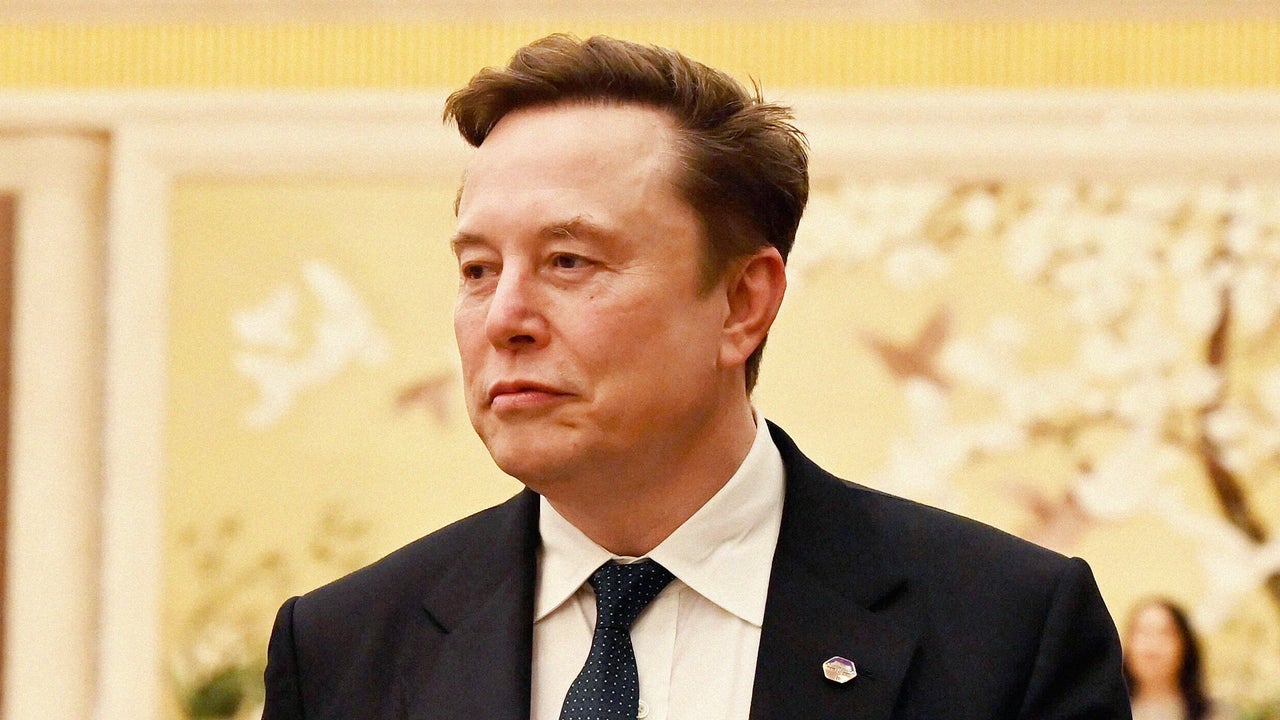
When Elon Musk finally closed on his deal to acquire Twitter, it seemed like the tech mogul may have bitten off more than he could chew. After all, over the course of 2022, Musk had offered to take the social media giant private; tried to back out of that proposal amid financial pressures; and ultimately been forced to move forward with the purchase anyway by the Delaware Chancery Court. He wasn’t the only one caught up in the brouhaha, either. Of the 44 billion transaction, an estimated 10 billion came in the form of equity put up by outside investors, including both preexisting shareholders rolling over their stakes and new ones eager to get on board with Musk’s latest enterprise. But the consensus in the wake of the deal—that Musk overpaid for the site, which he’s since renamed X, while also dragging his friends and associates into a stinker of an acquisition—no longer seems to hold true, reports Bloomberg, which recently set out to calculate where the backers’ investments now stand. The upshot? Name-brand investors such as Larry Ellison, Bill Ackman (by way of his charitable foundation), and Andreessen Horowitz have by this point seen a nearly 200 return on their investment. Yet X is hardly the sociopolitical powerhouse it once was, with short-form video continuing to eat the internet and users alienated by Musk’s right-wing politics fleeing the platform—so how did Musk ensure his backers came out looking good anyways? Bloomberg chalks it up to some savvy MA, reporting that X shareholders now own a cumulative 5 of another Musk venture—the frothy rocket startup SpaceX—which will be worth 100 billion if the firm goes public at a rumored 2 trillion valuation in its upcoming, and much-heralded, initial public offering. (Reuters pegged the expected IPO valuation at 1.75 trillion this morning [May 15], although even that amount would make it the biggest stock market debut by an American company ever.) SpaceX owns X and xAI, Musk’s artificial intelligence company, following a merger this February that reportedly valued xAI at 125 billion and SpaceX at 1 trillion. The SpaceX IPO would let X shareholders cash out their shares and see a return on those early investments. “The same people own all of Elon’s companies,” explained Ross Gerber, CEO of the investment firm Gerber Kawasaki, in a statement to Bloomberg. Other shareholders in the platform have included Saudi prince Alwaleed bin Talal, Sean “Diddy” Combs, and Jack Dorsey. Last year, Musk merged X with xAI—the machine learning startup behind his chatbot Grok, which was trained on Twitter’s massive logs of user content—in a deal that Bloomberg reports valued xAI at 80 billion and X itself at just over 40 billion. It was a boon to investors who’d been disappointed in X’s performance following Musk’s acquisition of the platform, says Gerber: “I had marked down the position like 75, and I got to mark it back up.” Still, says Gerber—who estimates that the SpaceX listing will ultimately net him a 2.5 or 3 times return on his X stake—all of Musk’s financial engineering does leave other investors holding the bag: “The fact that essentially SpaceX got heavily diluted so that Elon could make whole his Twitter and xAI investors kind of just sucks for SpaceX.” —Brian Contreras, Staff Writer This article originally appeared on Fast Company’s sister website, Inc.com. Inc. is the voice of the American entrepreneur. We inspire, inform, and document the most fascinating people in business: the risk-takers, the innovators, and the ultra-driven go-getters that represent the most dynamic force in the American economy.
Narrative Intelligence Brief
This article was published by Fast Company, a source frequently categorized with a lean left bias based in United States of America. Our narrative intelligence engine continuously monitors coverage from this outlet to track framing, bias, and rhetorical patterns. Our initial algorithmic scan of this specific piece did not flag high-confidence rhetorical techniques, suggesting a generally straightforward reporting style or neutral framing. By understanding the editorial perspective of Fast Company, readers can better contextualize the information presented and compare it across our broader media matrix to find the real narrative.
More from Fast Company
June 16, 2026
Jeff Bezos says AI will cause “labor scarcity,” not job loss
June 17, 2026
How ‘accidental managers’ sink teams and sour workplaces
June 16, 2026
Work-life balance doesn’t exist for working parents
June 17, 2026
How we learned to stop worrying* and love the autonomous future
June 17, 2026
Why employers should treat domestic violence as a workplace issue
Analysis Methodology
This narrative analysis was generated using the CoDataLab Global Intelligence Engine. Our proprietary AI scans thousands of cross-border sources to identify sentiment patterns, framing techniques, and potential media bias. While AI provides the data-driven foundation, our objective is to empower readers with additional context beyond the standard headline.The content displayed above is a structured summary designed for rapid information processing. For the full original report, please visit the source outlet.More Coverage
Discussion