Today in News History
On June 19, several notable moments in the history of News stand out. In 1800, War of the Second Coalition Battle of Höchstädt results in a French victory over Austria. In 1910, Sydney Allard, English race car driver, founded the Allard Company (died 1966) was born. In 1913, Natives Land Act, 1913 in South Africa implemented. In 1957, Subcomandante Marcos, Mexican insurgent and EZLN leader was born. In 1960, Charlotte Motor Speedway holds its first NASCAR race, the inaugural World 600. In 1982, The People's Armed Police is de facto founded; It is officially established 10 months later on April 5, 1983. In 1985, Members of the Revolutionary Party of Central American Workers, dressed as Salvadoran soldiers, attack the Zona Rosa area of San Salvador. In 2005, Following a series of Michelin tire failures during the United States Grand Prix weekend at Indianapolis, and without an agreement being reached, 14 cars from seven teams in Michelin tires withdrew after completing the formation lap, leaving only six cars from three teams on Bridgestone tires to race. In 2009, Tomoji Tanabe, Japanese engineer and surveyor (born 1895) passed away. In 2009, War in North-West Pakistan: The Pakistani Armed Forces open Operation Rah-e-Nijat against the Taliban and other Islamist rebels in the South Waziristan area of the Federally Administered Tribal Areas. Together, these milestones provide historical context for today's news news and ongoing narratives.
Why were Waymo cars driving into active construction zones?
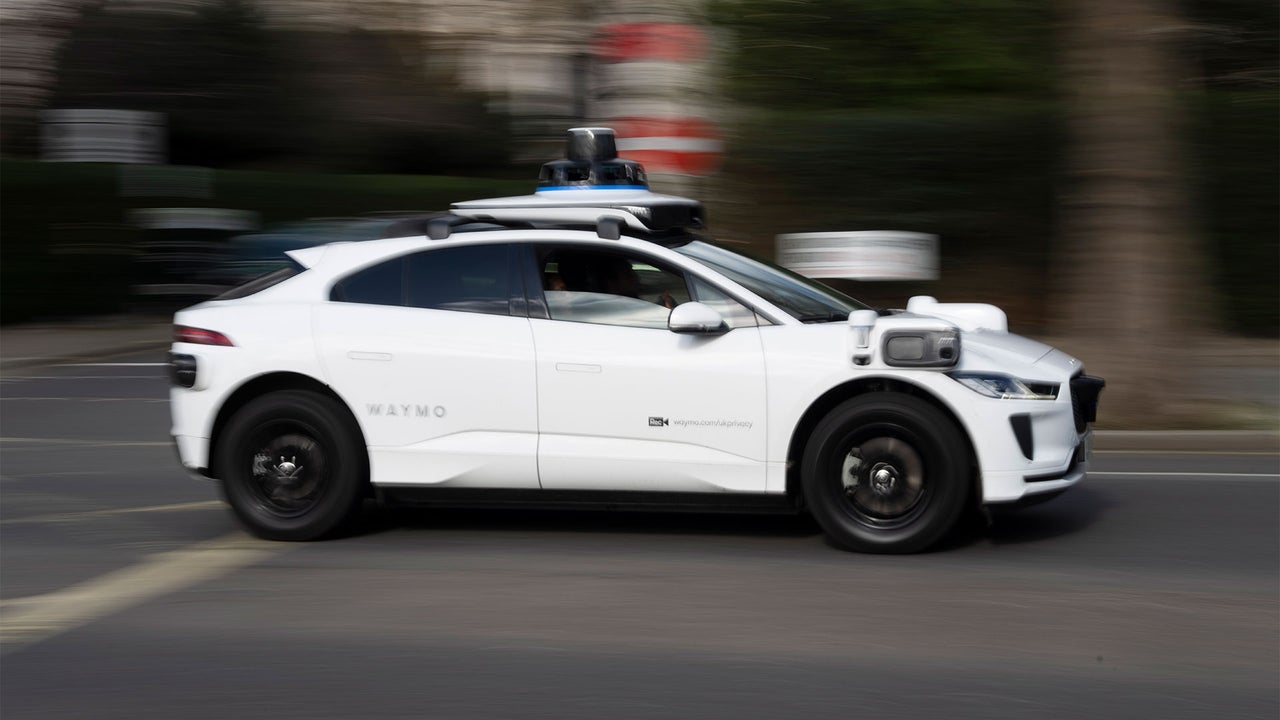
After driving into floodwater, gates, and telephone poles, Waymo’s robotaxis are being recalled yet again for driving into hazards. This time, Waymo’s fleet of nearly 4,000 vehicles is being recalled after at least 13 instances of the cars driving into construction zones on highways. Seven of those incidents occurred in a single day in San Francisco. On May 18, seven of Waymo’s robotaxis drove into active construction zones on highways in the Bay Area, reportedly because the company’s software was “prioritizing the avoidance of other freeway hazards and/or failing to recognize the construction zone,” per filings with the National Highway Traffic Safety Administration (NHTSA). One of these incidents was captured and posted to social media by Waymo passenger Elliot Slade, who was riding with his fiancée when the driverless vehicle accelerated into a construction zone. “There were construction signs,” Slade told CBS News of the incident. “There were lights going on. Police in the distance and it sped up. That’s when I looked at my fiancée, we’re done. This is it. We’re dead. We’re going to die right here in the Waymo.” According to Slade, the Waymo sped up for approximately 20 seconds, before pulling off the highway and pulling over in a residential neighborhood. He added that Waymo offered him three free rides up to 40 each as an apology. The next day on May 19, all Waymos were pulled from highways. According to the NHTSA filings, a solution is “currently under development.” In the meantime, Waymos are still operating on surface streets. The recall, issued on June 8, comes amid a massive planned expansion for Waymo, with launches planned for 21 more cities in 2026 alone, including the first Waymos in the United Kingdom and Japan. Way more Waymo woes Waymos driving into construction zones is only the latest snafu in a long list for the company. This recall is the sixth for the robotaxi brand, with previous recalls motivated by issues including illegal driving around school buses and driving on flooded roads. Waymo’s driving software is currently under investigation by the NHTSA and National Transportation Safety Board for a January incident where a Waymo struck a child during a school drop-off. The brand also made headlines in May for bizarre behavior by its fleet in Atlanta, when dozens of cars converged on a residential cul-de-sace in Atlanta every morning for no apparent reason. (At the time, social media users wondered if the ritual meant Waymos were inventing their own religion.) In a statement to Fast Company, a Waymo spokesperson explained the rationale for its latest recall. “Waymo’s mission is to be the world’s most trusted driver, and the data shows that we’re making roads safer in the communities in which we operate,” the spokesperson says. Waymo’s safety impact analyses say that the brand’s robotaxis get into serious injury or worse crashes 92 less than human drivers. “We identified an area of improvement regarding performance around freeway construction zones,” the spokesperson adds. “We voluntarily restricted freeway operations last month while making improvements, proactively notified state and federal regulators, and decided to file a voluntary software recall with NHTSA. We continue to safely serve riders on surface streets in all the cities where we operate.”
Narrative Intelligence Brief
This article was published by Fast Company, a source frequently categorized with a lean left bias based in United States of America. Our narrative intelligence engine continuously monitors coverage from this outlet to track framing, bias, and rhetorical patterns. Our initial algorithmic scan of this specific piece did not flag high-confidence rhetorical techniques, suggesting a generally straightforward reporting style or neutral framing. By understanding the editorial perspective of Fast Company, readers can better contextualize the information presented and compare it across our broader media matrix to find the real narrative.
More from Fast Company
June 18, 2026
How this street duck became Mexico’s unofficial World Cup mascot
June 18, 2026
Can ‘Applied Creativity’ be the next ‘Design Thinking?’
June 18, 2026
Reddit co-founder Alexis Ohanian spoke up about that UFC fighter’s controversial Michelle Obama comment
June 18, 2026
Knicksmania transformed NYC for two blissful weeks
June 18, 2026
Google AI leader Noam Shazeer leaves company for OpenAI