Today in News History
On June 18, several notable moments in the history of News stand out. In 908, Zhang Hao, general of Yang Wu passed away. In 1934, Barack Obama Sr., Kenyan economist (died 1982) was born. In 1951, Mohammed Al-Sager, Kuwaiti journalist and politician was born. In 1952, Tiiu Aro, Estonian physician and politician, Estonian Minister of Social Affairs was born. In 1974, Sergey Sharikov, Russian fencer and coach (died 2015) was born. In 1984, Nanyak Dala, Canadian rugby player was born. In 1987, Moeen Ali, English cricketer was born. In 1999, Choi Ye-won, South Korean singer and actress was born. In 2016, Jeppiaar, Indian educationist, founder and chancellor of Sathyabama University (born 1931) passed away. In 2022, Adibah Noor, Malaysian actress, singer, master of ceremonies (born 1970) passed away. Together, these milestones provide historical context for today's news news and ongoing narratives.
Google AI leader Noam Shazeer leaves company for OpenAI

The AI talent wars are raging on. Two years after Google paid 2.7 billion to poach leading AI researcher Noam Shazeer and part of his team at Character.AI, Shazeer is leaving the company to join OpenAI. Shazeer worked at Google as the vice president of engineering and co-lead of Gemini, where he was credited for helping close the gap between Gemini and ChatGPT’s capabilities. “I’m excited to share that I’ll be joining OpenAI and look forward to working with the exceptional team there,” Shazeer said in an X post. “It was a difficult decision to move on,” he added. “I’m incredibly proud of the amazing team at Google and everything we’ve built together. It has been an honor and a pleasure to work with all of you.” Shazeer was an early employee at Google in 2000. In 2017, he co-authored the research paper, “Attention is All You Need,” which laid the foundation of transformer architecture that powers almost all large language models, and gave rise to the AI boom. In 2021, Shazeer left Google and cofounded the companion chatbot startup, Character.AI. When he departed, he critiqued Google for exercising too much caution when it came to releasing new products based on transformer-based LLMs. During its 2023 Series A funding round, Character.AI was valued at 1 billion. Character.AI has been mired in litigation: In January, nearly two years after Shazeer returned to Google in 2024, Character.AI and Google agreed to settle multiple lawsuits over teen suicides and mental health harms. AI labs are in an expensive and speedy competition to attract top talent. Last year, Meta poached several OpenAI staffers. OpenAI has poached enterprise sales and go-to-market talent from companies including Slack, Salesforce and Snowflake. Last year, Microsoft hired two dozen engineers and researchers from Google DeepMind. As one could imagine, the poaching wars and aqui-hiring come at a high price. Last year, OpenAI CEO Sam Altman said that Meta tried to lure OpenAI staffers with 100 million signing bonuses. And aside from the 2.7 billion licensing deal Google struck with Shazeer, the company also struck a licensing and talent deal with AI coding startup, Windsurf. For 2.4 billion, Google DeepMind hired CEO Varun Mohan and co-founder Douglas Chen, and Google licensed certain Windsurf technology. Shazeer’s move to OpenAI comes ahead of the company’s anticipated IPO. While the company filed a confidential S-1 with the Securities and Exchange Commission (SEC), it stated that there is no decisive timeline for when it would go public. In a statement to Reuters, which first broke the news, Google said: “We are grateful for Noam’s meaningful contributions to Google over the years.”
Narrative Intelligence Brief
This article was published by Fast Company, a source frequently categorized with a lean left bias based in United States of America. Our narrative intelligence engine continuously monitors coverage from this outlet to track framing, bias, and rhetorical patterns. Our initial algorithmic scan of this specific piece did not flag high-confidence rhetorical techniques, suggesting a generally straightforward reporting style or neutral framing. By understanding the editorial perspective of Fast Company, readers can better contextualize the information presented and compare it across our broader media matrix to find the real narrative.
More from Fast Company
June 18, 2026
Can ‘Applied Creativity’ be the next ‘Design Thinking?’
June 18, 2026
Why were Waymo cars driving into active construction zones?
June 18, 2026
Knicksmania transformed NYC for 2 blissful weeks
June 18, 2026
Knicksmania transformed NYC for two blissful weeks
June 18, 2026
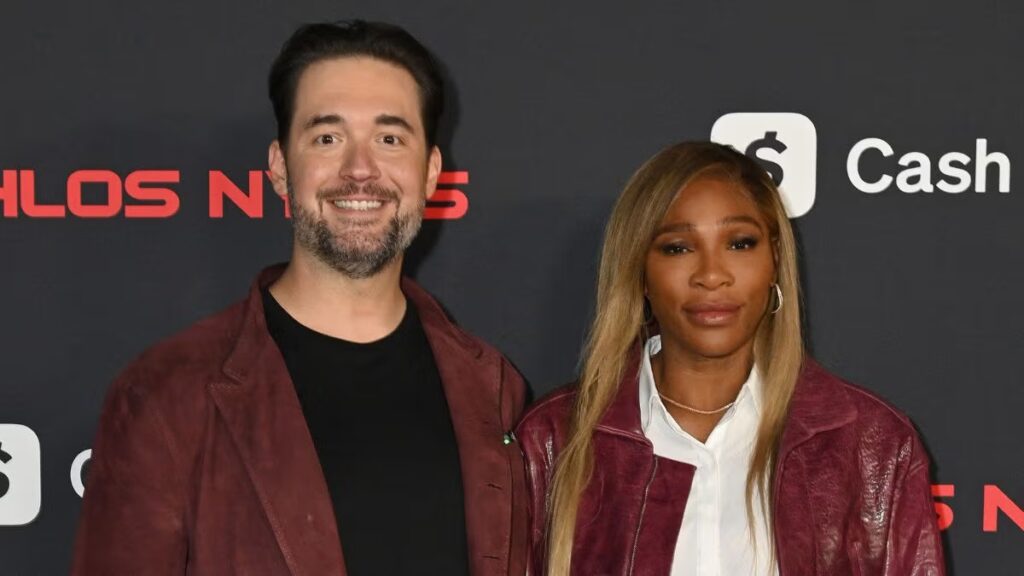
Reddit co-founder Alexis Ohanian spoke up about that UFC fighter’s controversial Michelle Obama comment
Analysis Methodology
This narrative analysis was generated using the CoDataLab Global Intelligence Engine. Our proprietary AI scans thousands of cross-border sources to identify sentiment patterns, framing techniques, and potential media bias. While AI provides the data-driven foundation, our objective is to empower readers with additional context beyond the standard headline.The content displayed above is a structured summary designed for rapid information processing. For the full original report, please visit the source outlet.More Coverage
Discussion
"michelle obama"
Reddit co-founder Alexis Ohanian spoke up about that UFC fighter’s controversial Michelle Obama comment

Stephen A. Smith rips Trump over silence on UFC fighter's Michelle Obama remark

Alexis Ohanian Denounces ‘Vile’ Michelle Obama Insult After Attending UFC White House Event