Today in News History
On June 19, several notable moments in the history of News stand out. In 1896, Rajani Palme Dutt, English journalist and politician (died 1974) was born. In 1956, Thomas J. Watson, American businessman (born 1874) passed away. In 1967, Bjørn Dæhlie, Norwegian skier and businessman was born. In 1974, Doug Mientkiewicz, American baseball player, coach, and manager was born. In 1988, Gladys Spellman, American lawyer and politician (born 1918) passed away. In 2001, Stanley Mosk, American lawyer, jurist, and politician (born 1912) passed away. In 2004, Clayton Kirkpatrick, journalist and newspaper editor (born 1915) passed away. In 2009, Mass riots involving over 10,000 people and 10,000 police officers break out in Shishou, China, over the dubious circumstances surrounding the death of a local chef. In 2012, WikiLeaks founder Julian Assange requests asylum in London's Ecuadorian Embassy for fear of extradition to the US after publication of previously classified documents including footage of civilian killings by the US army. In 2018, The 10,000,000th United States Patent is issued. Together, these milestones provide historical context for today's news news and ongoing narratives.
What if the office is actually a workplace perk?
Narrative Analysis: Plain Folks
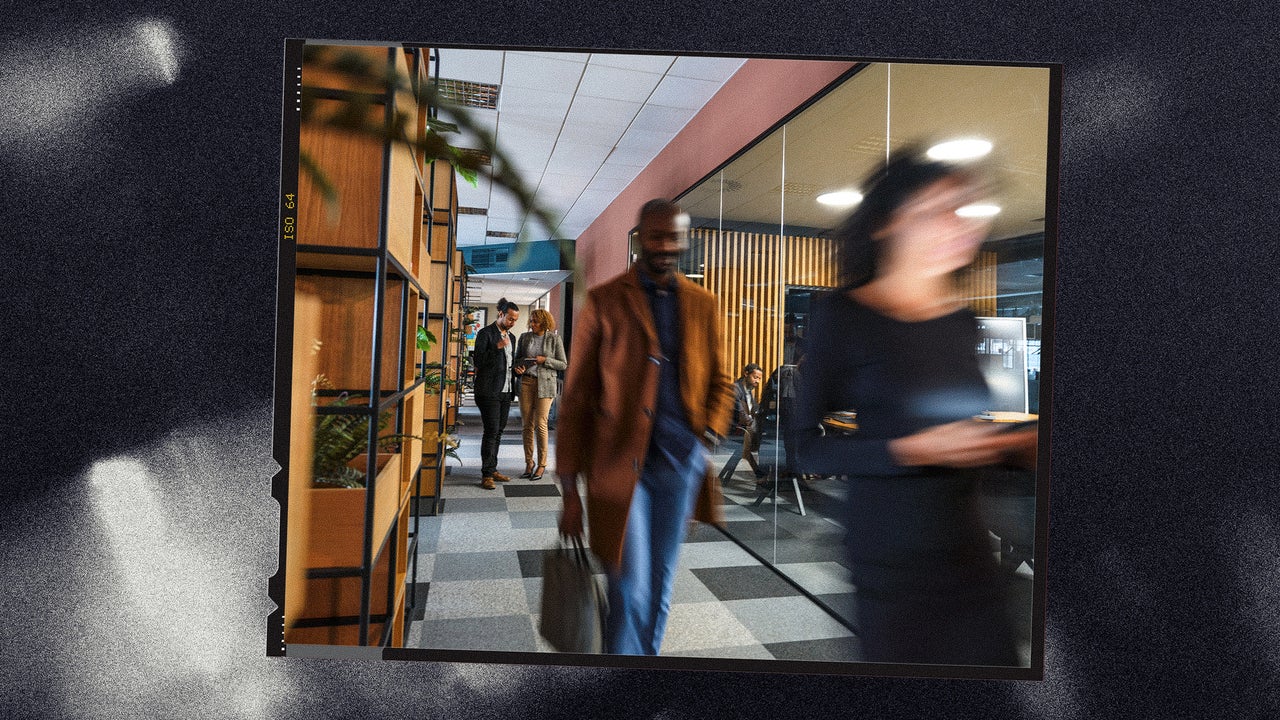
In the past few years, job listings have increasingly touted remote or partially remote work alongside other perks like gym memberships and childcare benefits. The assumption is baked in: employees prefer remote work. It implies that companies that care about employee well-being give them the freedom to work from home. But the tide is shifting. I heard a term recently that made me chuckle: FOMOW. Fear of missing out at work. Professionals, and Gen Z in particular, are feeling the drawbacks of not going to the office. Nearly half of Gen Z and 30 of millennials reported that office working increased their quality of life, according to one study. As a business owner, I’ve seen the benefits of working in the office, beyond quality of life—for learning, collaboration, and more. What’s more, it’s an investment in our employees’ careers and growth. The leaders getting in-office work right aren’t just reopening offices—they’re rethinking what those offices are for and how to frame policies for employees. Here’s how. Shifting the narrative from mandate to value proposition The pandemic spurred a global proliferation of remote work, but by 2024, a survey of 764 companies that were fully remote during the pandemic found that 87 were returning to the office by 2025: 64 already had. Nowadays, some companies compromise with a 60 in-office policy, and others wait to see how top talent navigates the market—whether they’re willing to accept fully in-office roles. Essentially, companies follow employees’ lead. But I think this does a disservice to professionals. It treats working in the office as a punishment rather than a value proposition. The most effective return-to-office strategies flip the script. They position the workplace as a high-value environment employees can and should choose to engage with, not one they’re required to endure. They frame working in the office as a perk rather than a mandate. The narrative surrounding your company’s return-to-office policy can have a powerful effect on employees’ perspectives. The most successful companies emphasize the value for employees and their growth. The question becomes: How can companies make that value tangible? Companies that have successfully navigated the transition don’t simply tell workers to come back—they articulate what employees gain from being there. Rebuilding the invisible infrastructure of work Thanks to research published in Nature Human Behaviour, we know that remote work tends to hurt collaboration and connection—employees were less likely to collaborate in groups than when they were in the office. Remote workers became more siloed. They exchanged less information. The researchers concluded that the long-term implications were decreased productivity and innovation among information workers. It makes sense. Communication simply isn’t as fluid when it must be scheduled via a Zoom call or Google Meet. Spontaneous interactions, informal mentorship, and meaningful yet casual trust-building moments slip away when work is fully remote. But they can boomerang back by returning to the office. Leaders who want to bring employees back with enthusiasm can reimagine offices as hubs for collaboration, creativity, and effective decision-making—and make those benefits crystal clear. Take this statement from Dell CEO Michael Dell: “What we’re finding is that for all the technology in the world, nothing is faster than the speed of human interaction. A 30-second conversation can replace an email back-and-forth that goes on for hours or even days.” Or this note in a staff email from Microsoft HR leader Amy Coleman: “If you reflect on our history, the most meaningful breakthroughs happen when we build on each other’s ideas together, in real time.” Outline the benefits that matter to your organization, and it will draw talent that cares about the same. Making in-person time intentional While the interpersonal connections that occur at the office are essential to an engaged workforce, the value of focused, individual work can’t be given short shrift. It matters just as much. The most effective leaders don’t treat office attendance as a blanket requirement. Instead, they define what in-person time is for—sharing ideas and information, and building relationships. One way to reinforce that message is by designating shared spaces for tasks that require collaboration, such as brainstorming, planning sessions, onboarding, and high-stakes decision-making. At Jotform, for example, our cross-functional teams have shared workspaces with whiteboards, big desks, space to stretch out, and doors that close. But we also have designated areas for individual work, where employees can shut out the noise, literal and figurative, and focus on tasks that demand quiet, independent thinking. Building a workplace that encourages collaboration while giving employees the autonomy to carve out time for individual work strikes the balance that makes the office a comfortable, effective, and productive place to work. The office is no longer the default setting for work. Instead, it is a deliberate tool that supports both work that benefits from being together and tasks that demand being alone.
Narrative Intelligence Brief
This article was published by Fast Company, a source frequently categorized with a lean left bias based in United States of America. Our narrative intelligence engine continuously monitors coverage from this outlet to track framing, bias, and rhetorical patterns. In this specific piece, our systems detected the potential use of the "Plain Folks" technique. This narrative approach is often used to shape reader perception by highlighting specific emotional or rhetorical angles. By understanding the editorial perspective of Fast Company, readers can better contextualize the information presented and compare it across our broader media matrix to find the real narrative.
More from Fast Company
June 19, 2026
Fable 5 crossed a line the world was not ready for
June 18, 2026
How this street duck became Mexico’s unofficial World Cup mascot
June 18, 2026
Can ‘Applied Creativity’ be the next ‘Design Thinking?’
June 18, 2026
Why were Waymo cars driving into active construction zones?
June 18, 2026
Reddit cofounder Alexis Ohanian speaks up about that UFC fighter’s controversial Michelle Obama comment
Reliability Insights
P
Technique: Plain Folks
System analysis detected use of specific narrative techniques in this piece.Analysis Methodology
This narrative analysis was generated using the CoDataLab Global Intelligence Engine. Our proprietary AI scans thousands of cross-border sources to identify sentiment patterns, framing techniques, and potential media bias. While AI provides the data-driven foundation, our objective is to empower readers with additional context beyond the standard headline.The content displayed above is a structured summary designed for rapid information processing. For the full original report, please visit the source outlet.More Coverage
Discussion