Today in News History
On June 25, several notable moments in the history of News stand out. In 1866, Eloísa Díaz, Chilean doctor and Chile's first female physician (died 1950) was born. In 1935, Larry Kramer, American author, playwright, and activist, co-founded Gay Men's Health Crisis (died 2020) was born. In 1941, World War II: The Continuation War between the Soviet Union and Finland, supported by Nazi Germany, began. In 1943, Carly Simon, American singer-songwriter was born. In 1975, Michele Merkin, American model and television host was born. In 1981, Microsoft is restructured to become an incorporated business in its home state of Washington. In 2011, Annie Easley, American computer scientist and mathematician (born 1933) passed away. In 2014, Ana María Matute, Spanish author and academic (born 1925) passed away. In 2015, Nerses Bedros XIX Tarmouni, Egyptian-Armenian patriarch (born 1940) passed away. In 2016, Adam Small, South African writer of apartheid-period (born 1936) passed away. Together, these milestones provide historical context for today's news news and ongoing narratives.
This startup is using AI to close gaps in women’s healthcare
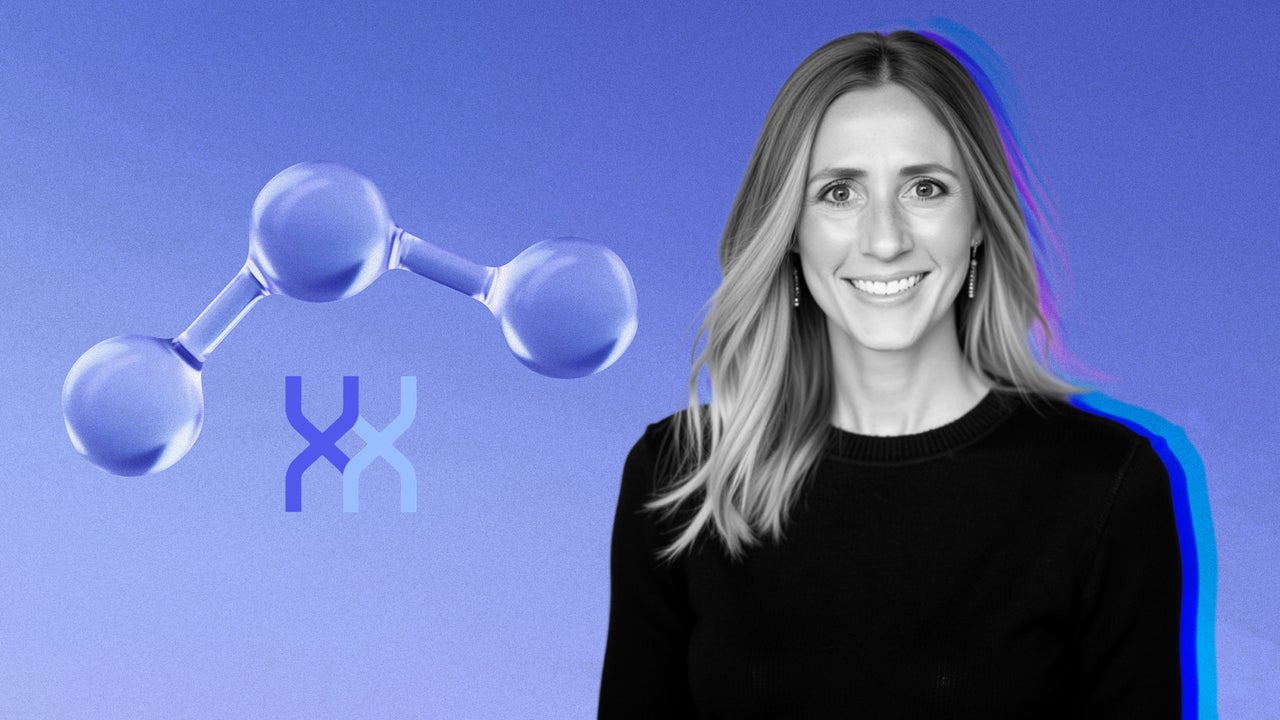
When Kelly Lacob was 14 years old, her mother was diagnosed with ovarian cancer. After 14 years in remission, the cancer returned during Lacob’s first year at Stanford Graduate School of Business. She graduated and moved home to care for her mother full time, becoming her primary caregiver. The experience gave her a close view of the gaps in women’s health care. “Even when we have access to great quality healthcare, we still have so many questions of what should we be asking the doctor,” says Lacob. “‘How do we know about the latest emergent research?’ ‘What else are you doing to support my mother’s health?’” The experience also pointed Lacob to a larger problem. Women’s health remains underfunded and underrepresented, with research suggesting that it accounts for only 6 of private health care investment. That gap has slowed scientific progress and left many women struggling for diagnoses. [Photo: Xella Health] Two and a half years ago, the biotechnology executive Adriana Dantas approached Lacob with an idea for a company that could enable earlier detection of conditions affecting women. Lacob was immediately interested. “Over the next few months, what we ended up doing was, we looked at my mother’s healthcare journey and we said, ‘What are the ways where women’s health could be dramatically improved?'” says Lacob. Lacob, Dantas, and Jesus Ching, another biosciences executive, went on to found Xella Health, which launched Wednesday morning and is available in every state except New York and New Jersey. The company hopes to expand into those states by 2027. An AI-powered precision health platform built exclusively for people with XX chromosomes, Xella Health is backed by 4.7 million in funding from investors including Precursor Ventures, Capital F, and Ulu Ventures. “[We wanted to] make precision healthcare as accessible to as many women as possible, which right now, is so exclusive and elite,” Lacob says. Xella Health uses proprietary artificial intelligence to analyze billions of data points across clinical inputs and multilayered biomarkers, with the goal of detecting more than 130 conditions that affect women. The platform most commonly looks for polyendocrine metabolic ovarian syndrome, perimenopause, and endometriosis. The AI operates in two main areas: diagnostics and generative AI. On the diagnostic side, it maps relationships between biomarkers, identifies what may be regulating them, and analyzes how they affect other biomarkers in the body. Rather than focusing on individual biomarkers, as traditional lab tests often do, Xella Health looks at what the entire biological system is indicating. The platform analyzes approximately 100 biomarkers, along with health history, life stage, and female-specific reference ranges. “By moving beyond isolated lab values and toward whole-system pattern recognition, we’re helping make women’s healthcare earlier, more personalized, and more precise,” says Lacob. “We then layer on clinical guidelines, peer-reviewed research, and expert-developed care pathways to provide personalized recommendations designed to support earlier detection and more informed care.” On the generative AI side, patients can enter previous health data into the system, which can integrate and interpret that information, then present it back to patients in a way that helps explain what it means. Xella Health says it complies with the Health Insurance Portability and Accountability Act, and patient data is never sold to third parties or used for advertising. Members can request deletion of their account and all associated data at any time. The company’s broader goal is to provide women with clarity through advanced testing paired with longitudinal care, a model that is typically available only through exclusive and expensive practices. Although Xella Health has a 15,000-person waiting list, prospective members are encouraged to sign up. Members begin by completing a questionnaire and scheduling a blood draw at a local partner lab. Results are processed through Xella Health’s dry lab—which is federally certified and accredited by the College of American Pathologists—then translated into a personal health care roadmap. Members are paired with a certified telehealth physician to review findings and determine immediate clinical action plans. An annual membership costs 499 and is eligible for Flexible Spending Accounts and Health Savings Accounts. The membership includes access to the health platform, testing, personalized reports with clinical and integrative health recommendations, and asynchronous messaging with a dedicated clinical team. Additional screenings are available for an extra cost, including deeper fertility and perimenopausal insights, as well as individual timelines. “One of the things that’s just really exciting is healthcare for women is going to look so different in the next 12, 24 months,” Lacob says. “Making sure that women don’t feel gaslit anymore, that they have a trusted community, trusted source of truths where they can go to.”
Narrative Intelligence Brief
This article was published by Fast Company, a source frequently categorized with a lean left bias based in United States of America. Our narrative intelligence engine continuously monitors coverage from this outlet to track framing, bias, and rhetorical patterns. Our initial algorithmic scan of this specific piece did not flag high-confidence rhetorical techniques, suggesting a generally straightforward reporting style or neutral framing. By understanding the editorial perspective of Fast Company, readers can better contextualize the information presented and compare it across our broader media matrix to find the real narrative.
More from Fast Company
June 25, 2026
The surprising Apple product that was spared from today’s price hikes
June 25, 2026
Meta reverses decision to reassign employees to AI training roles
June 25, 2026
A new national parks policy is drawing backlash after a deadly weekend
June 25, 2026
New data reveals the surprising places Americans are booking for July 4
June 25, 2026
Supreme Court allows Trump administration to block asylum seekers at the U.S.-Mexico border
Analysis Methodology
This narrative analysis was generated using the CoDataLab Global Intelligence Engine. Our proprietary AI scans thousands of cross-border sources to identify sentiment patterns, framing techniques, and potential media bias. While AI provides the data-driven foundation, our objective is to empower readers with additional context beyond the standard headline.The content displayed above is a structured summary designed for rapid information processing. For the full original report, please visit the source outlet.More Coverage
Discussion
"cup"
PODCAST: Is France prepared to face more hellish heatwaves and why are the French ruling the World Cup

Kevin Taylor blasts on Djed Spence after controversial Thomas Partey handshake snub incident

Energy crisis continues as households trapped in £4.79BILLION debt with bill hike only days away