Today in News History
On June 25, several notable moments in the history of News stand out. In 1910, The United States Congress passes the Mann Act, which prohibits interstate transport of women or girls for "immoral purposes"; the ambiguous language would be used to selectively prosecute people for years to come. In 1924, William J. Castagna, American lawyer and judge (died 2020) was born. In 1944, Lucha Reyes, Mexican singer and actress (born 1906) passed away. In 1948, The United States Congress passes the Displaced Persons Act to allow World War II refugees to immigrate to the United States above quota restrictions. In 1954, Sonia Sotomayor, American lawyer and jurist, Associate Justice of the Supreme Court of the United States was born. In 1960, Cold War: Two cryptographers working for the United States National Security Agency left for vacation to Mexico, and from there defected to the Soviet Union. In 1995, Warren E. Burger, Fifteenth Chief Justice of the United States (born 1907) passed away. In 1998, In Clinton v. City of New York, the United States Supreme Court decides that the Line Item Veto Act of 1996 is unconstitutional. In 2012, Shigemitsu Dandō, Japanese academic and jurist (born 1913) passed away. In 2022, The prime minister of Bangladesh, Sheikh Hasina inaugurates the longest bridge of Bangladesh, Padma Bridge. Together, these milestones provide historical context for today's news news and ongoing narratives.
Supreme Court allows Trump administration to block asylum seekers at the U.S.-Mexico border
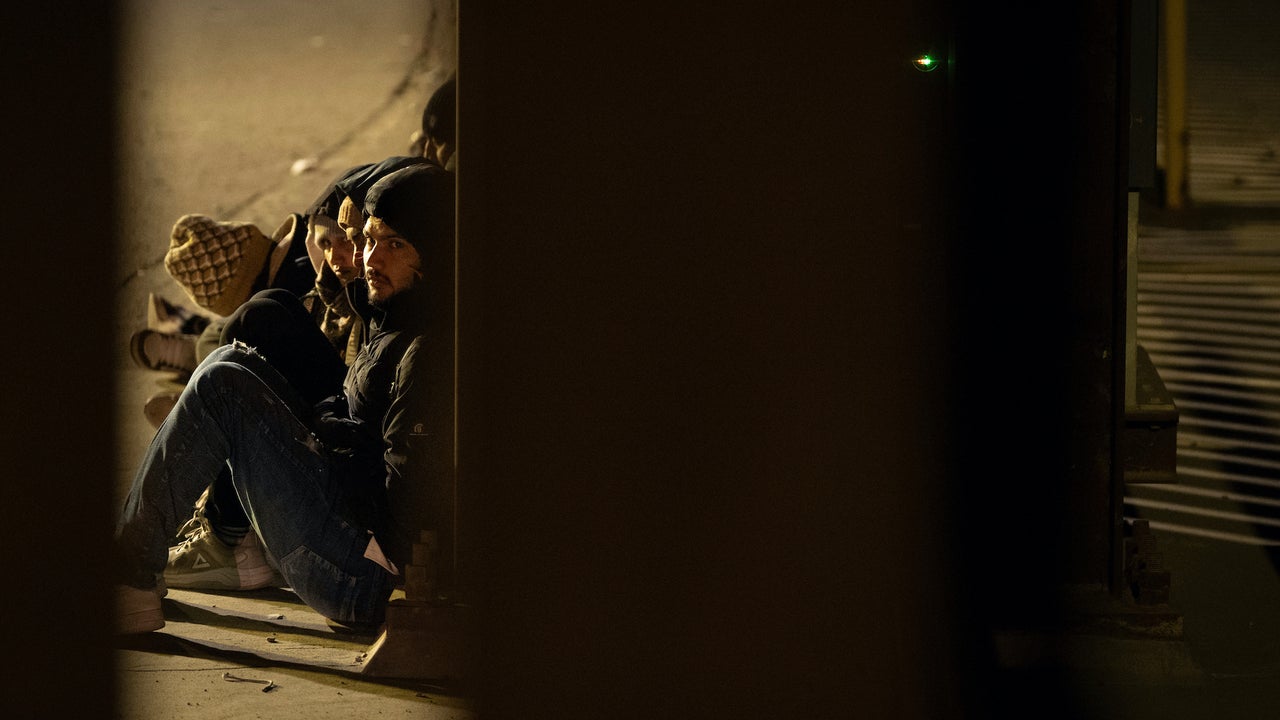
The Supreme Court cleared the way Thursday for the Trump administration to potentially revive an immigration policy once used to turn back migrants seeking asylum at the U.S.-Mexico border. The justices, in a 6-3 decision, overturned a lower court order blocking the practice that limited the number of people who could apply for asylum each day, first under the Obama administration and then expanded during President Donald Trump’s first term. Advocates said the tactic created a humanitarian crisis as thousands of people settled in unsafe makeshift shelters to await their turn. The Trump administration said it was necessary to deal with an increase of asylum seekers at the border. The policy is not in place now, though authorities have imposed other restrictions on asylum seekers. The Department of Homeland Security did not say if they plan to revive it, but applauded the ruling. “This decision opens up an important tool to continue securing our southern border,” said James Percival, the agency’s general counsel. The administration argued that metering is a critical tool that’s been used by presidents of both parties and should stay available. Federal attorneys say people turned away at the border could come back later, though lines were thousands of people long when the policy was in place before. The case is one of several immigration suits the court is considering this term, including Trump’s push to end the restriction of birthright citizenship. The high court also allowed his administration to end deportation for migrants fleeing instability and armed conflict on Thursday. Under federal law, migrants who arrive in the U.S. must be able to apply for asylum and be screened for fear of persecution in their home countries. The Justice Department argued that people stopped by authorities haven’t arrived in the country, so immigration agents don’t have to let them apply. The court’s conservative majority agreed. “A guest does not arrive in a house when he knocks on the front door,” Justice Samuel Alito wrote. But attorneys for people seeking asylum say the law has long meant anyone arriving at a port of entry should be screened, and blocking arrivals disregards the nation’s ideals. Justice Sonia Sotomayor dissented from the bench, saying that the majority’s opinion “regrettably and tragically extinguishes the light of the torch of the Statue of Liberty.” In an unusual exchange, Alito voiced a response after she finished speaking. He expressed surprise that she had read her dissent out loud and defended his opinion by pointing out that the policy had been used during two presidential administrations. “I won’t add anything more to that,” Alito said. Metering was first used under President Barack Obama when large numbers of Haitians appeared at the main crossing to San Diego from Tijuana, Mexico. It was expanded to all border crossings from Mexico during Trump’s first term in the White House. It ended in 2020 when the government introduced greater restrictions during the coronavirus pandemic, and President Joe Biden formally rescinded it in 2021. The same year, a California-based federal judge found that metering violated the asylum seekers’ rights and the law requiring screening. A divided appeals court panel affirmed the ruling but nearly half of judges on the full San Francisco-based court voted to rehear it, a strong signal that might have caught the attention of the Supreme Court. Attorneys with the group Democracy Forward first brought the case, and condemned Thursday’s ruling. “We are disappointed in the Court’s decision and call on all Americans to demand that our government protect the families the Court today decided to keep in harm’s way,” said President and CEO Skye Perryman. They represented the group Al Otro Lado, whose executive director said the decision would mean a “hardening of borders to keep out the most vulnerable,” that is “sure to result in many more lives lost.” U.S. law allows people seeking refuge to apply for asylum once they are on American soil, regardless of whether they came legally. To qualify for asylum, they must show a fear of persecution in their homeland for specific reasons, like race, religion, nationality, membership in a particular social group or political opinion. People who are eventually granted asylum can’t be deported. They can legally work, bring in immediate family, apply for legal residency and seek citizenship. —Lindsay Whitehurst, Associated Press Associated Press writers Fatima Hussein and Rebecca Santana contributed to this report.
Narrative Intelligence Brief
This article was published by Fast Company, a source frequently categorized with a lean left bias based in United States of America. Our narrative intelligence engine continuously monitors coverage from this outlet to track framing, bias, and rhetorical patterns. Our initial algorithmic scan of this specific piece did not flag high-confidence rhetorical techniques, suggesting a generally straightforward reporting style or neutral framing. By understanding the editorial perspective of Fast Company, readers can better contextualize the information presented and compare it across our broader media matrix to find the real narrative.
More from Fast Company
June 25, 2026
The surprising Apple product that was spared from today’s price hikes
June 25, 2026
California launches a statewide tracker to monitor AI-related job loss
June 25, 2026
Meta reverses decision to reassign employees to AI training roles
June 25, 2026
A new national parks policy is drawing backlash after a deadly weekend
June 25, 2026
New data reveals the surprising places Americans are booking for July 4
Analysis Methodology
This narrative analysis was generated using the CoDataLab Global Intelligence Engine. Our proprietary AI scans thousands of cross-border sources to identify sentiment patterns, framing techniques, and potential media bias. While AI provides the data-driven foundation, our objective is to empower readers with additional context beyond the standard headline.The content displayed above is a structured summary designed for rapid information processing. For the full original report, please visit the source outlet.More Coverage
Discussion
"trump"
Deadly Cost of Trump’s ICE Crackdown Revealed

Anti-ICE Protestors in Texas Given Harsh, Excessive Prison Sentences

Commies taking over NYC is not shocking when you see how pathetic voter turnout was