Today in News History
On June 29, several notable moments in the history of News stand out. In 1849, John Hunn, American businessman and politician, 51st Governor of Delaware (died 1926) was born. In 1955, Charles J. Precourt, American colonel, pilot, and astronaut was born. In 1963, Judith Hoag, American actress and educator was born. In 1982, O. J. Hogans, American sprinter was born. In 1995, Space Shuttle program: STS-71 Mission (Atlantis) docks with the Russian space station Mir for the first time. In 1999, Karekin I, Syrian-Armenian patriarch (born 1950) passed away. In 2007, Apple Inc. releases its first mobile phone, the iPhone. In 2009, Joe Bowman, American, target shooter and boot-maker (born 1925) passed away. In 2015, Hisham Barakat, Egyptian lawyer and judge (born 1950) passed away. In 2020, Carl Reiner, American actor, director, producer, and screenwriter (born 1922) passed away. Together, these milestones provide historical context for today's news news and ongoing narratives.
SpaceX is joining the Nasdaq-100 index: Timeline, date, impact on QQQ, 401(k) plans, and more
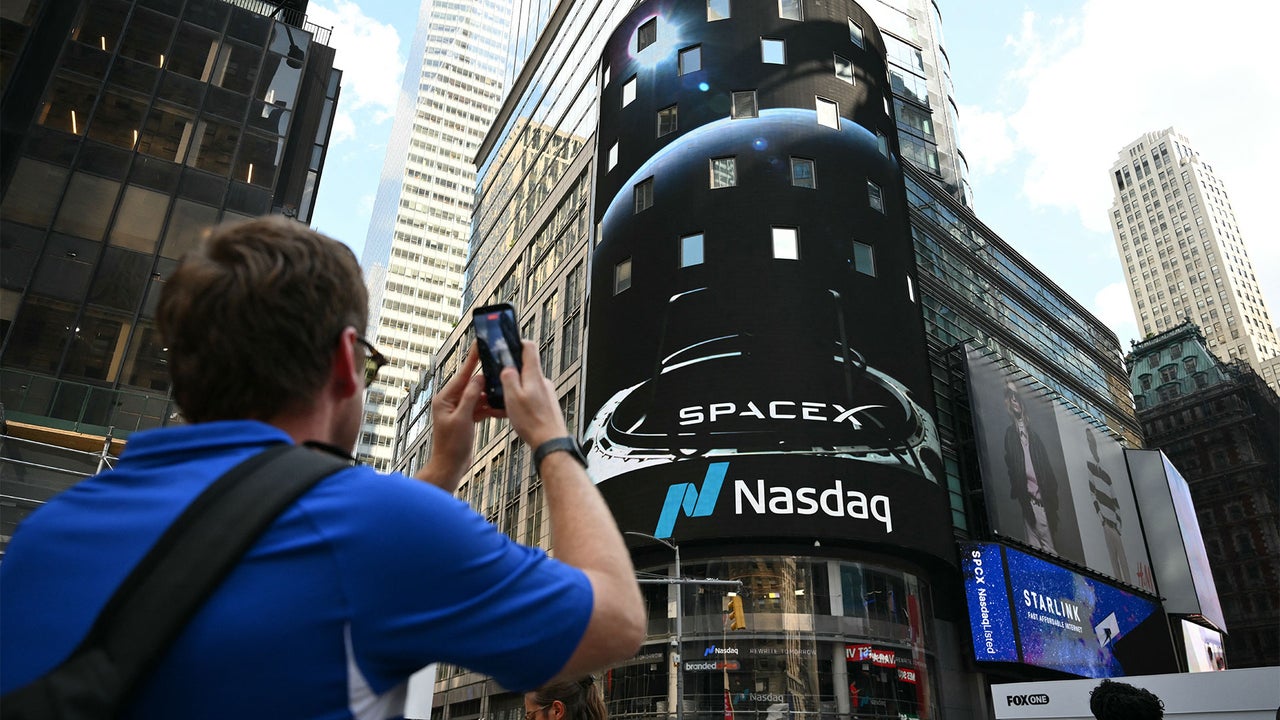
It has hardly been two weeks since Space Exploration Technologies Corp. (Nasdaq: SPCX), better known as SpaceX, went public, but the Elon Musk-led company is already poised to achieve another significant stock market milestone. Next month, it will be added to the Nasdaq 100. Here’s what that means for the company—and for you. What’s happened? On June 26, just 15 days after SpaceX made its stock market debut on June 12, Nasdaq announced that the space and AI company will be added to the institution’s closely watched Nasdaq-100 Index. And that 15-day timing? It’s fast, but it’s not exactly a surprise. In May, Nasdaq changed its rules for inclusion in the Nasdaq-100. Previously, a newly public company would take months or more before joining. But under the new rules, the inclusion window was reduced to just 15 days from its IPO if the company ranks among the top 40 Nasdaq-100 companies by market cap. While Nasdaq never specifically mentioned SpaceX when announcing its new Nasdaq-100 timeline rules, many in the investing sphere feel the company did so to court Elon Musk and get him to list SpaceX’s shares on Nasdaq rather than the rival New York Stock Exchange (NYSE). What is the Nasdaq-100? The Nasdaq-100 is an index of “100 fundamentally sound and innovative” companies that are traded on the Nasdaq, according to the stock exchange itself. These companies cover a range of industries, including tech, healthcare, utilities, and consumer goods. But one notable exclusion is financial services firms, as these companies don’t fit under the “innovative” banner. Nasdaq periodically adds companies to the Nasdaq-100, the most recent was Sandisk Corporation (Nasdaq: SNDK), which joined the index on April 20 under the old rules. But when one company joins, another must leave, because the Nasdaq-100 is limited to 100 companies. When Sandisk joined, Atlassian Corporation (Nasdaq: TEAM) was ejected from the Nasdaq-100. Given that the Nasdaq-100 focuses on innovative companies, it’s no surprise that many of its constituents are also the largest tech companies on the planet. They include include: Apple, Adobe, Amazon, Alphabet, Intel, Microsoft, Netflix, and, yes, Elon Musk’s other public company, Tesla. What is the benefit of being included on the Nasdaq-100? The first benefit is prestige. If your company is included in the Nasdaq-100, you get bragging rights and can call yourself a “Nasdaq-100 company.” And since the Nasdaq-100 tracks the most “innovative” companies on the Nasdaq, you get one of the best “innovative” stamps of approval there is. But the main benefit is financial. Many mutual funds and exchange-traded funds (ETFs) are designed to mirror the Nasdaq-100. Popular ETFs that mirror the Nasdaq-100 include Invesco QQQ Trust (QQQ) and iShares Nasdaq 100 ETF. And nearly all the major brokerage firms offer mutual funds that mirror the Nasdaq-100, including Fidelity, Schwab, and Vanguard. When a company is added to the Nasdaq-100, these ETFs and mutual funds need to buy that company’s shares—in the ratio that the company accounts for within the index—and include them in their ETFs and mutual funds. Retail investors, in turn, buy shares in these ETFs and mutual funds in order to diversify their portfolios—allowing them to own stock in every Nasdaq-100 without having to buy individual shares in 100 companies. So when a company is added to the Nasdaq-100, the day before it officially is included, every mutual fund and ETF that tracks the index needs to buy shares. And when a company’s shares are bought in large numbers, that company’s stock price tends to rise—thus, the financial benefit to being included in the Nasdaq-100. Now for the bad news (for retail investors) Under Nasdaq’s old rules, companies often had to wait many months before they were even eligible to be included in the Nasdaq-100. This lengthy timeframe was in place to reduce the potential for volatility in the index. While many companies see their share prices spike after an IPO, that share price can fluctuate wildly once the initial excitement for the stock wears off, or lockout periods expire. But under the new rules that let a company join the Nasdaq-100 after only 15 days post IPO, that volatility buffer is lost. And that’s bad news for retail investors and those with pensions. Many 401(k) managers and pension funds invest in Nasdaq-100 mutual funds and ETFs, and if SpaceX tanks six months from now, it could bring down the value of people’s retirement accounts. SpaceX is the first company to be included in the Nasdaq-100 under the new rules. SpaceX Nasdaq-100 timeline SpaceX isn’t part of the Nasdaq-100 yet, but it will be soon. Here’s the timeline of SpaceX’s journey to the Nasdaq-100: May 1, 2026: Nasdaq’s new Nasdaq-100 inclusion rules go into effect, allowing a company to join the Nasdaq-100 after just 15 trading days if it meets other requirements. June 12, 2026: SpaceX begins trading on the Nasdaq, kicking off the 15-day clock. June 26, 2026: Nasdaq confirms SpaceX has met all of the requirements to join the Nasdaq-100. July 6, 2026: This is the day, after market close, that ETFs and mutual funds will have to buy SpaceX shares to include in their funds. July 7, 2026: SpaceX joins the Nasdaq-100, and if you own ETFs like QQQ or mutual funds that track the Nasdaq-100, you now own a stake in SpaceX, for better or worse.
Narrative Intelligence Brief
This article was published by Fast Company, a source frequently categorized with a lean left bias based in United States of America. Our narrative intelligence engine continuously monitors coverage from this outlet to track framing, bias, and rhetorical patterns. Our initial algorithmic scan of this specific piece did not flag high-confidence rhetorical techniques, suggesting a generally straightforward reporting style or neutral framing. By understanding the editorial perspective of Fast Company, readers can better contextualize the information presented and compare it across our broader media matrix to find the real narrative.
More from Fast Company
June 29, 2026
Samsung and SK Hynix announce a joint $518 billion investment in artificial intelligence
June 29, 2026
How newly minted millionaires could reshape San Francisco home design
June 29, 2026
Comcast continues to unwind one of the most earth-shattering media mergers in history
June 29, 2026
A genome-first multiomic approach to diagnosis
June 29, 2026
Governance isn’t a drag on competitiveness. It’s the source
Analysis Methodology
This narrative analysis was generated using the CoDataLab Global Intelligence Engine. Our proprietary AI scans thousands of cross-border sources to identify sentiment patterns, framing techniques, and potential media bias. While AI provides the data-driven foundation, our objective is to empower readers with additional context beyond the standard headline.The content displayed above is a structured summary designed for rapid information processing. For the full original report, please visit the source outlet.More Coverage
Discussion