Today in News History
On June 29, several notable moments in the history of News stand out. In 1768, Vincenzo Dimech, Maltese sculptor (died 1831) was born. In 1942, Paul Troje, German politician, Mayor of Marburg (born 1864) passed away. In 1946, Egon von Fürstenberg, Swiss fashion designer (died 2004) was born. In 1950, Bobby London, American illustrator was born. In 1956, David Burroughs Mattingly, American illustrator and painter was born. In 1956, Nick Fry, English economist and businessman was born. In 1957, Michael Nutter, American politician, 98th Mayor of Philadelphia was born. In 2007, Joel Siegel, American journalist and critic (born 1943) passed away. In 2013, Margherita Hack, Italian astrophysicist and author (born 1922) passed away. In 2018, Steve Ditko, American comic writer and illustrator (born 1927) passed away. Together, these milestones provide historical context for today's news news and ongoing narratives.
How newly minted millionaires could reshape San Francisco home design
Narrative Analysis: Plain Folks
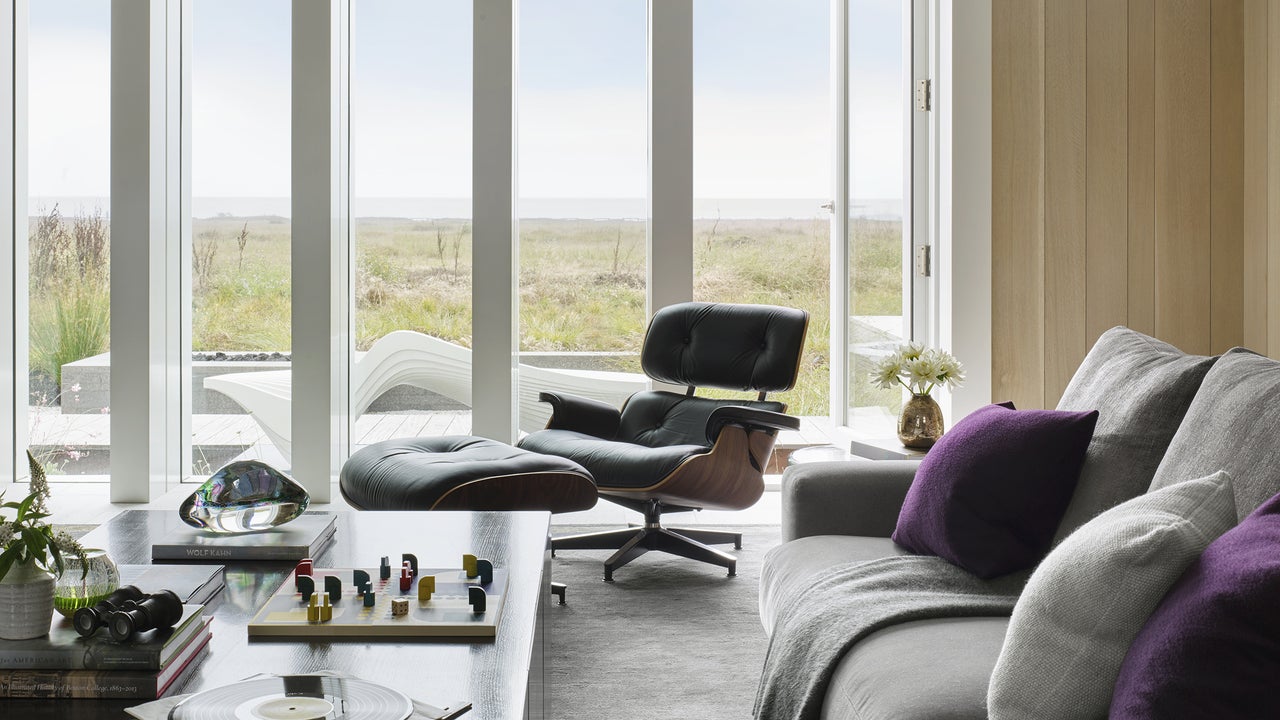
Cold plunges, circadian lighting, and robot closets aren’t on the typical home renovation checklist. But then again, the once-in-a-generation wealth creation coming from the Bay Area’s new wave of tech companies going public offers a singular shift in San Franciscans’ net worth, and a window into how the tech elite define the dream home. The explosion of wealth that will follow a handful of history’s biggest initial public offerings is expected to reshape San Francisco and the Bay Area, with massive investments in new ideas, startups, and even philanthropic ventures. Space X’s massive IPO and upcoming IPOs from Anthropic and OpenAI could create 12,000 new multimillionaires, with a handful of people netting hundreds of millions, per The Washington Post. But this peak in the region’s boom-bust cycle of tech wealth generation will also provide a unique look at the interior design trends and housing amenities favored by artificial intelligence aristocrats. Realtors have circled IPO dates on their calendars—as well as the days, months after the post-IPO lockups, when stockholders can sell—as key moments in a busy year to come. Today, the Bay Area real estate market is in a frenzy. Home prices in San Francisco jumped 18 year over year, according to a report in March from the Compass real estate brokerage, with the average sale price breaking the 2 million barrier. Michael Williams, a realtor and broker for TurboHome, says that certain desirable zip codes and neighborhoods have seen a nearly 10 price gain in home prices every month. The market is moving so fast, potential buyers and sellers are using pending sales to produce price comps. “Everything is now very hyperlocal,” Williams says. “And this may be the slow part of the market, since the IPO money hasn’t really hit yet.” A Gilded Age for the wellness set In conversations with real estate agents, home tech firms, decorators and contractors, a picture of the trends and amenities that will reshape the San Francisco housing market has become clear. The focus is on quality and utility, especially in terms of security and wellness. Broadly speaking, this isn’t a Gilded Age—the sense is that new or renovated homes won’t be gaudy and flashy. [Photo: Aaron Leitz/MatPel Builders] Instead, this will be homes with elaborate spas, seamless technology that blends into the background, and design that recreates high-end hospitality. For tech execs who spend significant parts of the year on the road and have the money to buy the best, a blurring of hotel and home makes sense. “They get out of their bed at the Four Seasons, and their feet touch the floor and the lights go on,” says Tom Catalano, a partner of Springpoint Group, which focuses on custom home building for high-end tech executives. “They want that at home.” Naming specific projects remains challenging. Many buyers in this cohort demand privacy and have designers sign nondisclosure agreements. In a change from recent years, some privacy-minded clients won’t allow contractors or builders to post finished projects to their portfolios, says Maor Greenberg, construction veteran and cofounder and CEO of Spacial, an AI-powered home design tool. But it’s likely that a lot of postpurchase renovations will be taking place. Williams says supply in hot neighborhoods like Inner Sunset will be severely constrained. He sees most buying taking place in the 1.5 million to 2.5 million range, typically older and outdated homes in emerging areas that need work to measure up to contemporary demands. “We tell buyers they need to make some compromises if they don’t want to pay 30 or 40 above asking price,” says TurboHome’s CEO, Ben Bear. The new luxury Right now, potential buyers or remodeling clients are likely talking to realtors, and perhaps architects, with the full wave of buying and then renovations to hit over the next year or so. Griffin Doninger, director of construction operations for MatPel Builders, says he’s seeing plans for many of these projects leaving the historic facades of existing San Francisco homes alone, due to preservation concerns, and instead building out and up, and in some cases, even adding more subterranean space. Catalano at Springpoint Group compares the last six months to 2016, when an acquisition frenzy from Meta, then known as Facebook, minted many newly rich homebuyers. He says it’s a perfect storm—pent-up investment frenzy, with many trying to diversify their wealth into physical assets; a resurgence of San Francisco from the post-pandemic doom loop; and the soon-to-hit AI IPO frenzy. [Photo: Matthew Millman/MatPel Builders] This IPO wave comes at a time when the idea of luxury has shifted, says Ian Yang, founder and CEO of the high-end lighting manufacturer Gantri. What he’s seeing is a rise of the creative class—or perhaps of people who want to see themselves as members of the creative class, valuing their interests, pursuits, and wellness. It’s about designing an optimized, enhanced life. “Time is the new luxury,” Catalano says. Wellness includes things like high-end lighting to mimic daylight. Elaborate spa features include cold plunges and saunas and massage rooms, with some starting to ask for more elaborate features like hammams (Turkish or Moroccan steam baths) that are taking up a substantial portion of the home. [Photo: Aaron Leitz/MatPel Builders] Greenberg at Spacial says the wellness demands carry over to elaborate water filtration systems and HEPA filters to see the homeowners through future wildfires and air-quality incidents. It’s part of a larger demand for control over the environment, he says. Some homeowners have spent 250,000 on lighting alone, seeking to adapt to circadian rhythms for health and eliminate harsh artificial illumination many say affect energy and wellness. “Wellness has become standard in home renovations,” MetPal’s Doninger says. “What you used to see at a resort is now what you’re seeing at home.” This trend has carried over to family time, including spending significantly more on kids’ rooms and amenities. “If I told you what some people are spending on treehouses and forts for kids, it would blow your mind,” Catalano says. [Photo: Matthew Millman/MatPel Builders] That family focus helps explain the interest in security. On top of all the new wealth that this cadre of buyers is now holding, recent high-profile home attacks, like the April molotov cocktail attack on OpenAI CEO Sam Altman’s Russian Hills home, have raised concerns. Buyers want shades that automatically close at night, and fences that block a pedestrian’s view of the home. Security systems go well beyond alarms and cameras. They can include resilience from worst-case scenarios. Greenberg is seeing owners look to add gas generators that, along with their Starlink internet connections, will allow them to stay powered and connected in case of an emergency. Some are factoring in closeness to hospitals as part of their home purchase decisions. Other potential buyers are looking at solutions still under development, says Yvonne McLaughlin, head of client satisfaction at Sauron, a local security startup that hasn’t made its offerings public, and aims to offer a comprehensive solution with round-the-clock surveillance, active deterrence, and in-market security teams. (Sauron also has an additional security team of former law enforcement and military members in Las Vegas in case of a severe disaster in San Francisco.) She says requests have come from relatively lower-profile tech workers coming into more wealth and feeling unprepared, from a security standpoint, and clients who are looking at larger estates and seeking a more sophisticated approach to technology and security. While there are plenty of high-tech touches within these homes—Catalano is overseeing his first project with a closet for storing and recharging humanoid robots—the overall trends aren’t favoring overtly elaborate smart homes. Despite, or maybe because of, a familiarity with tech, many of these clients aren’t asking for overly high-tech homes, or homes with very visible tech. Catalano says he’s even seeing requests for Faraday cages, structures that block electric signals and would render a room Wi-Fi and smartphone-free. “It’s weird. The Big Tech people are pretty analog,” he says. “They just don’t want Big Tech in their homes.”
Narrative Intelligence Brief
This article was published by Fast Company, a source frequently categorized with a lean left bias based in United States of America. Our narrative intelligence engine continuously monitors coverage from this outlet to track framing, bias, and rhetorical patterns. In this specific piece, our systems detected the potential use of the "Plain Folks" technique. This narrative approach is often used to shape reader perception by highlighting specific emotional or rhetorical angles. By understanding the editorial perspective of Fast Company, readers can better contextualize the information presented and compare it across our broader media matrix to find the real narrative.
More from Fast Company
June 29, 2026
Mars is changing M&M’s, Skittles, and Starburst this summer
June 29, 2026
Samsung and SK Hynix announce a joint $518 billion investment in artificial intelligence
June 29, 2026
Comcast continues to unwind one of the most earth-shattering media mergers in history
June 29, 2026
A genome-first multiomic approach to diagnosis
June 29, 2026
Governance isn’t a drag on competitiveness. It’s the source
Reliability Insights
P
Technique: Plain Folks
System analysis detected use of specific narrative techniques in this piece.Analysis Methodology
This narrative analysis was generated using the CoDataLab Global Intelligence Engine. Our proprietary AI scans thousands of cross-border sources to identify sentiment patterns, framing techniques, and potential media bias. While AI provides the data-driven foundation, our objective is to empower readers with additional context beyond the standard headline.The content displayed above is a structured summary designed for rapid information processing. For the full original report, please visit the source outlet.More Coverage
Discussion
"supreme court"
Samuel Alito’s outburst directed at Sonia Sotomayor is part of a troubling trend

The Supreme Court upholds Fed independence by saving Lisa Cook’s job—and also saves U.S. debt from a crisis

‘Irresponsible Escapade’: Alito Rips SCOTUS Majority in Ruling Involving Big Tech Data and a Bank Robbery