Today in News History
On July 5, several notable moments in the history of News stand out. In 1770, The Battle of Chesma between the Russian Empire and the Ottoman Empire begins. In 1886, Prince John Konstantinovich of Russia (died 1918) was born. In 1941, World War II: Operation Barbarossa: German troops reach the Dnieper river. In 1943, World War II: German forces begin a massive offensive against the Soviet Union at the Battle of Kursk, also known as Operation Citadel. In 1950, Korean War: Task Force Smith: American and North Korean forces first clash, in the Battle of Osan. In 1954, The BBC broadcasts its first daily television news bulletin. In 1962, The official independence of Algeria is proclaimed after an eight-year-long war with France. In 1982, Alexander Dimitrenko, Ukrainian-German boxer was born. In 1999, U.S. President Bill Clinton imposes trade and economic sanctions against the Taliban regime in Afghanistan. In 2012, The Shard in London is inaugurated as the tallest building in Europe, with a height of 310 metres (1,020 ft). Together, these milestones provide historical context for today's news news and ongoing narratives.
Putin and Trump discuss Ukraine, Iran in US Independence Day call
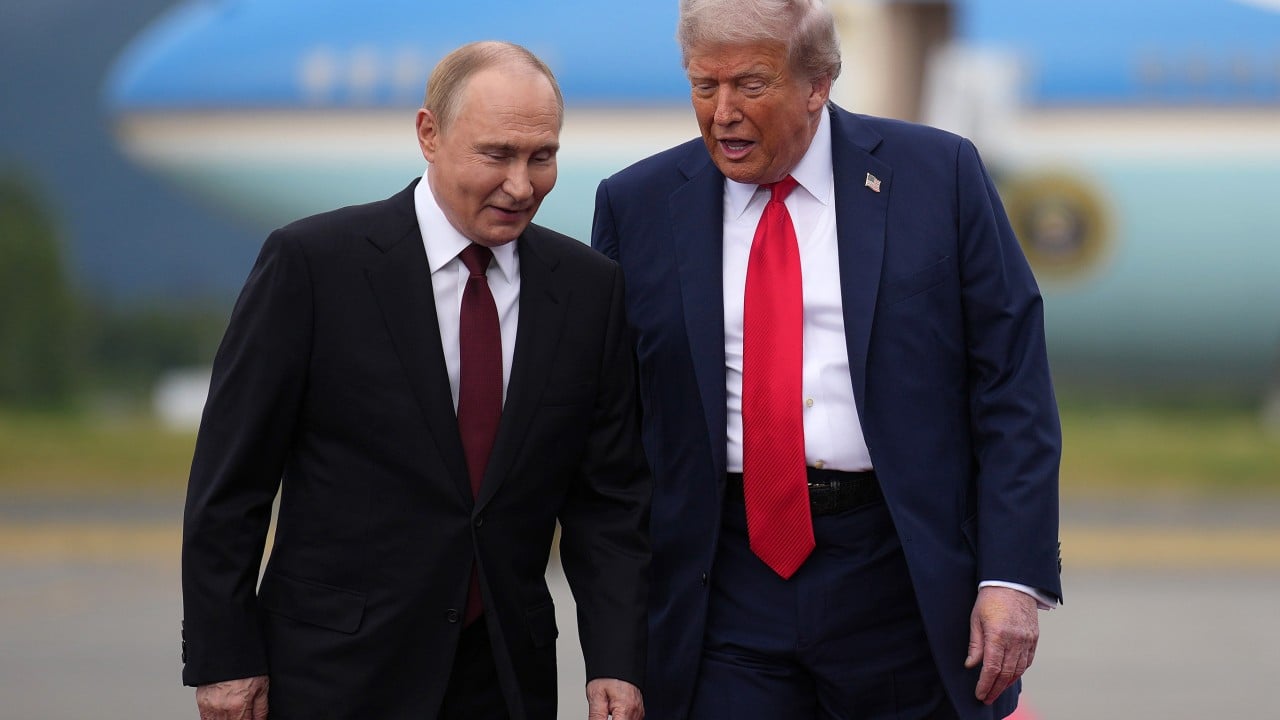
Russian President Vladimir Putin and US President Donald Trump discussed Ukraine and the coming Nato summit in Turkey in a phone call Saturday. Putin congratulated Trump on the 250th anniversary of US independence in the call that lasted 85 minutes, Kremlin foreign policy aide Yuri Ushakov said in an audio message to reporters. “The presidents naturally touched on the topic of a Ukrainian settlement, including in light of Trump’s upcoming participation in the Nato summit in Turkey on July 7-8,”...
Narrative Intelligence Brief
This article was published by South China Morning Post, a source frequently categorized with a lean left bias based in Hong Kong. Our narrative intelligence engine continuously monitors coverage from this outlet to track framing, bias, and rhetorical patterns. Our initial algorithmic scan of this specific piece did not flag high-confidence rhetorical techniques, suggesting a generally straightforward reporting style or neutral framing. By understanding the editorial perspective of South China Morning Post, readers can better contextualize the information presented and compare it across our broader media matrix to find the real narrative.
More from South China Morning Post
July 5, 2026
South Korea’s World Cup loss spurs anger over ‘cartel’ of elites, favouritism
July 5, 2026
How to manage China’s rise as a civilisational power
July 5, 2026
Why US and China are struggling to reach a consensus over future shape of relationship
July 5, 2026
Why Hong Kong students are heading to mainland China to intern
July 5, 2026
Asean monitors: ‘simply theatre’ in Thai-Cambodian narrative war?
Analysis Methodology
This narrative analysis was generated using the CoDataLab Global Intelligence Engine. Our proprietary AI scans thousands of cross-border sources to identify sentiment patterns, framing techniques, and potential media bias. While AI provides the data-driven foundation, our objective is to empower readers with additional context beyond the standard headline.The content displayed above is a structured summary designed for rapid information processing. For the full original report, please visit the source outlet.More Coverage
Discussion