Today in News History
On July 5, several notable moments in the history of News stand out. In 1594, Portuguese forces under the command of Pedro Lopes de Sousa begin an unsuccessful invasion of the Kingdom of Kandy during the Campaign of Danture in Sri Lanka. In 1833, Lê Văn Khôi along with 27 soldiers stage a mutiny taking over the Phiên An citadel, developing into the Lê Văn Khôi revolt against Emperor Minh Mạng. In 1950, Korean War: Task Force Smith: American and North Korean forces first clash, in the Battle of Osan. In 1987, Sri Lankan Civil War: The LTTE uses suicide attacks on the Sri Lankan Army for the first time. The Black Tigers are born and, in the following years, will continue to kill with the tactic. In 1987, Ji Chang-wook, South Korean actor was born. In 1997, Sri Lankan Civil War: Sri Lankan Tamil MP A. Thangathurai is shot dead at Sri Shanmuga Hindu Ladies College in Trincomalee. In 1997, A. Thangathurai, Sri Lankan Tamil lawyer and politician (born 1936) passed away. In 2004, The first direct Indonesian presidential election is held. In 2006, North Korea tests four short-range missiles, one medium-range missile and a long-range Taepodong-2. The long-range Taepodong-2 reportedly fails in mid-air over the Sea of Japan. In 2008, Hasan Doğan, Turkish businessman (born 1956) passed away. Together, these milestones provide historical context for today's news news and ongoing narratives.
Asean monitors: ‘simply theatre’ in Thai-Cambodian narrative war?
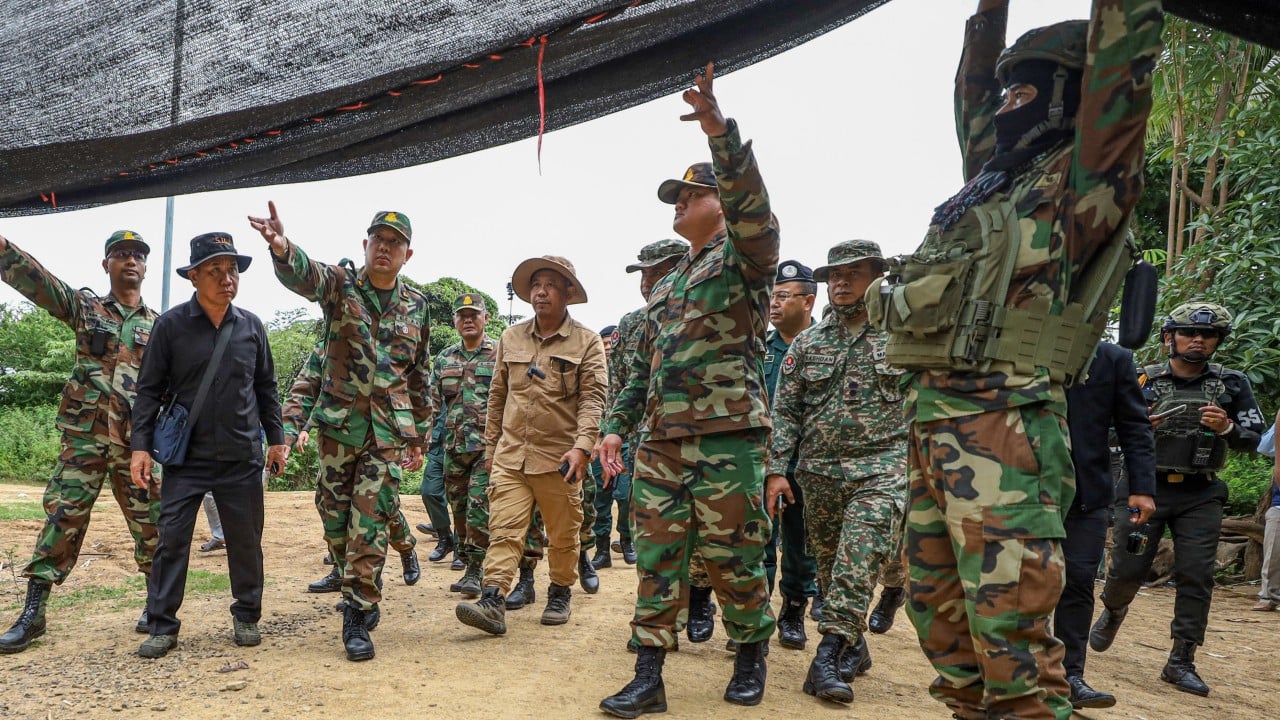
Asean military observers have now visited both sides of the Thai-Cambodian frontier, measuring damage and recording claims as Bangkok and Phnom Penh continue to trade allegations of ceasefire breaches following last year’s deadly clashes. In late June, a delegation from member states of the Association of Southeast Asian Nations fanned out across Thailand and Cambodia, escorted through contested ground and competing narratives. The fighting last year resulted in more than 100 military and...
Narrative Intelligence Brief
This article was published by South China Morning Post, a source frequently categorized with a lean left bias based in Hong Kong. Our narrative intelligence engine continuously monitors coverage from this outlet to track framing, bias, and rhetorical patterns. Our initial algorithmic scan of this specific piece did not flag high-confidence rhetorical techniques, suggesting a generally straightforward reporting style or neutral framing. By understanding the editorial perspective of South China Morning Post, readers can better contextualize the information presented and compare it across our broader media matrix to find the real narrative.
More from South China Morning Post
July 5, 2026
South Korea’s World Cup loss spurs anger over ‘cartel’ of elites, favouritism
July 5, 2026
How to manage China’s rise as a civilisational power
July 5, 2026
Why US and China are struggling to reach a consensus over future shape of relationship
July 5, 2026
Why Hong Kong students are heading to mainland China to intern
July 5, 2026
Chinese tourist-site performer portraying poet Li Bai offers advice to burned-out visitors
Analysis Methodology
This narrative analysis was generated using the CoDataLab Global Intelligence Engine. Our proprietary AI scans thousands of cross-border sources to identify sentiment patterns, framing techniques, and potential media bias. While AI provides the data-driven foundation, our objective is to empower readers with additional context beyond the standard headline.The content displayed above is a structured summary designed for rapid information processing. For the full original report, please visit the source outlet.More Coverage
Discussion