Today in News History
On July 4, several notable moments in the history of News stand out. In 836, Pactum Sicardi, a peace treaty between the Principality of Benevento and the Duchy of Naples, is signed. In 943, Taejo of Goryeo, Korean king (born 877) passed away. In 1333, Genkō War: Forces loyal to Emperor Go-Daigo seize Tōshō-ji during the Siege of Kamakura. Hōjō Takatoki and other members of the Hōjō clan commit suicide, ending the rule of the Kamakura shogunate. In 1803, The Louisiana Purchase is announced to the American people. In 1901, William Howard Taft becomes American governor of the Philippines. In 1903, The Philippine-American War is officially concluded. In 1961, On its maiden voyage, the Soviet nuclear-powered submarine K-19 suffers a complete loss of coolant to its reactor. The crew are able to effect repairs, but 22 of them die of radiation poisoning over the following two years. In 1973, Gackt, Japanese musician, singer, songwriter, record producer and actor was born. In 1984, Jin Akanishi, Japanese singer-songwriter was born. In 1998, Japan launches the Nozomi probe to Mars, joining the United States and Russia as a space exploring nation. Together, these milestones provide historical context for today's news news and ongoing narratives.
Japan pledges US$3 million for Kazakhstan’s Caspian Sea water decline
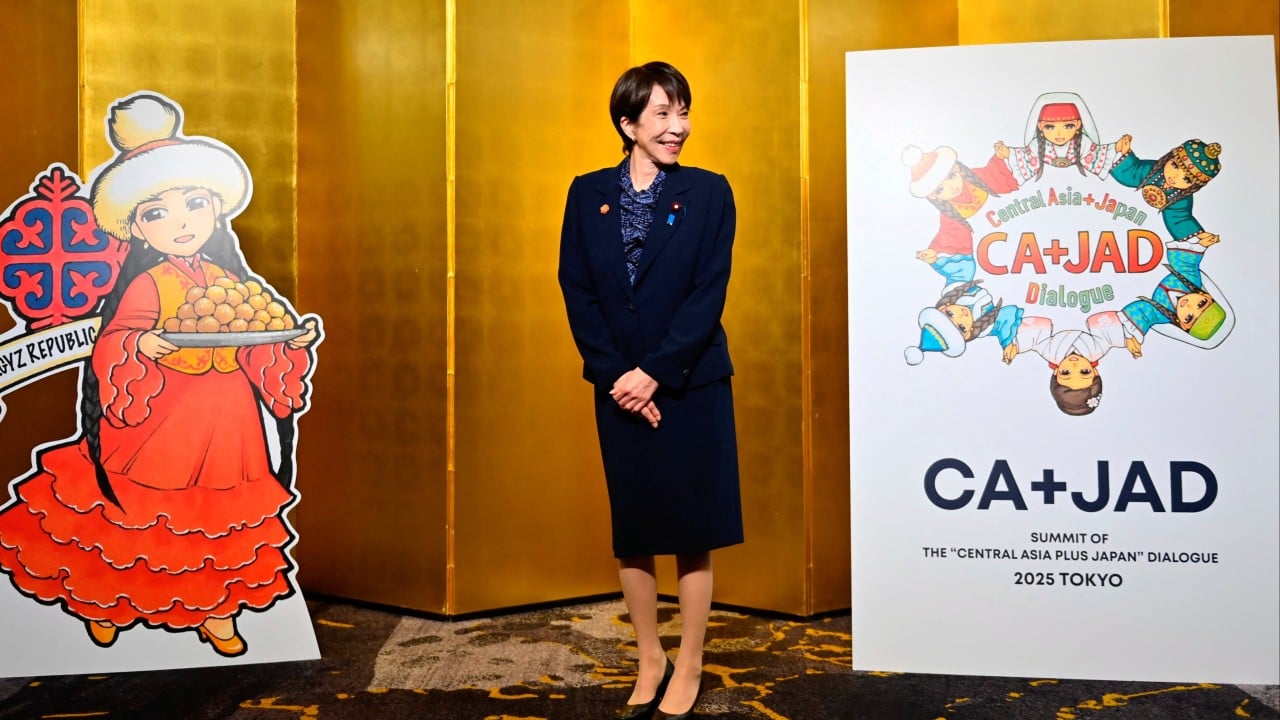
Japan has partnered with the UN Development Programme (UNDP) to support Kazakhstan’s efforts to address the decline in the Caspian Sea’s water level driven by climate change, pledging a 465 million yen (US3 million) grant towards its sustainable use. Under the initiative for the world’s largest inland water body, Japan hopes to promote cooperation among littoral states on water resource management and enhance monitoring systems, according to the foreign ministry. The decline in the Caspian...
Narrative Intelligence Brief
This article was published by South China Morning Post, a source frequently categorized with a lean left bias based in Hong Kong. Our narrative intelligence engine continuously monitors coverage from this outlet to track framing, bias, and rhetorical patterns. Our initial algorithmic scan of this specific piece did not flag high-confidence rhetorical techniques, suggesting a generally straightforward reporting style or neutral framing. By understanding the editorial perspective of South China Morning Post, readers can better contextualize the information presented and compare it across our broader media matrix to find the real narrative.
More from South China Morning Post
July 4, 2026
Hong Kong taxi driver dies, two passengers hurt in head-on crash with bus
July 4, 2026
As the US turns 250, young Asian-Americans weigh identity and China
July 4, 2026
Nobel-winning materials scientist Omar Yaghi joins China’s Tsinghua University from the US
July 4, 2026
Lebanon’s president urges US solidarity as Israeli troops occupy south
July 4, 2026
Beijing sends new coastguard force into waters east of Taiwan
Analysis Methodology
This narrative analysis was generated using the CoDataLab Global Intelligence Engine. Our proprietary AI scans thousands of cross-border sources to identify sentiment patterns, framing techniques, and potential media bias. While AI provides the data-driven foundation, our objective is to empower readers with additional context beyond the standard headline.The content displayed above is a structured summary designed for rapid information processing. For the full original report, please visit the source outlet.More Coverage
Discussion
"trump"
Trump FURIOUS as USMNT Defies his ADMINISTRATION’S WISHES!!!

Brian Feeney: From a beacon of democracy to Trump’s rotten, mafia state

Trump administration’s interpretation of slavery under George Washington can be reinstalled