Today in News History
On July 4, several notable moments in the history of News stand out. In 1778, American Revolutionary War: U.S. forces under George Clark capture Kaskaskia during the Illinois campaign. In 1913, President Woodrow Wilson addresses American Civil War veterans at the Great Reunion of 1913. In 1921, Nasser Sharifi, Iranian sports shooter was born. In 1928, Jassem Alwan, Syrian Army Officer (died 2018) was born. In 1964, Elie Saab, Lebanese fashion designer was born. In 1976, Yonatan Netanyahu, Israeli colonel (born 1946) passed away. In 1976, Israeli commandos raid Entebbe airport in Uganda, rescuing all but four of the passengers and crew of an Air France jetliner seized by Palestinian terrorists. In 1977, The George Jackson Brigade plants a bomb at the main power substation for the Washington state capitol in Olympia, in solidarity with a prison strike at the Walla Walla State Penitentiary Intensive Security Unit. In 1982, Three Iranian diplomats and a journalist are kidnapped in Lebanon by Phalange forces, and their fate remains unknown. In 2002, Benjamin O. Davis, Jr., American general (born 1912) passed away. Together, these milestones provide historical context for today's news news and ongoing narratives.
Lebanon’s president urges US solidarity as Israeli troops occupy south
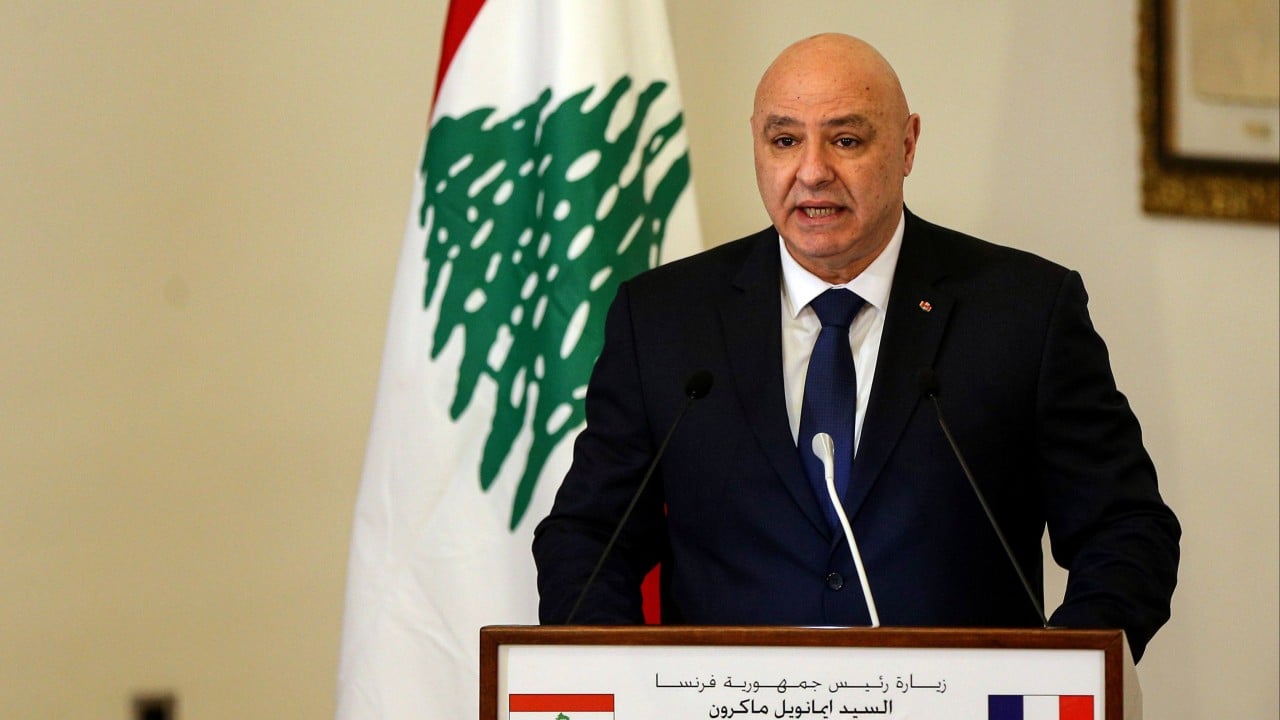
Lebanese President Joseph Aoun on Saturday urged the United States to stand by his country, after reaching a US-backed framework deal with Israel aiming to permanently end hostilities after the latest Israel-Hezbollah war. The deal reached in Washington calls for the disarmament of Iran-backed militant group Hezbollah, a gradual Israeli withdrawal from southern Lebanon and the deployment of the Lebanese army there, starting with two “pilot” areas. Hezbollah has rejected the deal, which does not...
Narrative Intelligence Brief
This article was published by South China Morning Post, a source frequently categorized with a lean left bias based in Hong Kong. Our narrative intelligence engine continuously monitors coverage from this outlet to track framing, bias, and rhetorical patterns. Our initial algorithmic scan of this specific piece did not flag high-confidence rhetorical techniques, suggesting a generally straightforward reporting style or neutral framing. By understanding the editorial perspective of South China Morning Post, readers can better contextualize the information presented and compare it across our broader media matrix to find the real narrative.
More from South China Morning Post
July 4, 2026
Nobel-winning materials scientist Omar Yaghi joins China’s Tsinghua University from the US
July 4, 2026
Beijing sends new coastguard force into waters east of Taiwan
July 4, 2026
Hong Kong police arrest driver after high-speed chase ends in 5-vehicle crash
July 4, 2026
Italian rice crops suffer in drought, worst European heatwave ever
July 4, 2026
Renowned neurobiologist and former taekwondo captain Chih-Ying Su leaves US for China
Analysis Methodology
This narrative analysis was generated using the CoDataLab Global Intelligence Engine. Our proprietary AI scans thousands of cross-border sources to identify sentiment patterns, framing techniques, and potential media bias. While AI provides the data-driven foundation, our objective is to empower readers with additional context beyond the standard headline.The content displayed above is a structured summary designed for rapid information processing. For the full original report, please visit the source outlet.More Coverage
Discussion