Today in News History
On July 4, several notable moments in the history of News stand out. In 910, Luo Shaowei, Chinese warlord (born 877) passed away. In 940, Wang Jianli, Chinese general (born 871) passed away. In 945, Zhuo Yanming, Chinese Buddhist monk and emperor passed away. In 1886, Poundmaker, Canadian tribal chief (born 1797) passed away. In 1901, William Howard Taft becomes American governor of the Philippines. In 1960, Due to the post-Independence Day admission of Hawaii as the 50th U.S. state on August 21, 1959, the 50-star flag of the United States debuts in Philadelphia, almost ten and a half months later (see Flag Acts (United States)). In 1979, Lee Wai Tong, Chinese footballer and manager (born 1905) passed away. In 1991, Victor Chang, Chinese-Australian surgeon and physician (born 1936) passed away. In 1999, Leo Garel, American illustrator and educator (born 1917) passed away. In 2013, Charles A. Hines, American general (born 1935) passed away. Together, these milestones provide historical context for today's news news and ongoing narratives.
As the US turns 250, young Asian-Americans weigh identity and China
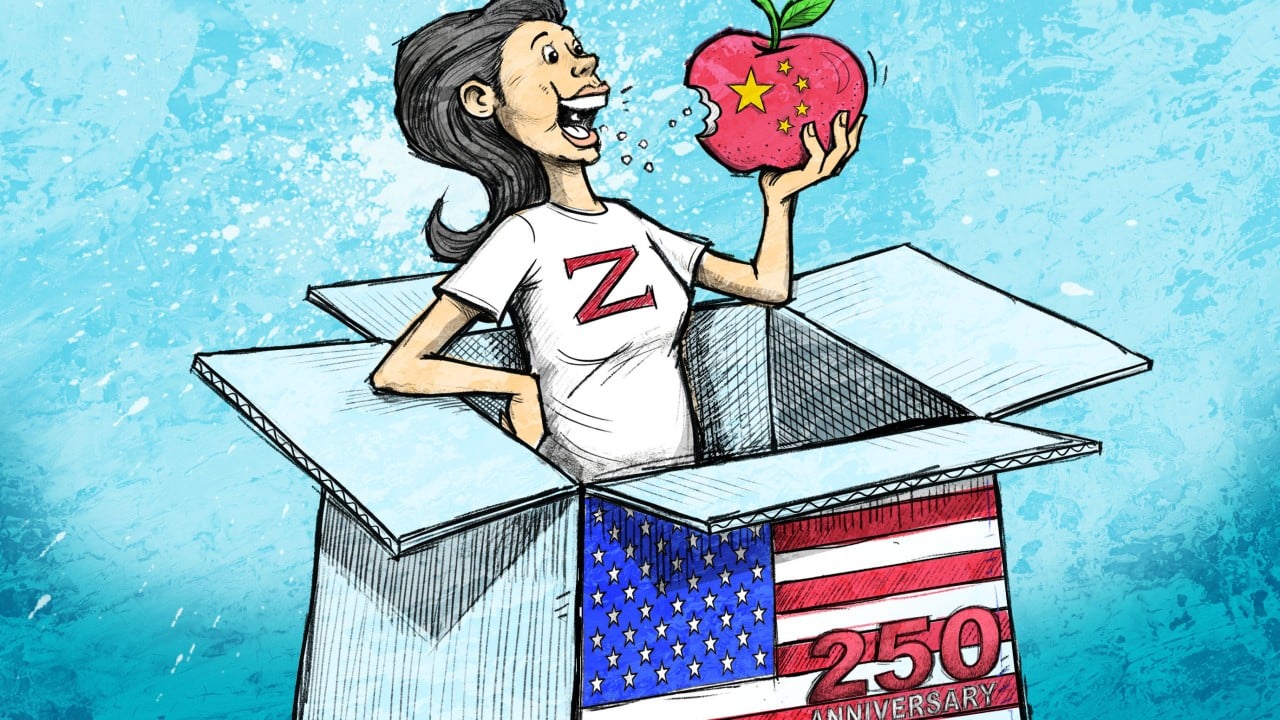
As the United States marks the 250th anniversary of its founding, it confronts a new world order dominated by its relationship with China. In this wide-ranging series, we examine the pressure points and possibilities in those ties, from hard tech to soft power. Here, Lucy Quaggin looks at how Gen Z Chinese-Americans are navigating identity amid shifting US-China tensions. As a high school student on New York City’s Upper East Side, Chinese-American Hannah Liu would take the subway downtown on...
Narrative Intelligence Brief
This article was published by South China Morning Post, a source frequently categorized with a lean left bias based in Hong Kong. Our narrative intelligence engine continuously monitors coverage from this outlet to track framing, bias, and rhetorical patterns. Our initial algorithmic scan of this specific piece did not flag high-confidence rhetorical techniques, suggesting a generally straightforward reporting style or neutral framing. By understanding the editorial perspective of South China Morning Post, readers can better contextualize the information presented and compare it across our broader media matrix to find the real narrative.
More from South China Morning Post
July 4, 2026
Hong Kong taxi driver dies, two passengers hurt in head-on crash with bus
July 4, 2026
Japan pledges US$3 million for Kazakhstan’s Caspian Sea water decline
July 4, 2026
Nobel-winning materials scientist Omar Yaghi joins China’s Tsinghua University from the US
July 4, 2026
Lebanon’s president urges US solidarity as Israeli troops occupy south
July 4, 2026
Beijing sends new coastguard force into waters east of Taiwan
Analysis Methodology
This narrative analysis was generated using the CoDataLab Global Intelligence Engine. Our proprietary AI scans thousands of cross-border sources to identify sentiment patterns, framing techniques, and potential media bias. While AI provides the data-driven foundation, our objective is to empower readers with additional context beyond the standard headline.The content displayed above is a structured summary designed for rapid information processing. For the full original report, please visit the source outlet.More Coverage
Discussion
"trump"
Trump FURIOUS as USMNT Defies his ADMINISTRATION’S WISHES!!!

Brian Feeney: From a beacon of democracy to Trump’s rotten, mafia state

Trump administration’s interpretation of slavery under George Washington can be reinstalled