
Is the Light Phone getting too smart?
Narrative Analysis: Bandwagon
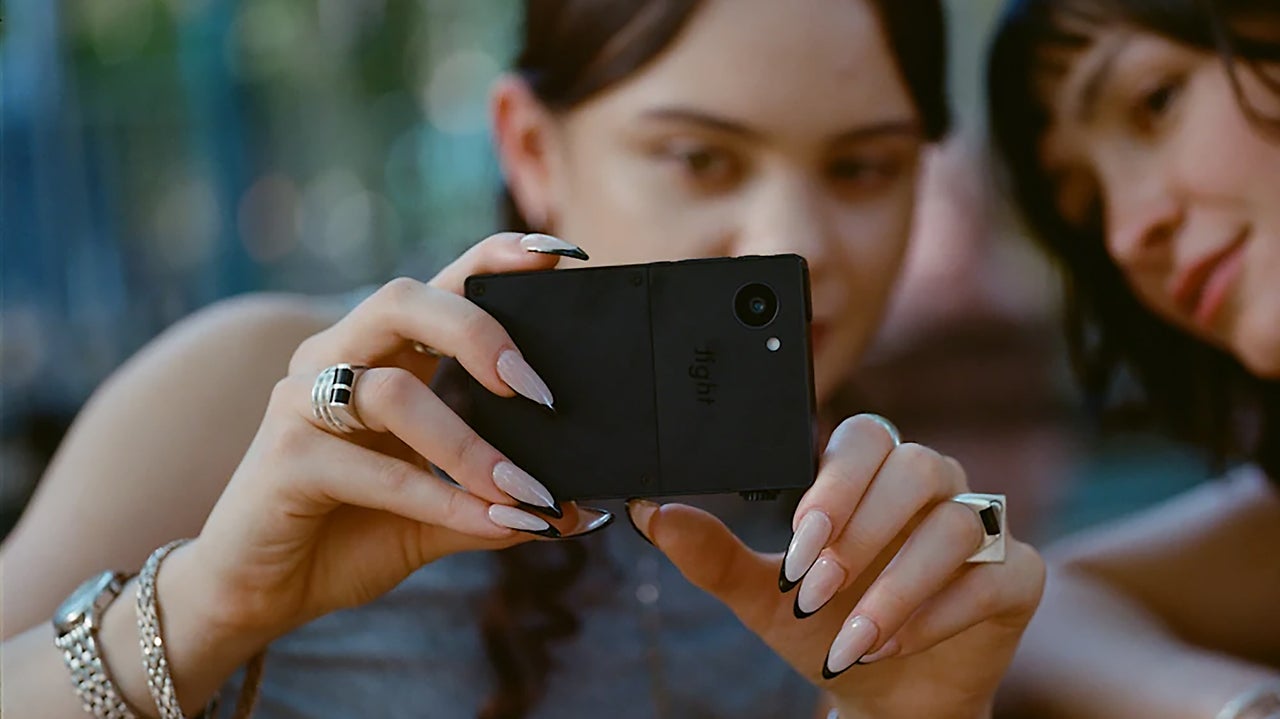
When Joe Hollier and Kaiwei Tang met at an experimental incubator run by Google a little more than a decade ago, developing a new phone from scratch wasn’t the goal. Rather, they were encouraged to think up and create new smartphone apps. Almost immediately the two of them found the assignment grating. The business model of many smartphone apps is retention: someone using the app over and over, sharing their time and personal data in the process. They wanted to flip the script. “A lot of my woes were about separating on and off from work. I found myself checking email right before going to bed or out at dinner on a date,” says Hollier, a 35-year-old artist. “I really personally wanted to carve out boundaries and compartmentalize the internet.” Meanwhile, Tang had recently left a job designing phones for Motorola and Nokia, questioning the industry’s obsession with churning out yet another device consumers didn’t really need. “Maybe we should just design technology like how we design physical tools,” says Tang, 46. (Think of a hammer. Now think of the last time you had to buy one.) Over the course of a few months they handed out flip phones to about a dozen people they knew and told them to use them in the evenings or on weekends. The pair framed it as “going light.” Granted, it was a small sample size, but the response, they say, was overwhelming. Everyone loved that the device they were using made it so that they didn’t have to be ready to reply to an email, a tweet, an Instagram message. There was no stream to check or app to feed. So Hollier and Tang launched a Kickstarter, began sourcing parts, built the hardware from scratch, programmed their own operating system, and created the Light Phone. The essential promise? No internet. Ever. With no way to get online, there is no way for a user to check social media, scroll endless news feeds, read email on the fly—anything that pulls attention from the immediate world. Since launching the first-generation Light Phone, the two designers watched as their Brooklyn-based startup blossomed from Kickstarter campaign to bona fide business, quickly selling more than 100,000 Light Phones just as an entire subculture around “dumb phones” grew increasingly popular. A device other than a smartphone is now the antidote to an incessant stream of push notifications. Against this backdrop comes the Light Phone III, which hit the market last year. More than 20,000 have sold. So popular is this new iteration that, at the start of 2026, customers were forced to preorder and wait as the company’s supply caught up to the demand. Yet the trajectory Hollier and Tang now chart is decidedly different from the path being navigated by people chucking their smart devices for an old-school flip phone. As the Light Phone has grown up, so too has its form and functionality. Gone are the days of simple phone calls. The Light Phone III is bigger, heftier, and, at 699, pricier. But you can send group texts. You can listen to podcasts. Even take photos. There’s an MP3 player, an alarm, a custom GPS-based maps app for getting around, and more. It’s not quite an iPhone, but it’s not a flip phone, either. It is, arguably, the smartest dumb phone out there. Listening to Tang and Hollier, I couldn’t help but wonder if their brainchild is getting too bright for its own good—or whether it’s the perfect substitute for a smartphone-dependent world. [Photo: The Light Phone] ‘It felt like a chokehold on my life’ Introducing the first Light Phone when they did, in 2015, allowed Tang and Hollier to ride a wave of technological revolution (maybe even revulsion). The Center for Humane Technology, cofounded by the former Google “design ethicist” Tristan Harris, who for years had been calling attention to how technology was hijacking our brains, got going in 2018. Groups like NoSurf popped up on Reddit, adamant about not wasting any more time online. Sales ballooned and the company grew. Now the business employs 15 people, and runs with the help of 15 million in venture capital, including from Pete Davidson, the comedian, and Biz Stone, cofounder of Twitter. (It also counts Breaking Bad’s Aaron Paul as an adviser.) Over time, Light Phone found itself bookended by phrases like “attention economy” and “brain rot,” Oxford’s 2024 Word of the Year. “I think the Light Phone’s popularity emphasizes a growing resistance among consumers about their smartphones being transformed into relentless distraction engines,” says Cal Newport, professor of computer science at Georgetown University and the author of 2019’s Digital Minimalism. Polling data seems to bear this out. Gallup surveys indicate that many American adults, in younger generations especially, are highly dependent on their phones. (People under 50 report that they would be anxious if they lost their phone for a day.) A Pew poll from 2025 shows that Americans between 18 and 29 are most dependent on their smartphones. That’s probably obvious. Less obvious is the second-most-dependent group: senior citizens. Hollier and Tang have tried to reconcile this overreliance with the fundamental nature of the Light Phone in the third-gen version. “The goal for us is not asking people to give up technology,” Tang says. “It’s to give you enough utility tools so that you feel comfortable.” Hollier says that what defines Light Phone more than anything is what it will never have. And so, like its predecessors, Light Phone III does not have internet, social meda, email, or news feeds of any kind. And, as with previous generations, you can move your SIM card over from your current phone, so you can keep your number. But it is, in a few notable respects, a markedly different phone from the second iteration of Light Phone, to say nothing of how much it’s changed from the very first Light Phone—a product the size of a credit card and about as thick as a pad of Post-it notes, with a keypad, nine speed dials, and nothing else. Light Phone III is equipped with a camera for photos and video, although there are no filters or options to alter the images as there are on a standard smartphone. Texting now includes 24 emojis, which were rolled out with Light Phone II. The screen on Light Phone II was an E Ink screen; Light Phone III is upgraded with an organic light emitting diode (OLED), matte display, eliminating some of the speed problems users experienced. Break it down, and it sounds an awful lot like a smartphone—much different from, for instance, the flip phones that dominated in the days before Steve Jobs unleashed Apple’s iPhone on the world. For some, a Light Phone isn’t enough of a bridge between the smart and the dumb. Ciara McLaren, a 28-year-old who publishes a Substack on phone addiction called Hanging Up, including a piece about the Light Phone III, went light last year—but did it by switching from her iPhone to a Nokia 2780. “I had even tried living in a house without Wi-Fi and using a super-low data plan. But as long as I had my iPhone, I just couldn’t stop using it,” she says. “It felt like a chokehold on my life and my time.” McLaren’s decision, of course, goes to a larger point: Tang and Hollier aren’t the first to have tried giving a user a minimum of what they need on a phone so they no longer crave the feel of a pocket-size computer. “The proposition is theoretically great,” says Nabila Popal, a senior director at the market intelligence company IDC. “But, practically, how dependent we have become on these smartphone apps for our day-to-day lives—it’s going to be very hard to find someone that says, ‘I’m actually going to drop my smartphone.’” ‘Kids seemed happier’ Perhaps unsurprisingly, critics are somewhat confused by the new Light Phone. Reviews have been mixed. Writing in Slate, the longtime Light Phone II user Christopher Schaberg described the Light Phone III as a “fascinating attempt at merging the desire for digital detoxification with a wish image of mindfulness.” Brian X. Chen at The New York Times called it a “so-so product” that made him feel “more stressed and less capable.” There’s certainly a friction that comes with suddenly losing access to the seemingly infinite stream of applications housed inside the computer in your pocket. To Tang and Hollier, though, the inconvenience of not being able to do so while in class or out with friends means that what was once a subconscious habit becomes a more intentional act. “It forces you at different points to decide what you’re actually doing,” says Hollier. “We don’t want you just mindlessly opening the phone.” I mostly found it curious that a phone predicated on being the antithesis of the iPhone in my pocket had added a camera and emojis to its suite of software. It seemed to me that, with each passing year, the Light Phone had edged closer to resembling a smartphone. (In an ironic twist, one of the company’s investors is the Lyft cofounder John Zimmer—although Tang and Hollier are apparently talking with the Lyft team to see if there’s a world in which the Lyft app could exist on the Light Phone.) Most conspicuous is the price. At 699, Light Phone III is cheaper than flagship models of popular smart phones. The iPhone 17 Pro, for example, goes for more than 1,000. But the iPhone 17e starts at 599. HMD Skyline models cost roughly 400 (and offer a built-in “detox” mode to turn off soul-sucking apps). I recently purchased a new MacBook Neo for just 590, trading in my old MacBook Air for a 150 credit. Tang and Hollier maintain that the Light Phone is a different animal altogether. Their ultimate argument is a metaphysical one. You can replace the battery on a Light Phone III, and they’ll send you a new one with a T5 screwdriver so you can open the phone. You don’t have to worry about your data flying into a Big Tech mothership, because none of the phone’s apps are tracking you. Where else can you find a future-proof device that’s going to give you enough to be comfortable in the world, but not so much that you’re bumping into strangers walking across the street? “It’s maybe not the cheapest simple phone you could possibly buy, but it’s a sustainable model that’s not based off any data collection,” says Hollier. One example the cofounders like to point to is a grand experiment carried out several years ago in Massachusetts. Beginning in the fall of 2022, the company distributed Light Phones to all the students and faculty at the Buxton School, a boarding high school in northwest Massachusetts. For a couple years, the school was completely smartphone-free. “When we weren’t fighting with them over their phones all the time, learning outcomes were better. Kids seemed happier,” says the head of school, John Kalapos. Students could still check out their smart devices at the office in order to call their parents. But the default mode of socialization, Kalapos recalls, became in person, not virtual. There was, however, some frustration with the devices themselves—frustrations Kalapos continues to deal with as a Light Phone III user. “The challenge with the product is that it’s really hard to exist in the world without a smartphone,” he says. How do you incorporate tap-to-pay? What if a concert venue or restaurant requires you to scan a QR code to obtain tickets or information? Tang and Hollier told me they’re playing around with the idea of introducing some sort of stripped-down, text-only version of a QR reader on the phone. But the questions Kalapos raised point to the difficulty involved in peeling away modern trappings. Boring old-fashioned data shows this. According to Popal, there were just over 4 million dumb phones in the hands of Americans in 2025, but more than 130 million smartphones. As a trend, globally, the switch from smart to dumb is actually decreasing: In 2022, dumb phones were 16 of the market; by the end of the first quarter of this year, that figure had dropped to 11. We’ve entangled so much of our lives to the devices in our pockets that it seems damn near impossible to ditch an iPhone in favor of something else. To do, in other words, what Tang and Hollier have done: forswear their iPhones to become full-time Light Phone users. What is a supplemental device for some people—something to keep in your pocket at night or on weekends, when you want to be disconnected—is, for them, their own version of the everything machine, minus the distractions of the internet. I turned the thought over in my head. My iPhone holds apps that let me activate my house alarm, check the production of my solar panels, monitor who’s at my front door, deposit checks into my online bank accounts, and remote start my Ford Bronco. I can’t do any of that from a Light Phone. And yet, when I stop to think about it, those are the most important functions. I gave up Facebook in 2018 and don’t keep the app for X on my phone. But I hate having email in my pocket, connecting me at all times and in all places to a job that occasionally makes me pine for the life of a Luddite. Ditching a smartphone isn’t just about choosing a simpler interface. It’s about injecting voluntary hardship into your daily routine by removing the very thing that causes so much distraction—something Light Phone’s cofounders say is a priceless trade-off. “The cost is high, but we’d argue that a lot of people resort to thousands-of-dollars digital detox retreats or these other things to try to find balance,” Hollier says. “But this can save you hours of your day every single day for years of your life.”
Narrative Intelligence Brief
This article was published by Fast Company, a source frequently categorized with a lean left bias based in United States of America. Our narrative intelligence engine continuously monitors coverage from this outlet to track framing, bias, and rhetorical patterns. In this specific piece, our systems detected the potential use of the "Bandwagon" technique. This narrative approach is often used to shape reader perception by highlighting specific emotional or rhetorical angles. By understanding the editorial perspective of Fast Company, readers can better contextualize the information presented and compare it across our broader media matrix to find the real narrative.
Explore related topics: Stay informed with Real Narrative News as we track unfolding stories. Dive deeper into our coverage of pivotal topics including الضاحية الجنوبية, champions league, الجنوبية لبيروت, coupe monde, choose france, james milner, arne slot, president ilham, ilham aliyev, and dua lipa. Our intelligence streams continuously monitor these keywords to bring you unbiased analysis and real-time updates on topics like "Is the Light Phone getting too smart?".
More from Fast Company
June 1, 2026
AI was supposed to prevent downtime. Instead, it’s creating new kinds of outages
June 1, 2026
Recho Omondi’s fashion podcast ‘The Cutting Room Floor’ inks a multiyear deal with Patreon
June 1, 2026
Chipotle CEO Scott Boatwright finds his answers in the restaurants
June 1, 2026
Is the Light Phone getting too smart?
June 1, 2026
Inside Uber’s strategy to avoid a head-on collision with autonomous cars
Reliability Insights
P
Technique: Bandwagon
System analysis detected use of specific narrative techniques in this piece.Analysis Methodology
This narrative analysis was generated using the CoDataLab Global Intelligence Engine. Our proprietary AI scans thousands of cross-border sources to identify sentiment patterns, framing techniques, and potential media bias. While AI provides the data-driven foundation, our objective is to empower readers with additional context beyond the standard headline.The content displayed above is a structured summary designed for rapid information processing. For the full original report, please visit the source outlet.More Coverage
Discussion