
Inside Uber’s strategy to avoid a head-on collision with autonomous cars
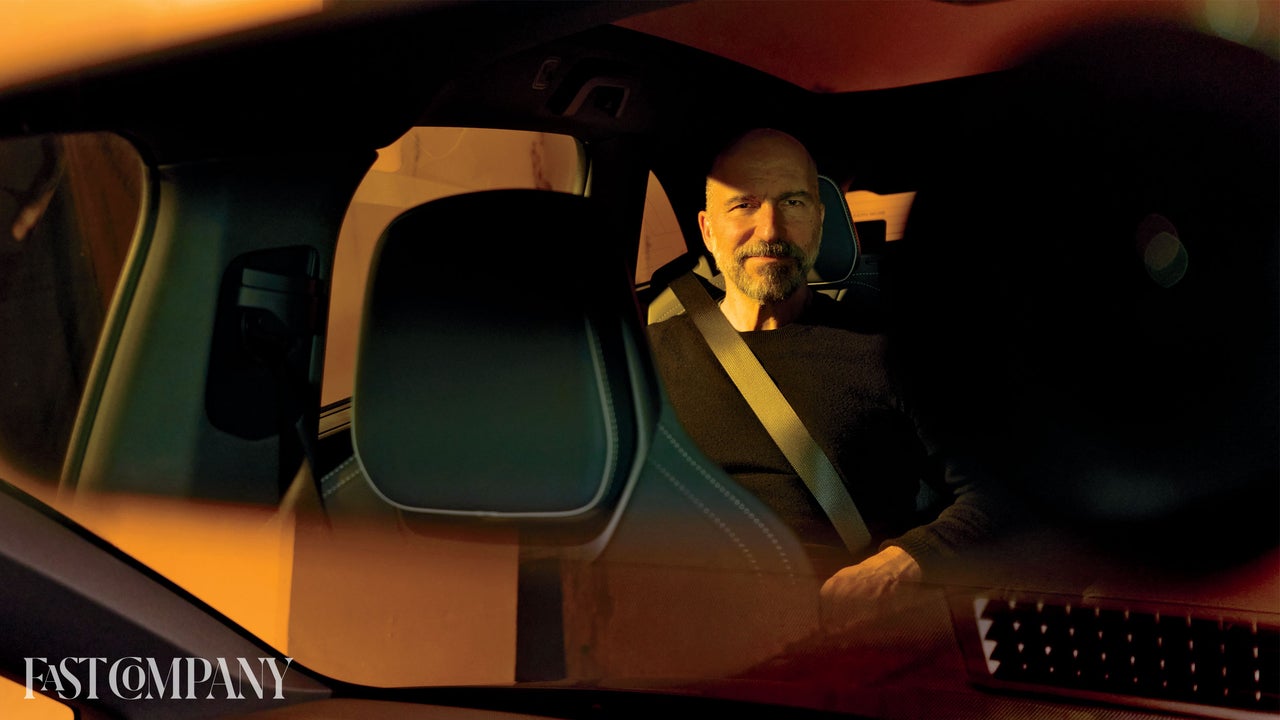
Pale springtime sun skims across lower Manhattan’s streets and sidewalks as buses groan, jackhammers echo, and commuters hustle. It’s a fitting backdrop for Uber’s annual product showcase, Go-Get, held on this April morning inside the creamy marble confines of the Perelman Performing Arts Center. Uber’s CEO, Dara Khosrowshahi, was hired nine years ago to impose order on the chaos of the company’s wildly aggressive corporate culture. With that work complete, he’s been focused more recently on taming the chaos of consumers’ daily lives, adding everything from teen accounts to Costco delivery to the once-straightforward hailing app. The headline for this year’s Go-Get is a new hotel-booking feature, powered by Expedia. It brings 700,000 hotels to the Uber app. Vrbo listings will follow later this year, and Uber is layering in sightseeing destinations and other travel features, too. “We’re no longer just an app for rides,” Khosrowshahi tells the audience of journalists, influencers, and employees inside the arts center’s darkened auditorium. “Uber is now an app for everything.” Khosrowshahi, who previously spent a dozen years at the helm of Expedia, has long seen an opportunity to turn travel into the app’s next big offering, akin to its food-ordering and delivery platform, Uber Eats. Trips to and from an airport, after all, comprise roughly 15 of rides and have ripple effects. They can be the reason that people download Uber for the first time, and why they default to the app closer to home, too. “We have to make what may be very difficult, complex orchestrations on the back end ridiculously easy and simple for the user,” Khosrowshahi tells me as we sit in the burgundy velvet seats of the Perelman theater after the Go-Get crowds have cleared. “That’s when the magic happens.” Uber runs arguably the most sophisticated real-time consumer marketplace in the world. The company deftly balances the supply and demand for its 10 million couriers and drivers and nearly 200 million monthly active users via data-intensive, time-sensitive levers. Uber controls these levers so nimbly that it’s been able to seamlessly roll out feature after feature: Uber Pet, Senior Mode, grocery delivery, and more. It even enlisted one of its most despised innovations, surge pricing, as a selling point for the more than 50 million members of its 10-a-month Uber One program by offering “Surge Savings,” or personalized discounts at peak hours. Lipstick: pig. But for Uber, it works. And the company is profitable. After logging its first quarter in the black from operations in 2023, it generated 193 billion in gross bookings last year, with ride-sharing representing slightly more than half. Net income for 2025 topped 10 billion. While it’s still common to hear Uber and Lyft referred to as rivals, the label is tenuous: Uber’s market capitalization was 29 times greater than Lyft’s as of mid-May. In The Driver’s Seat: Uber CEO Dara Khosrowshahi is preparing the ride-hailing app for the emergence of autonomous vehicles. [Video and photo: Arsenii Vaselenko] And yet, a new era is dawning. Khosrowshahi, ever unflappable, is selling vacation-booking to the Go-Get audience with a smile. But outside of these walls, his software peers are publicly declaring “code red,” pivoting to AI, and firing half their employees. AI—in the form of self-driving cars—represents a textbook Clayton Christensen disruptive threat to Uber: Using a mobile app to hail a ride with a human driver was revolutionary 15 years ago; eventually, it’ll sound quaint. Goldman Sachs expects the U.S. robotaxi market to be worth 19 billion by 2030 and 48 billion by 2035. “For ride-hailing companies, [autonomy] is an existential risk, and they knew it 10 years ago,” says Laurie Yoler, a venture partner at Playground Global who previously served on the board of directors at Tesla and the Amazon-owned robotaxi company Zoox. In Uber’s brash and bro-tastic early days, when founder Travis Kalanick was CEO, the company built its own autonomous vehicles (AVs). These days, under Khosrowshahi, it’s taking on the role of market maker—and positioning itself as the platform that connects riders to all AVs. Khosrowshahi scored an early win as Waymo’s exclusive booking partner in Austin and Atlanta. Now, he’s teaming up with promising AV startups that are racing to get to market. Khosrowshahi is offering them cash, operational know-how, and access to riders, all in the hopes of ushering tens of thousands of robotaxis onto the platform. All told, the company has committed roughly 10 billion, according to a Financial Times analysis, as an equity investor and prospective customer to some 30 AV partners, and says it will be operating in 15-plus markets by the end of 2026. “We get to work with everybody in the ecosystem. We get to see all of the different approaches to autonomy as well,” Khosrowshahi says. “And when you’re operating at our scale, doing more than 40 million trips a day, we think the bet that we’re making on the ecosystem is the right bet.” The approach works on paper. But Uber’s future dominance of mobility depends on how well Khosrowshahi nurtures this new AV ecosystem—while shaping it to his own advantage. It also depends on how completely he realizes his super-app quest, ensuring that Uber remains indispensable no matter what kind of cars rule the road. Uber’s first flirtation with self-driving ended disastrously. In 2015, under Kalanick, the company announced a partnership with Carnegie Mellon University that led to the establishment of an internal AV group. To accelerate development, Kalanick hired the star engineer Anthony Levandowski, previously a leader at Waymo, Alphabet’s self-driving unit. The hire quickly became an extraordinarily costly entanglement: In 2017, Waymo accused Levandowski of the “calculated theft” of roughly 14,000 confidential files, kicking off a high-profile intellectual property dispute. Levandowski was sentenced to 18 months in prison, and Kalanick resigned as CEO. Under Khosrowshahi, Uber settled Waymo’s civil lawsuit, giving Alphabet an equity stake of about 245 million in the ride-hailing company, pre-IPO, and paving the way for a more collegial relationship. Later, Khosrowshahi sold off Uber’s AV group to the freight specialist Aurora. Uber wasn’t the only early AV aspirant to temper its ambitions. Apple canceled its internal project, GM shut down Cruise, Lyft-backed Argo AI folded, and even a partnership with OpenAI couldn’t save Ghost Autonomy. The outlier in these tales of woe, of course, is Waymo. Its vehicles are now six times safer than the average human driver, according to a Morgan Stanley analysis, and the company has ushered AVs from fantasy to reality. Its robotaxi service is operating in 11 U.S. cities with a fleet of more than 3,000 vehicles. To help introduce robotaxis to the masses, Waymo tapped its former rival. When Waymo expanded its Phoenix service in 2023, it allowed riders to book through Uber’s app. The partnership deepened in 2025, when Waymo launched in parts of Austin and Atlanta and made rides in those cities exclusively available through Uber. (In other cities, like San Francisco and Los Angeles, Waymo rides are available only through Waymo’s own ride-hailing app.) Hailing a Waymo through Uber has become so popular in Austin that locals refer to getting matched with one as “Waymo roulette.” When demand exceeds supply, Uber sends a human driver. This gap between robotaxi supply and peak rider demand is at the heart of Uber’s confidence that it can position itself as an AV-era winner. AV companies face a fundamental challenge: whether to design their systems for base load, when rider demand is low, or peak load, when it’s high. Design for base, and riders will be frustrated with long wait times and high prices during rush hour. Design for peak, and AVs—which are expensive to make because of their chip-based brains, sensors, and unique mechanical requirements—will be idle for long stretches during the day, weighing on balance sheets. Khosrowshahi argues that Uber’s hybrid marketplace helps AV companies monetize every minute for their vehicles. It’s not so bad for human drivers either, in his view. “[AVs are] getting shorter trips in city centers, and our drivers are getting longer, more interesting, and high-value trips,” he says. “You could argue that the AVs are getting the scraps.” (Rideshare drivers in San Francisco and Seattle, however, have rallied against robotaxis.) Uber, Unmanned: Uber is partnering with EV maker Lucid Group and self driving startup Nuro to launch a robotaxi service using Lucid Gravity SUVs. [Photo: Arsenii Vaselenko] For Uber, adding AVs has only been beneficial. “Our business in Atlanta and Austin, where the hybrid marketplace is working at scale, is growing faster than it is in the rest of the country,” Khosrowshahi says. “And we’re growing really, really quickly in the rest of the country.” As for the prospect of AVs displacing human drivers, Khosrowshahi is laying the groundwork for the transition. He says the company is recruiting fewer drivers in cities where AVs are coming online. It’s Uber’s way of ensuring “that the drivers who are [already] in-market, who are experienced, and who’ve been with us through this whole journey continue to earn,” he explains. That rosy narrative runs counter to the experience of Liza Ramsey, a veteran Uber and Lyft driver who coleads the Atlanta Rideshare Drivers Union and is a member of the Justice for App Workers coalition. She says her weekly income has dropped by about a third since Waymo’s arrival. In her eyes, “it’s Waymo getting the best rides.” Even as Uber risks alienating its drivers, its relationship with Waymo is also looking rocky. Waymo, which intends to move into 20 new cities worldwide over the next six months, hasn’t announced any further collaboration with Uber. In soon-to-launch Nashville, for example, Waymo plans to drive bookings through its own app and, eventually, through Lyft. (Waymo declined to comment for this story.) Khosrowshahi expresses optimism about Uber’s old frenemy: “We continue to work with Waymo constructively,” he says, adding that he sees the partnership extending “for hopefully many years to come.” Some commentators are less diplomatic. “If you read between the lines, I think the relationship’s over,” says Grayson Brulte, an AV adviser and host of The Road to Autonomy podcast. He notes that Alphabet recently tied CEO Sundar Pichai’s compensation to Waymo’s growth. “At the end of the day, what type of company does Waymo want to be? We don’t know. But what we do know is that if you look at the last eight earnings calls, the amount of time that Alphabet spends talking about Waymo has dramatically increased. I think Alphabet views this as a winner.” In a signal of its ambition—perhaps as both a robotaxi maker and a consumer-facing service—Waymo raised 16 billion in new funding in February. Uber, meanwhile, is asserting its independence, too. In late April, Uber’s CTO, Praveen Neppalli, may have tipped the company’s hand when he publicly posted a video on X of a run-in with a Waymo that he described as “scary.” After the AV overtook a bus, he said, it put itself on a collision course with his car. “Big fan of AVs, but perception judgment. Edge cases matter!” he wrote, referring to the unusual driving scenarios that can confound a robotaxi (and influence public perception of their safety). No one at Uber asked him to delete it. On a quiet suburban street in Mountain View, California—the heart of Waymo territory—I’m sitting in what might be Uber’s most high-profile hedge against Waymo’s disinterest. It’s a three-row Lucid Gravity EV, kitted out with an autonomous system from the self-driving startup Nuro, which is housing the Gravity and a small host of other test vehicles in its office parking lot. Last summer, Uber announced plans with the two companies to deliver at least 35,000 robotaxis for Uber riders over six years. In April of this year, the trio started conducting test drives for select Uber employees with a fleet of close to 100 vehicles in the Bay Area. If all goes well, the robotaxi will launch to the public in the next six months. Nuro’s sensor suite of high-definition cameras, microphones, radar, and lidar (Light Detection and Ranging) sit unobtrusively above and around the vehicle, making for a more subtle silhouette than Waymo’s mad-scientist design. Inside, sunshine filters through the glass roof to a small screen that will serve as an extension of the Uber app and a gateway to systems for music, climate control, and customer support. It all looks nice enough while stationary, but the AV doesn’t yet have regulatory approval for press drives. (Approval came through in mid-May.) So we clamber out and instead hop in the back seat of a Lexus that Nuro has equipped with the equivalent sensors and robot brain. A safety operator sits behind the wheel. Susan Anderson, Global Head of Delivery [Photo: Arsenii Vaselenko] The Lucid–Nuro partnership will mark the first time that an AV with Uber’s imprint hits the streets, but it’s just one of a flurry of new partnerships. In Las Vegas, Uber riders are already starting to see robotaxis from Motional in the app; AVs from Amazon-owned Zoox will soon join them. (Unlike the Lucid–Nuro partnership, Uber didn’t purchase or play a role in the design of those vehicles.) Deals with Rivian and Stellantis, meanwhile, will take shape over multiple years as those automakers scale their robotaxi production. Some of Uber’s deals are exclusive: Self-driving startup Waabi had been focused on freight but is now working to deliver 25,000 robotaxis just for Uber, where Waabi’s founder was previously an engineer. “It’s more and more apparent to me that there are going to be many, many [AV] players that make it to the finish line here,” says Khosrowshahi. “Our role is about commercializing this technology that ultimately is going to save lives and be the largest revenue generator for this industry.” In Mountain View, the Lexus powered by Nuro’s robot brain takes us on a meandering trip through commercial avenues and residential streets. When we make a left turn at a stop sign, the vehicle brakes after we’ve already crossed in front of a large truck, waiting for its turn. We pause for a moment before Nuro realizes that all is well. Later, the vehicle appropriately exercises caution, this time at a busy pedestrian crossing in the center of town. We wait patiently as a biker passes in front of the vehicle, then a woman holding a child’s hand, and then a skateboarder. Back at Nuro’s offices, where past models of the startup’s quirky passengerless delivery vehicles line the hallways, the co-CEO, Dave Ferguson, sips a coffee and explains the simple rationale for partnering. “If Nuro was setting up our own operations and running our own mobility service, that’s going to take us an enormous amount of time,” he says. “We don’t need to do any of that. We plug into Uber.” Time is of the essence for an AV startup like Nuro, which has spent a decade developing its tech and raised 2.3 billion to support those efforts. It operates a closed-course test track in Las Vegas; it runs a simulation to introduce edge cases; and it performs AV-specific reinforcement learning known as shadow autonomy, in which a human driver controls the vehicle while Nuro runs in parallel, checking its decision against the human’s. In March, the startup completed a “zero-shot” drive through Tokyo in which its system successfully adapted to new terrain, new cultural norms, and even a new orientation, driving on the left-hand side of the road. Sachin Kansal, Chief Product Officer [Photo: Arsenii Vaselenko] It was an impressive feat, but with an asterisk: There was a safety driver behind the wheel. Nuro and other startups of its generation are theoretically building more modern and efficient AV systems than Waymo, but in one area, Waymo remains indisputably unmatched: the 200 million rider-only miles its Waymo Drive system has logged to date, exposing it to many of the edge cases that still confound younger systems. Teaming up with Uber gives Nuro license to focus on safety and reliability while the ride-hailing company takes care of commercialization. In January, Uber tasked Danny Guo, VP of engineering and science, with leading a new group focused on self-driving data, known as AV Labs. Guo acknowledges the obvious when we sit down at Uber HQ in San Francisco. “Waymo is way ahead of everybody else,” he says. AV Labs aims to close the gap as quickly as possible through data collection and sharing. The plan is to leverage Uber’s vast network to generate the kind of data on driving edge cases and real-world messiness that AV startups need to level up. That would make Uber an even more attractive partner—and make its own AV fleets all the more powerful. It’s a lofty goal with humble beginnings. At the start of the year, Guo and his team bought two Hyundai Ioniq 5 EVs in order to outfit them with the sensors necessary to collect data. At Uber’s garage, they set to work drilling holes in the B-pillars of the cars—the roof support structure between the front and rear doors—and Guo badly cut his hand. “Obviously this doesn’t scale,” he says ruefully. By summer, though, Uber expects to have added 50 such vehicles to its garage. In the meantime, it’s been logging data from thousands of regular cars as they conduct paying Uber trips. For all its AV investments and partnerships, Khosrowshahi is focused on keeping users hooked on its ever-expanding roster of super-app services. He says he doesn’t even really think of Uber as a ride-hailing company anymore. When he joined, Uber’s revenue was roughly 90 rides and 10 new ideas, like food delivery. “Now, the Uber Eats business has gone from experiment to a business that’s as large as mobility,” he says, in terms of gross bookings. “And if it continues on that path—I see it in terms of getting into grocery and retail, local delivery of all kinds—I think it can be bigger than the mobility sector.” Uber’s most important asset in the coming era of robotaxis will likely be its customer relationship, which travel is designed to strengthen. “If that deteriorates, because AVs have their own experience and consumers all of a sudden want to download the app from Waymo or Tesla, it significantly eats at [Uber’s] ability to have a significant portion of this future,” says Reilly Brennan, partner at seed-stage fund Trucks Venture Capital. Uber One, the company’s four-year-old membership program, which continues to grow at 50 year over year, is at the center of the strategy. Members pay 10 a month to get waived delivery fees, credits back on rides, and more. For the company, the program is a way to knit together the pieces of its everything-app puzzle and cross-sell new offerings. “With Uber One, we take a short-term hit on profits, but Uber One members spend three times more than nonmembers,” Khosrowshahi says. “They’re using multiple products as well. From a long-term standpoint, I think of it as our version of Amazon Prime.” (Like Prime, it’s also come under scrutiny by the Federal Trade Commission, which sued Uber last spring, saying the company made canceling Uber One “extremely difficult.” The trial is scheduled for 2027; Uber rejects the claims.) The travel launch underscores Uber One’s value: Members save 20 on hotel bookings. Would Uber look beyond hotels to travel categories like flights? “Definitely,” says Khosrowshahi. Conveniently, travel also positions Uber to defend against AVs’ appeal by playing to the company’s scale and depth, which no AV specialist can match. If Uber is to maintain its dominance, it must be the first app that consumers open when they land in a new city or realize there’s nothing for dinner. Adding flights would certainly pit Uber against a slew of established travel-booking sites. More competitors might sound like more problems, but for Khosrowshahi, it would be just another front in the everything app’s forever wars. “The more value we can add to our user base, and especially the more value we can add to our Uber One user base that’s absolutely exploding, the better for us,” Khosrowshahi says, “whether we’re competing against a Lyft or we’re competing against a DoorDash or a Deliveroo—or, for example, Waymo as well.”
Narrative Intelligence Brief
This article was published by Fast Company, a source frequently categorized with a lean left bias based in United States of America. Our narrative intelligence engine continuously monitors coverage from this outlet to track framing, bias, and rhetorical patterns. Our initial algorithmic scan of this specific piece did not flag high-confidence rhetorical techniques, suggesting a generally straightforward reporting style or neutral framing. By understanding the editorial perspective of Fast Company, readers can better contextualize the information presented and compare it across our broader media matrix to find the real narrative.
Explore related topics: Stay informed with Real Narrative News as we track unfolding stories. Dive deeper into our coverage of pivotal topics including الضاحية الجنوبية, champions league, الجنوبية لبيروت, coupe monde, choose france, james milner, arne slot, president ilham, ilham aliyev, and dua lipa. Our intelligence streams continuously monitor these keywords to bring you unbiased analysis and real-time updates on topics like "Inside Uber’s strategy to avoid a head-on collision with autonomous cars".
More from Fast Company
June 1, 2026
AI was supposed to prevent downtime. Instead, it’s creating new kinds of outages
June 1, 2026
Recho Omondi’s fashion podcast ‘The Cutting Room Floor’ inks a multiyear deal with Patreon
June 1, 2026
Chipotle CEO Scott Boatwright finds his answers in the restaurants
June 1, 2026
Is the Light Phone getting too smart?
June 1, 2026
Inside Uber’s strategy to avoid a head-on collision with autonomous cars
Analysis Methodology
This narrative analysis was generated using the CoDataLab Global Intelligence Engine. Our proprietary AI scans thousands of cross-border sources to identify sentiment patterns, framing techniques, and potential media bias. While AI provides the data-driven foundation, our objective is to empower readers with additional context beyond the standard headline.The content displayed above is a structured summary designed for rapid information processing. For the full original report, please visit the source outlet.More Coverage
Discussion