Today in News History
On June 21, several notable moments in the history of News stand out. In 868, Ali al-Hadi, the tenth Imam of Shia Islam (born 829) passed away. In 906, Abu Ja'far Ahmad ibn Muhammad, Saffarid emir (died 963) was born. In 1916, Herbert Friedman, American physicist and astronomer (died 2000) was born. In 1919, Gérard Pelletier, Canadian journalist and politician (died 1997) was born. In 1922, Joseph Ki-Zerbo, Burkinabé historian, politician and writer (died 2006) was born. In 1923, Jacques Hébert, Canadian journalist and politician (died 2007) was born. In 1924, Ezzatolah Entezami, Iranian actor (died 2018) was born. In 1947, Shirin Ebadi, Iranian lawyer, judge, and activist, Nobel Prize laureate was born. In 1967, Yingluck Shinawatra, Thai businesswoman and politician, 28th Prime Minister of Thailand was born. In 2014, Yozo Ishikawa, Japanese politician, Japanese Minister of Defense (born 1925) passed away. Together, these milestones provide historical context for today's news news and ongoing narratives.
Iran's clerics — not MAGA voters — may decide Vance's future in politics: expert
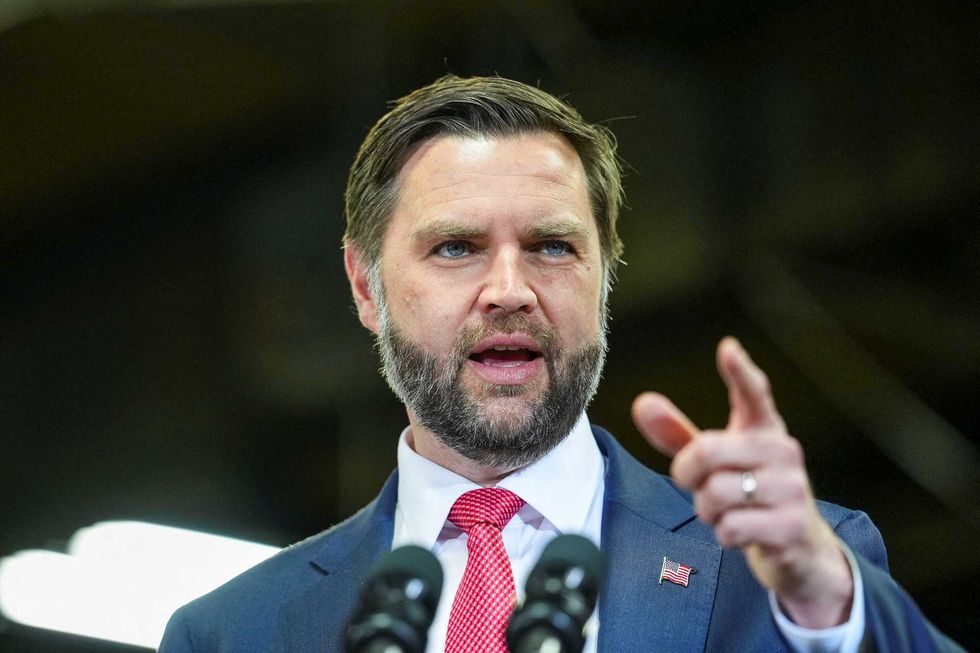
JD Vance's path to the presidency may run through Tehran, and not in a way that helps him. That is the striking implication of a new analysis by Iran expert Karim Sadjadpour, who argues in The Atlantic that the vice president's political future now depends heavily on whether hardline Iranian officials decide to play along with Donald Trump's latest gamble.Sadjadpour, a senior fellow at the Carnegie Endowment for International Peace, lays out how Trump handed Vance responsibility for an enormous and unlikely task: not merely striking a new nuclear deal, but engineering a wholesale transformation of US-Iran relations after a war that Sadjadpour says ended in humiliation for the president. The memorandum that paused the fighting, he writes, is so lopsided that it reads as if Tehran drafted it, with 13 of its 14 provisions amounting to boilerplate or favoring Iran outright.That is the project Vance has been told to deliver, and Trump has been remarkably candid about who absorbs the blame if it fails. If it works out, I'm going to take the credit, the president said, according to the piece. If it doesn't work out, I'm blaming J.D.The expert's sharpest observation is about where that leaves the vice president. Vance's prospects, Sadjadpour writes, may rest as much on Islamic Revolutionary Guard Corps officers as on Republican-primary voters. In other words, a man eyeing the 2028 nomination has tied his standing to the cooperation of the very military and clerical figures who built their careers on resistance to the United States.Vance is reportedly pinning hopes on Mohammad Baqer Qalibaf, a former IRGC general and current speaker of Iran's Parliament, with whom he spent more than 20 hours in Islamabad and supposedly developed a rapport. Sadjadpour is skeptical that private warmth means anything. He notes that Qalibaf's public appearances, where he mocks America, praises Hezbollah, threatens Israel, and celebrates partnership with China, are a far more reliable guide to Tehran's intentions than any backroom assurances.The broader picture Sadjadpour paints is of an Iranian regime that thrives on isolation and treats sabotaging American presidents as a point of pride. He traces that pattern back to the 1979 revolution and the hostage crisis that helped sink Jimmy Carter's reelection. This time, he suggests, Tehran stands to claim an unusually rich prize. The Islamic Republic, he writes, may get a two-for-one: the presidency of Donald Trump, and the presidential ambitions of JD Vance.If Sadjadpour is right, Vance has accepted a mission whose success is largely outside his control, with a boss already rehearsing the line that will pin any failure on him. The clerics and generals in Tehran, not the voters in Iowa, may end up deciding how that story turns out.
Narrative Intelligence Brief
This article was published by Raw Story, a source frequently categorized with a left bias based in United States of America. Our narrative intelligence engine continuously monitors coverage from this outlet to track framing, bias, and rhetorical patterns. Our initial algorithmic scan of this specific piece did not flag high-confidence rhetorical techniques, suggesting a generally straightforward reporting style or neutral framing. By understanding the editorial perspective of Raw Story, readers can better contextualize the information presented and compare it across our broader media matrix to find the real narrative.
More from Raw Story
June 21, 2026
Tulsi Gabbard’s rise to power potentially guided by ‘controlling cult’ leader: report
June 21, 2026
Senator sounds alarm over G7 'nightmare scene' exposing 'state-like power' of corporations
June 21, 2026
MAGA national security expert questions if Trump is 'bipolar' or being blackmailed
June 21, 2026
'Downward spiral': Trump's niece says his decline is 'becoming impossible to hide'
June 21, 2026
Senior official makes astonishing claim on 'doomed' war: 'We went in with no real mission'
Analysis Methodology
This narrative analysis was generated using the CoDataLab Global Intelligence Engine. Our proprietary AI scans thousands of cross-border sources to identify sentiment patterns, framing techniques, and potential media bias. While AI provides the data-driven foundation, our objective is to empower readers with additional context beyond the standard headline.The content displayed above is a structured summary designed for rapid information processing. For the full original report, please visit the source outlet.More Coverage
Discussion
"trump"
Trump Marks Father’s Day With Angry Rant

When I moved to Texas people warned me about the Trump-mad lunatics. I’ve been surprised
Trump lets loose new details on Reflecting Pool damage: ‘Many people have been arrested’