Today in News History
On June 21, several notable moments in the history of News stand out. In 1565, Scipione Chiaramonti, Italian philosopher and astronomer (died 1652) was born. In 1892, Reinhold Niebuhr, American theologian and academic (died 1971) was born. In 1913, Madihe Pannaseeha Thero, Sri Lankan monk and scholar (died 2003) was born. In 1918, J. Clyde Mitchell, British sociologist and anthropologist (died 1995) was born. In 1922, Joseph Ki-Zerbo, Burkinabé historian, politician and writer (died 2006) was born. In 1924, Ezzatolah Entezami, Iranian actor (died 2018) was born. In 1929, Leonard Trelawny Hobhouse, English sociologist, journalist, and academic (born 1864) passed away. In 1947, Shirin Ebadi, Iranian lawyer, judge, and activist, Nobel Prize laureate was born. In 1967, Yingluck Shinawatra, Thai businesswoman and politician, 28th Prime Minister of Thailand was born. In 1986, Assi Rahbani, Lebanese singer-songwriter and producer (born 1923) passed away. Together, these milestones provide historical context for today's news news and ongoing narratives.
Tulsi Gabbard’s rise to power potentially guided by ‘controlling cult’ leader: report
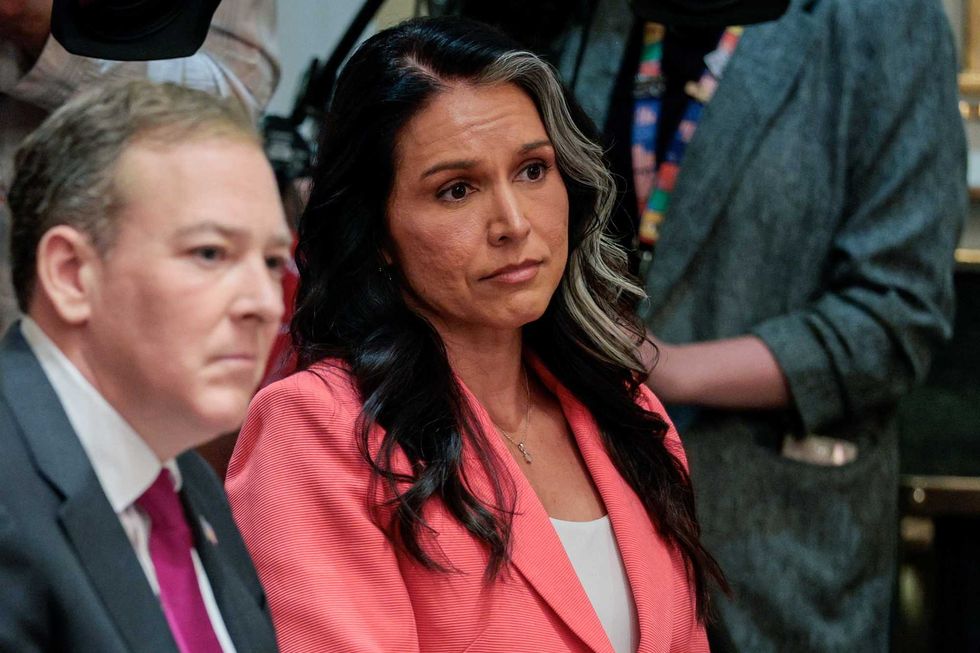
Former Director of National Intelligence Tulsi Gabbard may have been “guided” throughout her more than 24 years in politics by Chris Butler, the leader of a group countless ex-members have described as a “cult,” an extensive report from The Washington Post revealed Sunday.Gabbard began her career in politics as a Hawaii state House representative in 2002, climbing the ranks over decades before being appointed as Director of National Intelligence last year, a position she resigned from last Friday citing her husband’s deteriorating health. However, after obtaining “hundreds of confidential memos,” the Post revealed that much of her decision making over the past two decades – from what she should say to what bills she should introduce – may have been “guided” by Butler, who founded the Science of Identity Foundation, a new religious movement that began in the 1970s, which some scholars have called a “cult.”“Former devotees had been telling me for weeks that Butler controlled his followers’ major life decisions and demanded total obedience and secrecy,” the Post’s Jon Swaine wrote. “They said he spent years working to extend his reach into politics – and they suspected Gabbard’s rise in Washington was the culmination of that effort.The memos, Swaine revealed, included specific guidance and direction on a number of different topics.“Dozens of attached memos appeared to document directives and advice for Gabbard from her time in Congress,” Swaine wrote.“Some contained instructions on what legislation she should propose, which policies she should embrace and how she should conduct herself on television. They had an air of authority. A memo about a proposal to partition war-torn Iraq into three states quoted an unnamed person as saying it was ‘time for TG to come up with this idea.’”Other memos obtained by Swaine included “harshly critical” language, he wrote, flagging one from January of 2015 that contained a “derisive assessment” of Gabbard’s response to an annual address delivered by former President Barack Obama.“In the first place, nobody gives a s--- what you think about his State of the Union speech, unless you’re going to say something of interest,” the memo read. “You’re not even trying. You’ve become really intellectually lazy.”Swaine continued, “In another, Gabbard was described as ‘chickens---’ and “mealymouthed” for her comments on a policy proposal.”
Narrative Intelligence Brief
This article was published by Raw Story, a source frequently categorized with a left bias based in United States of America. Our narrative intelligence engine continuously monitors coverage from this outlet to track framing, bias, and rhetorical patterns. Our initial algorithmic scan of this specific piece did not flag high-confidence rhetorical techniques, suggesting a generally straightforward reporting style or neutral framing. By understanding the editorial perspective of Raw Story, readers can better contextualize the information presented and compare it across our broader media matrix to find the real narrative.
More from Raw Story
June 21, 2026
Report exposing ex-Trump cabinet member's 'guru' shocks analysts: 'Hillary was right'
June 21, 2026
Trump 'embarrassed' as his Iran deal becomes the 'joke in Washington': analyst
June 21, 2026
Senator sounds alarm over G7 'nightmare scene' exposing 'state-like power' of corporations
June 21, 2026
MAGA national security expert questions if Trump is 'bipolar' or being blackmailed
June 21, 2026
'Downward spiral': Trump's niece says his decline is 'becoming impossible to hide'
Analysis Methodology
This narrative analysis was generated using the CoDataLab Global Intelligence Engine. Our proprietary AI scans thousands of cross-border sources to identify sentiment patterns, framing techniques, and potential media bias. While AI provides the data-driven foundation, our objective is to empower readers with additional context beyond the standard headline.The content displayed above is a structured summary designed for rapid information processing. For the full original report, please visit the source outlet.More Coverage
Discussion
"trump"
Trump Marks Father’s Day With Angry Rant

When I moved to Texas people warned me about the Trump-mad lunatics. I’ve been surprised

Trump lets loose new details on Reflecting Pool damage: ‘Many people have been arrested’