
Today in News History
On July 12, several notable moments in the history of News stand out. In 1493, Hartmann Schedel's Nuremberg Chronicle, one of the best-documented early printed books, is published. In 1852, Hipólito Yrigoyen, Argentinian lawyer and politician, 19th President of Argentina (died 1933) was born. In 1862, The Medal of Honor is authorized by the United States Congress. In 1928, Alastair Burnet, English journalist (died 2012) was born. In 1933, Victor Poor, American engineer, developed the Datapoint 2200 (died 2012) was born. In 1979, Maya Kobayashi, Japanese journalist was born. In 1982, Jason Wright, American football player, businessman, and executive was born. In 1995, Chinese seismologists successfully predict the 1995 Myanmar-China earthquake, reducing the number of casualties to 11. In 2013, Takako Takahashi, Japanese author (born 1932) passed away. In 2024, Evan Wright, American writer (born 1964) passed away. Together, these milestones provide historical context for today's news news and ongoing narratives.
iPhone users: Be aware of this new ‘Apple High Alert’ scam
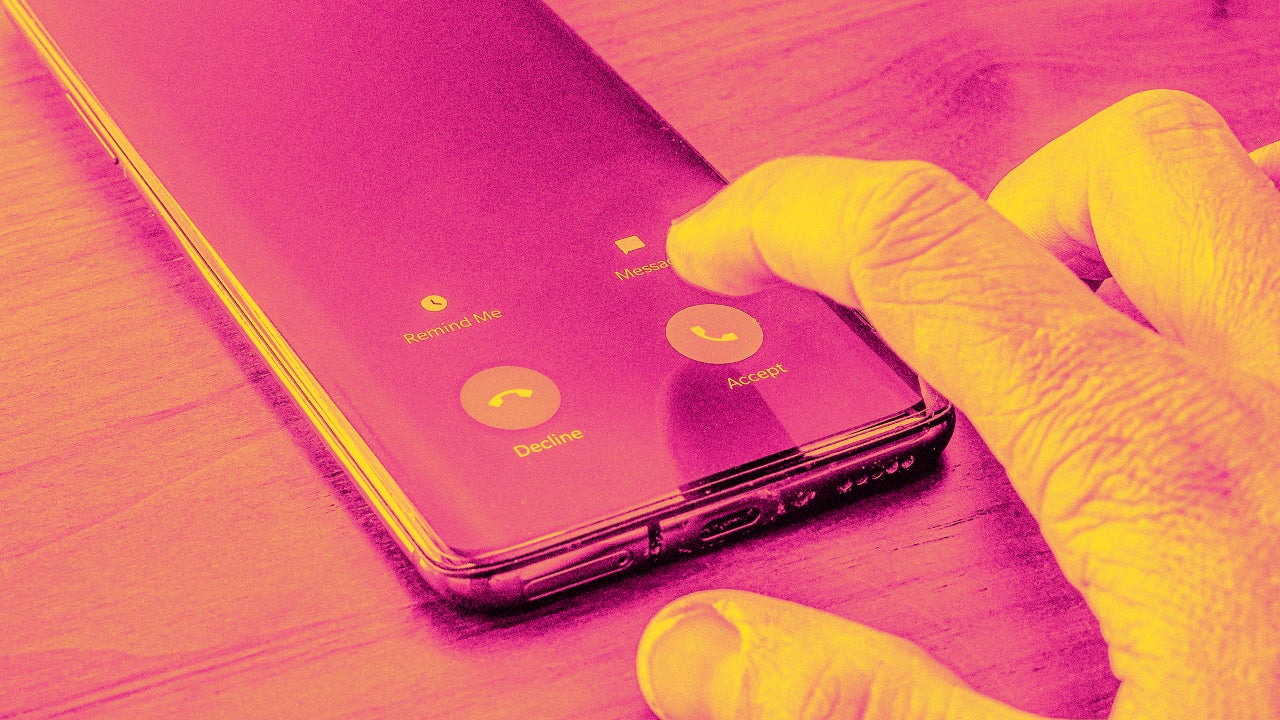
There’s no shortage of scams trying to get us to turn over our login information, payment details, or other critical data. But recently, bad actors online seem to be refocusing their attention on Apple users. First, it was the “iCloud storage is full” scam. Now there’s another, designed to trick not just iCloud users, but anyone with an Apple account. It’s become known as the “Apple High Alert” scam. Here’s what you need to know about it—and how to protect yourself. What is the Apple High Alert scam? Apple High Alert is the latest phishing scam targeting people with Apple accounts, including iCloud users and anyone with an iPhone or other Apple device. The scam does not take advantage of any vulnerabilities in Apple’s services or devices. Instead, it relies on tried and tested social engineering methods to trick users into giving their valuable information over to the scammer, so that the scammer can steal their financial information or hijack their Apple account or Apple device, like an iPhone. As ConsumerAffairs notes, the messaging often includes phrases like “Security Breach Detected,” “Your iPhone Has Been Compromised,” and “High Alert,” which is where the scam’s name comes from. How does the Apple High Alert scam work? According to ConsumerAffairs, the scam works like this: A targeted user will receive a phone call, email, text message, or web browser pop-up claiming to be from Apple. No matter the medium, the message is the same. It relays that your Apple account, or even your iPhone, has been compromised. The message claims to know this because suspicious activity was supposedly detected on your account. This supposed suspicious activity, the scam claims, may put your iCloud data, such as your photos or emails, at risk of being deleted, or your payment methods being charged for purchases you didn’t make. To ostensibly stop this, the target is instructed to turn over their sensitive information, such as their Apple ID login credentials or payment details, or to install software on their device to fix the issue. In reality, the scammer will use the data you turn over to either hijack your Apple account, hijack your Apple device, or steal your payment information. How do I know if I am the target of the Apple High Alert scam? The Apple High Alert scam can feel like a genuine message from Apple. Scammers often use Apple’s official logos in their messaging and may even include links to websites that appear to be owned by Apple. And in cases where the scammer targets you via a phone call, it is relatively simple for them to make their caller ID appear to confirm that the call is coming from Apple. However, there are many tells, or giveaways, that users can look for to determine whether a message is likely from Apple. Things to keep an eye out for include: links that direct you to a website that has a primary domain name other than Apple.com email addresses that do not end in @apple.com, and poor grammar, or even threatening or doom-mongering messaging. All of the above are telltale signs that the message is not from Apple and is a scam. The Apple High Alert scam, like most other phishing scams, is designed to create a sense of urgency so that you will follow instructions without thinking, rather than taking a breath and asking yourself if this message is for real. Scammers often create that urgency by claiming that if you don’t act immediately, your valuable photos will be deleted, your data will become inaccessible and unrecoverable, or you may be legally and financially liable for massive purchases supposedly made through your Apple account. What can I do to protect myself from the Apple High Alert scam? The immediate thing you can do to protect yourself, should you receive one of these Apple High Alert scam messages, is to take a deep breath and avoid the impulse to act right away. Instead, ask yourself if the message adds up. If the URL of any link does not have www.apple.com as the primary domain, or the email address that sent the message does not end in @apple.com, that’s a big red flag. If the message feels like a ticking clock and says that you must act immediately, that’s another huge red flag. And if the message instructs you to install an app on your device, download a profile to your iPhone, or hand over your Apple ID password or two-factor authentication code, that’s about as big a red flag as there can be. Apple has an entire support document that details common social engineering schemes and tactics. In it, Apple explicitly states that it will never ask a user for their Apple Account password or their verification codes. If you have any concern that a message you receive might be a scam, do not reply to it or interact with it. Instead, go to a web browser and navigate to Apple’s Apple Account login portal online—or access your Apple Account directly through the Settings app on your Mac, iPhone, or iPad. If there is indeed a problem with your Apple account, you’ll likely see a message there. If you still have concerns, you can contact Apple through the company’s official support channels. Just never, ever, use the contact information provided in a message you think is a scam.
Narrative Intelligence Brief
This article was published by Fast Company, a source frequently categorized with a lean left bias based in United States of America. Our narrative intelligence engine continuously monitors coverage from this outlet to track framing, bias, and rhetorical patterns. Our initial algorithmic scan of this specific piece did not flag high-confidence rhetorical techniques, suggesting a generally straightforward reporting style or neutral framing. By understanding the editorial perspective of Fast Company, readers can better contextualize the information presented and compare it across our broader media matrix to find the real narrative.
More from Fast Company
July 11, 2026
In a tough job market, don’t make AI your only career coach
July 11, 2026
This airport wants to separate wealthy travelers from everyone else
July 11, 2026
Housing market shift explained—and where it’s happening the quickest
July 11, 2026
How Maison de Sabré built a cult business of bag charms from scraps
July 11, 2026
6 frugal ways to beat the brutal heat
Analysis Methodology
This narrative analysis was generated using the CoDataLab Global Intelligence Engine. Our proprietary AI scans thousands of cross-border sources to identify sentiment patterns, framing techniques, and potential media bias. While AI provides the data-driven foundation, our objective is to empower readers with additional context beyond the standard headline.The content displayed above is a structured summary designed for rapid information processing. For the full original report, please visit the source outlet.More Coverage
Discussion
"cup semifinals"
Jude Bellingham's star shines as risk-averse England advance to World Cup semifinals over tepid Norway

Bellingham carries England past Norway and into World Cup semifinals

England defeat Norway 2-1 as Jude Bellingham shines in World Cup quarterfinal

How other outlets are covering this story
Compare narratives across 6 related reports from 6 sources. Real Narrative News aggregates the coverage spectrum so you can see who emphasises what — bias tags reflect the outlet, not the story.
Coverage bias distribution
6 sources
Left 33%
Center 50%
Right 17%
Inc.com
· Jun 27, 2026
iPhone Users: Be Aware of This New ‘Apple High Alert’ Scam
The scam is designed to make you act quickly—and turn over sensitive information to bad actors. Don’t fall for it.
Reclaim the Net
· Jul 6, 2026
Apple Hide My Email Vulnerability Exposes Real Email Addresses
The feature you pay Apple to keep your address secret has been handing it out for more than a year, and the company keeps insisting it's almost fixed. The post Apple Hide My Email Vulnerability Exposes Real Email Addresses appeared first on Reclaim The Net: Free Speech, Privacy, Digital Rights.
CNET
· Jul 1, 2026
Major Apple Bug Appears to Disclose All Real Emails for 'Hide My Email' Users
A vulnerability in Apple's privacy-focused iCloud Plus feature allows attackers to discover users' real email addresses.
Gizmodo
· Jun 30, 2026
Apple’s Beef With Fortnite Maker Epic Games Is Heading to the Supreme Court
The U.S. Supreme Court agreed to hear Apple’s appeal in a case dealing with App Store fees.
The Next Web
· Jun 30, 2026
Supreme Court will hear Apple’s appeal over the App Store contempt finding in Epic case
The US Supreme Court on Tuesday agreed to hear Apple’s appeal of the contempt finding in its long-running legal battle with Epic Games over App Store fees. The justices will review lower court decisions that found Apple willfully defied a 2021 order requiring it to let developers direct consumers to cheaper payment options outside the [] This story continues at The Next Web
The Eastern Herald
· Jun 28, 2026
Apple Asks Trump White House to Protect Chinese Chip Supplier From US Blacklist
Apple has escalated a lobbying campaign to the Trump White House, seeking assurance that Chinese memory maker CXMT — already on the Pentagon's military-risk list — will not be added to Commerce's Entity List. The push exposes a growing fault line between America's largest company and its own national-security apparatus.
Topics:
Related coverage for "iPhone users: Be aware of this new ‘Apple High Alert’ scam": Inc.com — iPhone Users: Be Aware of This New ‘Apple High Alert’ Scam. Reclaim the Net — Apple Hide My Email Vulnerability Exposes Real Email Addresses. CNET — Major Apple Bug Appears to Disclose All Real Emails for 'Hide My Email' Users. Gizmodo — Apple’s Beef With Fortnite Maker Epic Games Is Heading to the Supreme Court. The Next Web — Supreme Court will hear Apple’s appeal over the App Store contempt finding in Epic case. The Eastern Herald — Apple Asks Trump White House to Protect Chinese Chip Supplier From US Blacklist