Today in News History
On July 5, several notable moments in the history of News stand out. In 1770, The Battle of Chesma between the Russian Empire and the Ottoman Empire begins. In 1841, William Collins Whitney, American financier and politician, 31st United States Secretary of the Navy (died 1904) was born. In 1860, Robert Bacon, American colonel and politician, 39th United States Secretary of State (died 1919) was born. In 1865, The United States Secret Service begins operation. In 1902, Henry Cabot Lodge Jr., American colonel and politician, 3rd United States Ambassador to the United Nations (died 1985) was born. In 1943, World War II: German forces begin a massive offensive against the Soviet Union at the Battle of Kursk, also known as Operation Citadel. In 1950, Korean War: Task Force Smith: American and North Korean forces first clash, in the Battle of Osan. In 1982, Alexander Dimitrenko, Ukrainian-German boxer was born. In 1999, U.S. President Bill Clinton imposes trade and economic sanctions against the Taliban regime in Afghanistan. In 2006, North Korea tests four short-range missiles, one medium-range missile and a long-range Taepodong-2. The long-range Taepodong-2 reportedly fails in mid-air over the Sea of Japan. Together, these milestones provide historical context for today's news news and ongoing narratives.
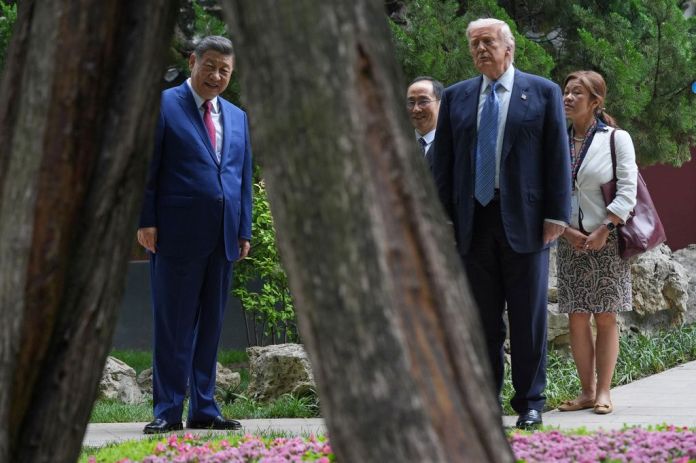
First money, now ‘loyalty’: Trump’s demands test Nato chief’s flattery tactics

Since he started work as Nato secretary general almost two years ago, Mark Rutte has spent much of his time trying to keep the United States anchored to the world’s biggest military alliance, employing outright flattery to dissuade US President Donald Trump from acting on threats to abandon it. But the goalposts keep shifting, raising the stakes ahead of this week’s summit in Turkey. Initially, it was about money. Trump has long railed against Nato allies for spending too small a fraction of...
Narrative Intelligence Brief
This article was published by South China Morning Post, a source frequently categorized with a lean left bias based in Hong Kong. Our narrative intelligence engine continuously monitors coverage from this outlet to track framing, bias, and rhetorical patterns. Our initial algorithmic scan of this specific piece did not flag high-confidence rhetorical techniques, suggesting a generally straightforward reporting style or neutral framing. By understanding the editorial perspective of South China Morning Post, readers can better contextualize the information presented and compare it across our broader media matrix to find the real narrative.
More from South China Morning Post
July 5, 2026
Can you get cancer? Hong Kong doctors say it takes more than 1 mistake
July 5, 2026
Russian warships dock in Chinese port ahead of Joint Sea exercises
July 5, 2026
Fires ravage France, Spain, Portugal forests as Europe’s temperatures rise again
July 5, 2026
Helpers’ union calls for raising food allowance to HK$2,770, citing inflation
July 5, 2026
‘Cheers should have limits’: Chinese province calls foul on fans of Japan World Cup team
Analysis Methodology
This narrative analysis was generated using the CoDataLab Global Intelligence Engine. Our proprietary AI scans thousands of cross-border sources to identify sentiment patterns, framing techniques, and potential media bias. While AI provides the data-driven foundation, our objective is to empower readers with additional context beyond the standard headline.The content displayed above is a structured summary designed for rapid information processing. For the full original report, please visit the source outlet.More Coverage
Discussion