Today in News History
On July 5, several notable moments in the history of News stand out. In 905, Dugu Sun, Chinese chancellor passed away. In 1745, Carl Arnold Kortum, German physician and poet (died 1824) was born. In 1781, Stamford Raffles, English politician, founded Singapore (died 1826) was born. In 1826, Stamford Raffles, English politician, founded Singapore (born 1782) passed away. In 1882, Inayat Khan, Indian mystic and educator (died 1927) was born. In 1888, Herbert Spencer Gasser, American physiologist and academic, Nobel Prize laureate (died 1963) was born. In 1955, Peter McNamara, Australian tennis player and coach (died 2019) was born. In 2003, The World Health Organization announces that the 2002-2004 SARS outbreak has been contained. In 2006, North Korea tests four short-range missiles, one medium-range missile and a long-range Taepodong-2. The long-range Taepodong-2 reportedly fails in mid-air over the Sea of Japan. In 2009, A series of violent riots break out in Ürümqi, the capital city of the Xinjiang Uyghur Autonomous Region in China. Together, these milestones provide historical context for today's news news and ongoing narratives.
Can you get cancer? Hong Kong doctors say it takes more than 1 mistake
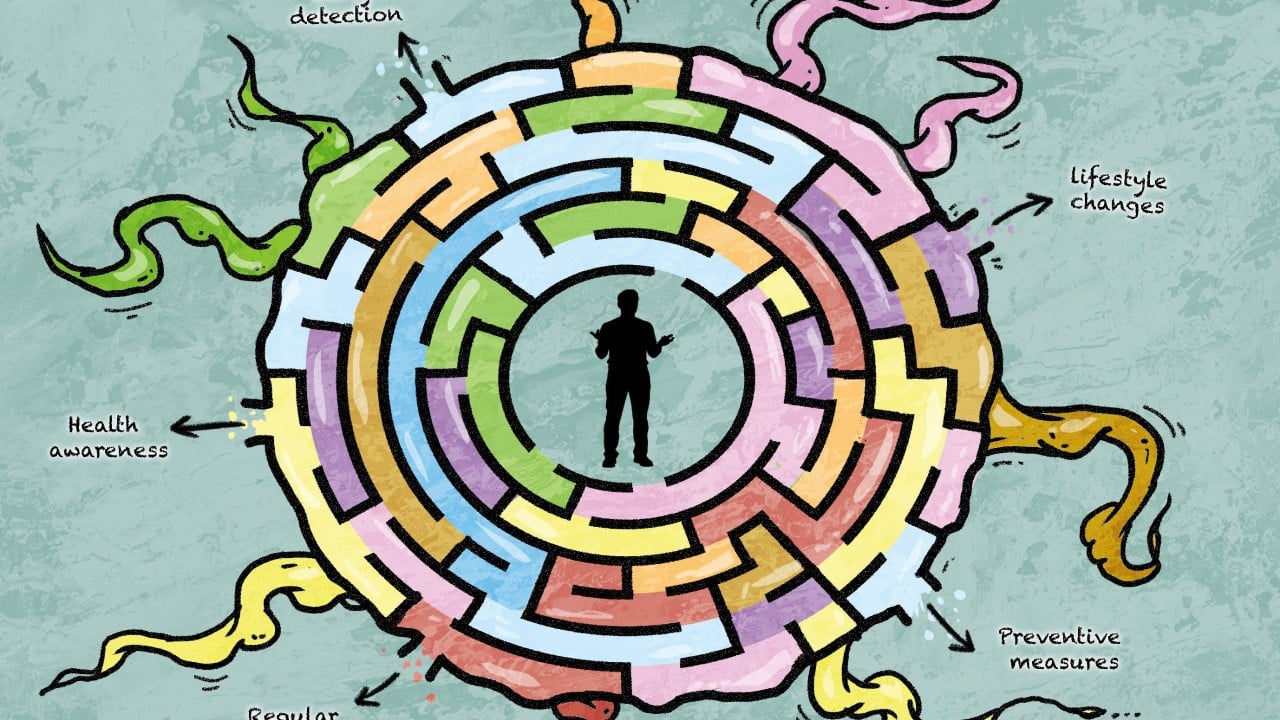
In the final instalment of a six-part Health Matters wellness series on cancer in Hong Kong, Anthea Rowan explores how genetics, lifestyle and chance intersect in cancer risk and why early detection matters. Tom Hutchins did not find a lump. What he noticed instead – a tiny, almost imperceptible dot – was enough to change his life. The Hong Kong-based business director, who has lived in the city for a decade, was just 30 when he was diagnosed with testicular cancer. He first spotted something...
Narrative Intelligence Brief
This article was published by South China Morning Post, a source frequently categorized with a lean left bias based in Hong Kong. Our narrative intelligence engine continuously monitors coverage from this outlet to track framing, bias, and rhetorical patterns. Our initial algorithmic scan of this specific piece did not flag high-confidence rhetorical techniques, suggesting a generally straightforward reporting style or neutral framing. By understanding the editorial perspective of South China Morning Post, readers can better contextualize the information presented and compare it across our broader media matrix to find the real narrative.
More from South China Morning Post
July 5, 2026
German govt may withhold classified info from states if far-right start winning
July 5, 2026
How bitter Persian Gulf rivals can make peace the Asean way
July 5, 2026
Berkshire Hathaway’s multibillion-dollar buy of Taylor Morrison to boost US housing market
July 5, 2026
Fires ravage France, Spain, Portugal forests as Europe’s temperatures rise again
July 5, 2026
Helpers’ union calls for raising food allowance to HK$2,770, citing inflation
Analysis Methodology
This narrative analysis was generated using the CoDataLab Global Intelligence Engine. Our proprietary AI scans thousands of cross-border sources to identify sentiment patterns, framing techniques, and potential media bias. While AI provides the data-driven foundation, our objective is to empower readers with additional context beyond the standard headline.The content displayed above is a structured summary designed for rapid information processing. For the full original report, please visit the source outlet.More Coverage
Discussion