Today in News History
On July 3, several notable moments in the history of News stand out. In 710, Emperor Zhongzong of Tang (born 656) passed away. In 896, Dong Chang, Chinese warlord passed away. In 1442, Emperor Go-Tsuchimikado of Japan (died 1500) was born. In 1767, Pitcairn Island is discovered by Midshipman Robert Pitcairn on an expeditionary voyage commanded by Philip Carteret. In 1886, Raymond A. Spruance, American admiral and diplomat, United States Ambassador to the Philippines (died 1969) was born. In 1940, World War II: The Royal Navy attacks the French naval squadron in Algeria, to ensure that it will not fall under German control. Of the four French battleships present, one is sunk, two are damaged, and one escapes back to France. In 1958, Matthew Fraser, Canadian-English journalist and academic was born. In 1965, Komsan Pohkong, Thai lawyer and academic was born. In 1988, United States Navy warship USS Vincennes shoots down Iran Air Flight 655 over the Persian Gulf, killing all 290 people aboard. In 1998, Kim Dong-han, South Korean singer was born. Together, these milestones provide historical context for today's news news and ongoing narratives.
China sends warning to Japan and the Philippines over ‘wrongful’ maritime talks
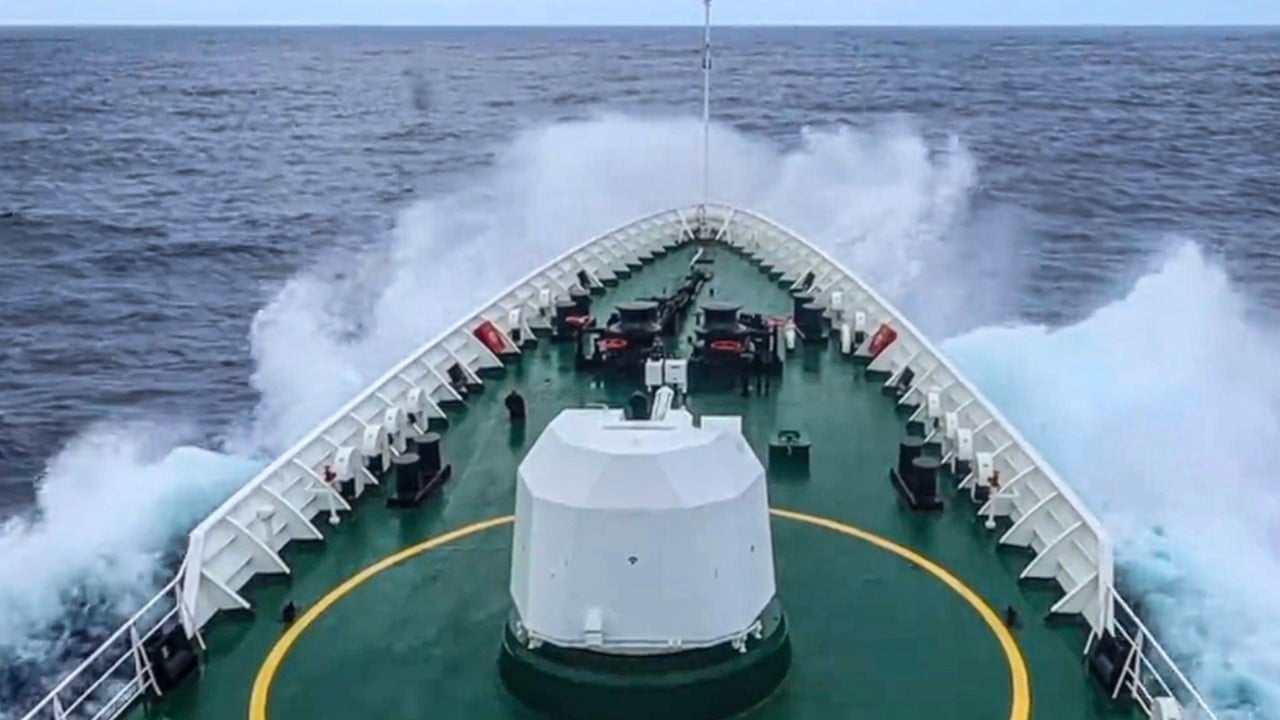
China has issued a legal warning to Japan and the Philippines over their planned maritime border talks, calling the move “internationally wrongful” and saying it had the right to hold both nations accountable. It is the latest protest from Beijing after Manila and Tokyo agreed in May to launch formal negotiations to delimit the maritime boundary of the exclusive economic zones and continental shelf between the two countries, which overlap with areas claimed by China. “The announcement,...
Narrative Intelligence Brief
This article was published by South China Morning Post, a source frequently categorized with a lean left bias based in Hong Kong. Our narrative intelligence engine continuously monitors coverage from this outlet to track framing, bias, and rhetorical patterns. Our initial algorithmic scan of this specific piece did not flag high-confidence rhetorical techniques, suggesting a generally straightforward reporting style or neutral framing. By understanding the editorial perspective of South China Morning Post, readers can better contextualize the information presented and compare it across our broader media matrix to find the real narrative.
More from South China Morning Post
July 3, 2026
Unitree IPO to test valuations as venture capital floods China robotics
July 3, 2026
Venezuela’s leader defends quake response as thousands remain missing
July 3, 2026
Bear spray surge in Japan sparks safety concerns after accidental discharge
July 3, 2026
Indonesia’s free meals corruption probe extends to police, military officers
July 3, 2026
German government pledges to defend trade, signalling tougher China stance
Analysis Methodology
This narrative analysis was generated using the CoDataLab Global Intelligence Engine. Our proprietary AI scans thousands of cross-border sources to identify sentiment patterns, framing techniques, and potential media bias. While AI provides the data-driven foundation, our objective is to empower readers with additional context beyond the standard headline.The content displayed above is a structured summary designed for rapid information processing. For the full original report, please visit the source outlet.More Coverage
Discussion
"cup"
Markwayne Mullin’s celebration of Iran’s World Cup exit is worse than poor sportsmanship

Here’s why you get nervous watching penalty shootouts at the World Cup | Pitchside Episode 4

Fans Erupt After Team USA’s Star Player Ejected On Controversial Call