Today in News History
On July 5, several notable moments in the history of News stand out. In 905, Pei Shu, Chinese chancellor (born 841) passed away. In 905, Lu Yi, Chinese chancellor (born 847) passed away. In 936, Xu Ji, Chinese official and chancellor passed away. In 1859, The United States discovers and claims Midway Atoll. In 1943, World War II: An Allied invasion fleet sails for Sicily (Operation Husky, July 10, 1943). In 1953, Caryn Navy, American mathematician and computer scientist was born. In 1983, Zheng Jie, Chinese tennis player was born. In 1994, Jeff Bezos founds Amazon. In 2003, The World Health Organization announces that the 2002-2004 SARS outbreak has been contained. In 2006, North Korea tests four short-range missiles, one medium-range missile and a long-range Taepodong-2. The long-range Taepodong-2 reportedly fails in mid-air over the Sea of Japan. Together, these milestones provide historical context for today's news news and ongoing narratives.
China offers sea cable detection tech to clients in Middle East, Europe and Asia
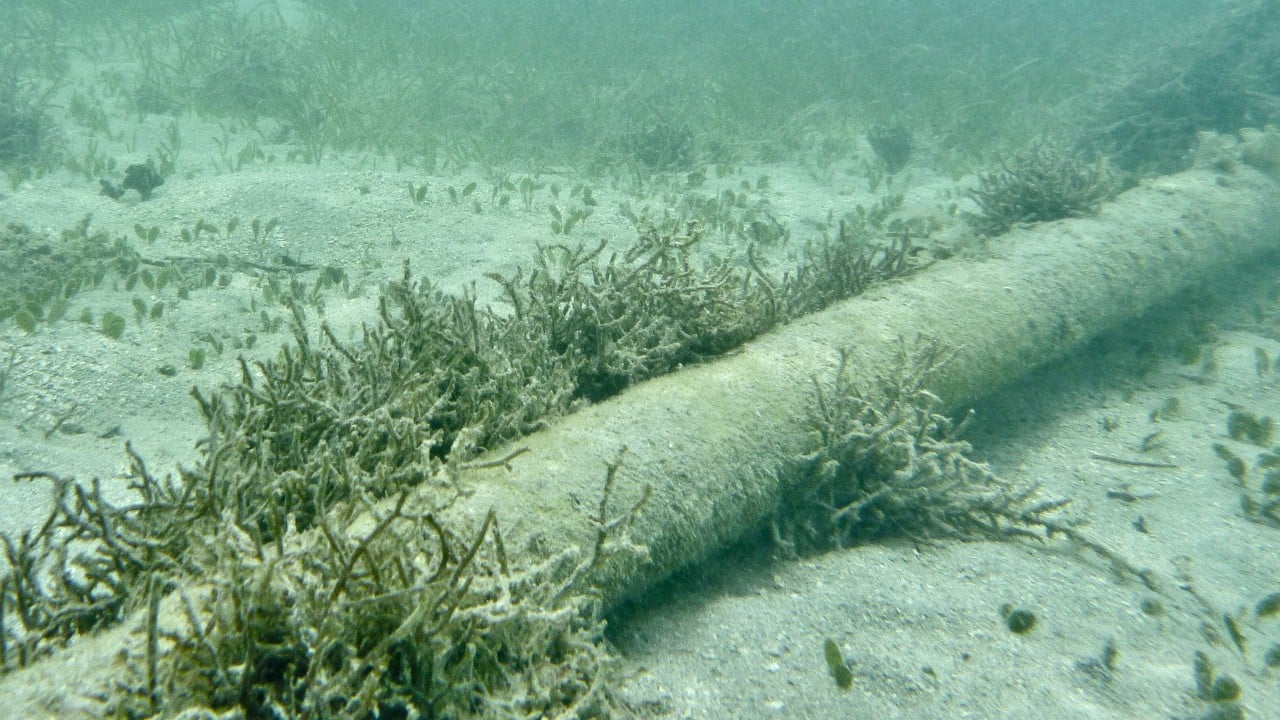
China plans to export powerful robots capable of locating marine cables buried under the seabed to regions including “Southeast Asia, the Middle East and Europe”, according to the Science and Technology Daily. China aimed to secure its position in the marine equipment sector by introducing this technology to potential clients in these regions, the official newspaper reported last Monday. “By deepening cooperation in [these] offshore engineering markets, we will integrate Chinese intelligent...
Narrative Intelligence Brief
This article was published by South China Morning Post, a source frequently categorized with a lean left bias based in Hong Kong. Our narrative intelligence engine continuously monitors coverage from this outlet to track framing, bias, and rhetorical patterns. Our initial algorithmic scan of this specific piece did not flag high-confidence rhetorical techniques, suggesting a generally straightforward reporting style or neutral framing. By understanding the editorial perspective of South China Morning Post, readers can better contextualize the information presented and compare it across our broader media matrix to find the real narrative.
More from South China Morning Post
July 5, 2026
Asean monitors: ‘simply theatre’ in Thai-Cambodian narrative war?
July 4, 2026
Evacuation ordered as storms gather in Washington before Trump’s July 4 speech
July 4, 2026
Putin and Trump discuss Ukraine, Iran in US Independence Day call
July 4, 2026
Inside Taylor Swift and Travis Kelce’s big bash: a garden in the Garden
July 4, 2026
‘Overcapacity’ talk reflects a West irked by China’s industrial rise
Analysis Methodology
This narrative analysis was generated using the CoDataLab Global Intelligence Engine. Our proprietary AI scans thousands of cross-border sources to identify sentiment patterns, framing techniques, and potential media bias. While AI provides the data-driven foundation, our objective is to empower readers with additional context beyond the standard headline.The content displayed above is a structured summary designed for rapid information processing. For the full original report, please visit the source outlet.More Coverage
Discussion
"trump"
Trump FURIOUS as USMNT Defies his ADMINISTRATION’S WISHES!!!

Brian Feeney: From a beacon of democracy to Trump’s rotten, mafia state

Storm threat triggers chaotic evacuation ahead of Trump’s speech (VIDEOS)