
Today in News History
On July 12, several notable moments in the history of News stand out. In 965, Meng Chang, emperor of Later Shu (born 919) passed away. In 981, Xue Juzheng, Chinese scholar-official and historian passed away. In 1488, Joseon Dynasty official Choe Bu returned to Korea after months of shipwrecked travel in China. In 1879, Han Yong-un, Korean poet (died 1944) was born. In 1913, The Second Revolution breaks out against the Beiyang government, as Li Liejun proclaims Jiangxi independent from the Republic of China. In 1924, Faidon Matthaiou, Greek basketball player and coach (died 2011) was born. In 1969, Chantal Jouanno, French politician, French Minister of Youth Affairs and Sports was born. In 1986, Simone Laudehr, German footballer was born. In 2006, The 2006 Lebanon War begins. In 2015, Cheng Siwei, Chinese engineer, economist, and politician (born 1935) passed away. Together, these milestones provide historical context for today's news news and ongoing narratives.
以太坊对不起用户六年的等待?
“现在最大的问题在于ETH这里了BTC依然有铁粉认为BTC有共识价值而ETH这轮可以说尴尬到极点任何创新对于投资者来说都要落实到价格上而这轮ETH的高位是4500U现在的价格是1500U这就带来一个问题ETH将来还能不能有创新拉高价格先不论能不能到一万美元假设能Continue reading on Medium »
Narrative Intelligence Brief
This article was published by Ethereum on Medium, a source frequently categorized with a center bias based in United States of America. Our narrative intelligence engine continuously monitors coverage from this outlet to track framing, bias, and rhetorical patterns. Our initial algorithmic scan of this specific piece did not flag high-confidence rhetorical techniques, suggesting a generally straightforward reporting style or neutral framing. By understanding the editorial perspective of Ethereum on Medium, readers can better contextualize the information presented and compare it across our broader media matrix to find the real narrative.
More from Ethereum on Medium
July 11, 2026
A qué nos referimos cuando hablamos de EOA, Smart Wallets y ERC-4337?
July 12, 2026
The Missing Layer in AI Isn’t Intelligence. It’s Trust.
July 12, 2026
Ethereum Foundation’s Staked ETH Reaches Over $143M, Boosting Institutional Confidence
July 12, 2026
How to Check If a Smart Contract Looks Risky (Before You Interact)
July 12, 2026
Solidity Mappings
Analysis Methodology
This narrative analysis was generated using the CoDataLab Global Intelligence Engine. Our proprietary AI scans thousands of cross-border sources to identify sentiment patterns, framing techniques, and potential media bias. While AI provides the data-driven foundation, our objective is to empower readers with additional context beyond the standard headline.The content displayed above is a structured summary designed for rapid information processing. For the full original report, please visit the source outlet.More Coverage
Discussion
"lindsey graham"
Shock Details of Lindsey Graham’s Emergency Revealed

Celebrity Deaths of 2026: Lindsey Graham and More Stars We’ve Lost This Year
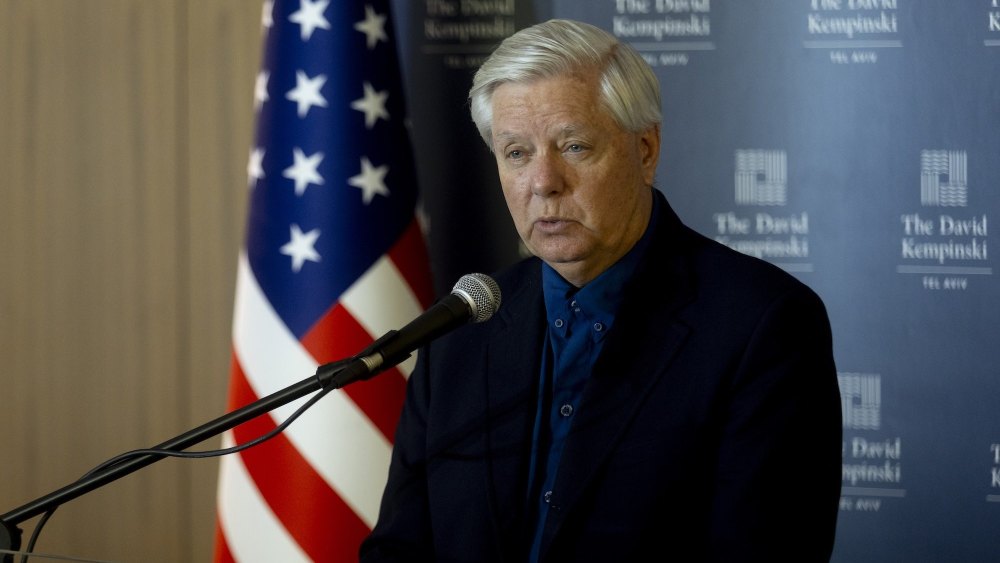
"No Conspiracy": Former Israeli Consul Dismisses Conspiracy Theories about Lindsey Graham's Death
How other outlets are covering this story
Compare narratives across 6 related reports from 6 sources. Real Narrative News aggregates the coverage spectrum so you can see who emphasises what — bias tags reflect the outlet, not the story.
Coverage bias distribution
6 sources
Left 33%
Center 17%
Right 17%
Saudi Gazette
· Jun 21, 2026
Federation of Chambers’ Paris visit instrumental in further bolstering Saudi-French trade and investment ties
PARIS — A delegation from the Federation of Saudi Chambers of Commerce, headed by its Chairman Sheikh Abdullah Saleh Kamel, concluded a five-day high-profile visit to France. During the visit, the delegation participated in several key meetings and events, including the Gulf Vision 2026 forum and the annual meeting of the Saudi-French Business Council. The delegation held meetings with government officials and business leaders to explore opportunities for cooperation and investment. The delegation, representing more than 40 Saudi companies and investors, attended the annual dinner of the Saudi-French Business Council hosted by the French Ministry for Europe and Foreign Affairs, which focused on strengthening economic cooperation, expanding private-sector ties, and exploring investment opportunities in strategic sectors. The delegation participated in the annual meeting of the Saudi-French Business Council in Paris. Speaking at the meeting, Sheikh Kamel said Saudi-French relations have entered a new phase of growth and development, supported by the leaderships of both countries and their shared vision to strengthen economic and investment cooperation. He noted that the partnership has expanded beyond traditional trade ties to include investment, innovation, energy, culture, tourism and advanced technologies. The delegation also took part in the two-day Gulf Vision 2026 forum, organized by Business France and attended by officials, investors, and business leaders from France and Gulf Cooperation Council countries. During a forum session, Federation Secretary General Sultan Al-Musallam highlighted the Kingdom's economic transformation under Saudi Vision 2030 and noted that Saudi-French trade reached SR44.2 billion in 2025, an increase of 7.2 percent, while French investments remain among the largest foreign investments in the Kingdom. The visit reflects the growing momentum in Saudi-French economic relations and ongoing efforts to strengthen trade and investment ties between the two countries.
ANTARA News
· Jul 1, 2026
5G-A Experience Monetization Forum Debuts Milestone Results to Accelerate Terminal-Network-Business Synergy
The industry forum 5G-A Experience Monetization: Terminal-Network-Business Synergy concluded in Shanghai. ...
Middle East Eye
· Jun 22, 2026
How the Muslim world is grappling with AI, faith and the struggle for human dignity
How the Muslim world is grappling with AI, faith and the struggle for human dignity Submitted by Hesham Gaafar on Wed, 06/17/2026 - 19:56 As Pope Leo XIV warns in his recent encyclical, artificial intelligence is not simply another tool. It is reshaping every aspect of our lives This illustration photograph, taken in October 2023 in Mulhouse, France, shows figurines next to a screen displaying a logo of the US firm OpenAI (Sebastien Bozon/AFP) On When Pope Leo XIV signed his first encyclical, Magnifica Humanitas, on 15 May 2026, the date was not accidental. It marked 135 years since Rerum Novarum, the 1891 papal letter that confronted the moral crisis of the industrial age: factories, machines, labour exploitation and the violent imbalance between capital and workers. The new “social question” is no longer only the factory. It is the algorithm. The pope’s warning is clear: artificial intelligence is not simply another tool. Like the steam engine before it, it is reshaping work, war, knowledge, politics and even the way we define the human person. The question is no longer only what AI can do, but what kind of world it is building - and who is being sacrificed to build it. Across Muslim societies, similar questions are being asked, though not through one central voice. In Doha, scholars of Islamic ethics examine moral agency and accountability. In Malaysia, Islamic principles are being brought into the conversation around new technologies. In Indonesia, clerical institutions are beginning to address digital life, AI-generated religious answers, and the social impacts of automation. These traditions do not speak in the same language as Catholic social teaching, but they converge at a crucial point: the human being cannot be reduced to data, productivity or usefulness. In Catholicism, human dignity is rooted in the idea that people are created in the image of God. This dignity is not earned through efficiency, intellect or economic value. A machine may calculate, predict and imitate language, but it cannot possess conscience or moral responsibility. Islamic thought reaches a similar conclusion through different concepts. These include takrim, the Quranic honouring of the children of Adam; khilafah, human stewardship of the earth; and amanah, the moral trust carried by human beings. A person cannot surrender moral responsibility to a machine, because accountability belongs to the human being, not to the tool. Who owns the algorithm? This is where Islamic theology offers a powerful response to what might be called the deification of technology. Tawhid, the oneness of God, is not only a doctrine of worship; it is also a critique of false absolutes. If only God is absolute, then no technology, market or algorithm can be treated as destiny. AI is a tool made by human beings. It must not become an idol before which societies surrender judgement. Yet the deeper issue is not only philosophical. It is political. The most urgent questions are: who owns the machine? Who controls the data? Who profits from the systems? And who pays the hidden human costs? AI forces both Christian and Muslim traditions to confront the same truth: dignity is not an abstract word. It is tested where power becomes invisible Here, the tradition of Catholic social teaching offers a more developed structural critique. Pope Leo XIV places AI within the long history of labour, capital and inequality. He warns that power over AI is concentrated in the hands of private corporations, which have amassed resources greater than many states. Data, platforms, patents and infrastructure are becoming the new property of empire. The danger is not only misuse by individuals, but a global system in which a few actors control the conditions of knowledge, work and visibility. This matters profoundly for the Middle East, Africa and the wider Global South. AI systems are often trained on data extracted from the world, while the profits and decision-making power remain concentrated elsewhere. Languages such as Arabic, Malay and Indonesian are underrepresented when compared with English. Cultural assumptions embedded in western datasets can then return to Muslim societies disguised as neutral technology. But this is not neutrality. It is a new form of epistemic dependency. The field of Islamic ethics has the tools to respond. The maqasid tradition, an Islamic legal doctrine, asks whether a practice protects or harms religion, life, intellect, family, wealth, dignity and justice. Classical Islamic law also contains strong ideas about public goods, monopoly, harm and fair labour. Question of justice The prophetic principle that people share in essential resources could be extended to today’s digital commons: the data, algorithms and technological infrastructure that increasingly shape public life. But much contemporary Islamic discussion still treats AI mainly as a question of permissible use: is this application halal or haram? Can a chatbot issue religious advice? Can AI be used in finance, medicine or education? These are important questions, but they are not enough. The bigger question is not only whether Muslims may use AI, but whether the current AI economy itself is just. Behind the clean interface of an AI system are invisible workers labelling data, moderating violent content, training models and absorbing psychological harm. Many are young, underpaid and located in poorer economies. Behind the promise of automation are minerals, energy, surveillance, military contracts and widening inequalities. If Islamic ethics is serious about justice, it must ask not only what the machine says, but whose labour and whose suffering make it speak. The Indonesian experience offers one possible strength: collective religious reasoning. Institutions such as Nahdlatul Ulama, Muhammadiyah and the Indonesian Ulema Council have mechanisms for addressing new social questions collectively. The Malaysian tradition offers another strength: philosophical depth through maqasid, virtue ethics and critiques of secular knowledge. The Arab scholarly world, including facilities such as the Research Center for Islamic Legislation and Ethics in Doha, offers serious work on moral agency and accountability. Fragmented conversation The problem is not absence of thought. The problem is fragmentation. Catholicism has the pope and a unified tradition of social teaching. Sunni Islam, by contrast, has no single central authority. Its knowledge is dispersed across scholars, institutions, regions and languages. This can appear as a weakness when compared with a papal encyclical. But it can also be a strength, if Muslims learn to treat this diversity not as scattered noise, but as an open ethical system. Pope Leo XIV wants to disarm AI. Its developers want to win the race Read More » The challenge is not to create an Islamic “pope”. That would misunderstand the tradition. The challenge is to build a connected moral conversation: one that links Arab ethical scholarship, Malaysian maqasid thinking and Indonesian institutional reasoning with the lived realities of workers, migrants, women, minorities and communities already affected by algorithmic power. AI forces both Christian and Muslim traditions to confront the same truth: dignity is not an abstract word. It is tested where power becomes invisible. It is tested when a worker is managed by an algorithm they cannot question. It is tested when a refugee is reduced to a risk score. It is tested when a student’s future is shaped by automated systems trained on biased data. It is tested when lethal decisions in war are delegated to machines. The next chapter of human dignity will not be written only in churches, mosques, universities or the offices of tech companies. It will be written wherever theology has the courage to meet the algorithm - not to worship it, and not merely to fear it, but to insist that no machine, market or empire has the right to reduce the human person to a file. The views expressed in this article belong to the author and do not necessarily reflect the editorial policy of Middle East Eye. Technology Opinion Post Date Override 0 Update Date Mon, 05/04/2020 - 21:29 Update Date Override 0
KNN India
· Jul 1, 2026
FM Sitharaman Begins 4-Day France Visit; Bilateral Economic Dialogue to Focus on Cross-Sector Trade
FM Sitharaman Begins 4-Day France Visit; Bilateral Economic Dialogue to Focus on Cross-Sector Trade New Delhi, Jul 1 (KNN) Union Finance and Corporate Affairs Minister Nirmala Sitharaman has begun a four-day official visit to France to participate in high-level bilateral engagements aimed at strengthening economic cooperation between the two countries. A key engagement during the visit will be the India-France Economic and Financial Dialogue (EFD), which Sitharaman will co-chair with French Economy Minister Roland Lescure in Aix-en-Provence. The dialogue will focus on expanding bilateral economic cooperation across various sectors and strengthening economic ties between India and France. During the visit, the finance minister will also hold meetings with global business leaders and participate in a roundtable with industry executives to discuss investment opportunities and economic cooperation. Sitharaman will take part in a panel discussion at Les Rencontres Économiques d'Aix-en-Provence, where she will speak on the theme, How to Promote the Growth of a New Middle Class. Her itinerary also includes visits to the International Thermonuclear Experimental Reactor (ITER) project at Cadarache and Campus Cyber, France's national cybersecurity hub, to discuss collaboration in areas including clean energy, scientific research and cybersecurity. The minister is also scheduled to meet Renaud Muselier, President of the Provence-Alpes-Côte d'Azur (PACA) Region, to discuss cooperation in investment, innovation, clean energy, technology and regional economic partnerships. She will conclude the visit with an interaction with members of the Indian diaspora. (KNN Bureau)
Jamaica Observer
· Jul 10, 2026
Chinese company UBTech launches hyper-real humanoid robots for lonely people
SHENZHEN, China (AFP)—Their metallic frames covered in supple, lifelike skin, a posse of new Chinese robots meant for companionship can offer users AI-generated conversation or a hand to hold, complete with manicured nails.The company UBTech says its U1 robot -- equipped with eye cameras, chest sensors, and listening microphones -- is the world's first full-sized, ultra-realistic humanoid designed for mass production.Touted as an antidote to loneliness, the robots are priced at 119,800 yuan (17,600) for the most basic type and 990,000 yuan (145,700) for an Ultra version with more advanced features.Our bionic robots can accompany you for a lifetime, Michael Tam, head of UBTech's brand UWorld, said Tuesday at a launch event in the southern Chinese tech hub Shenzhen.It will never betray you, will always be loyal to you, and will love you unconditionally.If you pay enough, the androids' hair, face and outfits can be customised to resemble a loved one, a celebrity, or an imaginary character.Male and female U1s can speak through an artificial intelligence tool programmed by the company to offer soothing words if it detects fatigue or stress, and get to know its user over time.The product is mainly aimed at single people and those aged over 60 -- a colossal market in China of around 120 and 320 million respectively, according to Tam.These people have a great need for companionship, he said.UBTech says it has already had more than 13,300 pre-orders, with deliveries due to start in September.- 'Niche market' -Robotics is a booming sector worldwide, and Chinese startups have raced ahead in recent years, helped in part by their access to the country's existing supply chains.The basic U1 can move its head, eyes and mouth, and has a battery life of up to four hours -- but it doesn't do housework or cooking, and its skills do not extend to the bedroom either.It is not designed to offer intimate relations, at least for now, UBTech says.But it can discuss users' daily concerns, remind them to take medication and help spot potential health problems, or even propose watching a World Cup match together.Generative AI is also being deployed elsewhere in an effort to ease loneliness, especially among elderly populations.In South Korea, cuddly ChatGPT-powered dolls are used in some care homes, while a lamp-like AI device called ElliQ offers similar companionship and safety-monitoring services.Lian Jye Su, a Singapore-based chief analyst at Omdia, told AFP that he does see value in a companion robot, albeit in a niche market such as elderly care or mental wellness.But they have to pass the 'uncanny valley' test to appear physically and emotionally acceptable, with current models perhaps too off-putting to sell well, Su said, referring to the phenomenon in which interactions with artificial objects are so human-like it triggers unease.- Sci-fi vibes -The race to develop AI tools that humans trust has raised concerns over data privacy and the risk of becoming emotionally attached to a machine, including accusations that chatbots have encouraged suicides.UBTech says the data processed by its U1 robots is encrypted and will not be used to train its AI models.In Shenzhen on Tuesday, the company did not shy away from sci-fi associations, showing off its ultra-realistic bots with outfits and visuals inspired by video games, and a spaceship on a giant screen.Robots of all shapes and sizes can be seen in many places in China, from hotels to shopping centres and in factories.The country accounted for 85 percent of the world's humanoid installations last year, according to Barclays bank.The government has designated robotics a strategic industry, and says that by last year, more than 140 Chinese companies had already launched more than 330 humanoid robot models.These companies, like their global rivals, are also ploughing resources into the development of physical AI -- technology that allows robots to move and interact with the world autonomously.For now, the scope and performance of real-life use cases for robots that use AI for movement remains limited, however, with most impressive displays pre-programmed or remotely operated.
NDTV
· Jun 26, 2026
After Gaokao, How Chinese Students Are Using AI To Choose Right Universities
Gaokao Results 2026: Conducted once a year, the Gaokao is China's national college entrance examination and plays a decisive role in shaping a student's academic future.
Topics:
Related coverage for "以太坊对不起用户六年的等待?": Saudi Gazette — Federation of Chambers’ Paris visit instrumental in further bolstering Saudi-French trade and investment ties. ANTARA News — 5G-A Experience Monetization Forum Debuts Milestone Results to Accelerate Terminal-Network-Business Synergy. Middle East Eye — How the Muslim world is grappling with AI, faith and the struggle for human dignity. KNN India — FM Sitharaman Begins 4-Day France Visit; Bilateral Economic Dialogue to Focus on Cross-Sector Trade. Jamaica Observer — Chinese company UBTech launches hyper-real humanoid robots for lonely people. NDTV — After Gaokao, How Chinese Students Are Using AI To Choose Right Universities