
Today in News History
On July 12, several notable moments in the history of News stand out. In 1855, Ned Hanlan, Canadian rower, academic, and businessman (died 1908) was born. In 1952, Voja Antonić, Serbian computer scientist and journalist, designed the Galaksija computer was born. In 1959, Karl J. Friston, English psychiatrist and neuroscientist was born. In 1966, D. T. Suzuki, Japanese philosopher and author (born 1870) passed away. In 1970, Lee Byung-hun, South Korean actor, singer, and dancer was born. In 1994, Kanako Momota, Japanese singer-songwriter was born. In 1998, Arkady Ostashev, Soviet/Russian scientist and engineer (born 1925) passed away. In 2015, Tenzin Delek Rinpoche, Tibetan monk and activist (born 1950) passed away. In 2015, Cheng Siwei, Chinese engineer, economist, and politician (born 1935) passed away. In 2024, Ruth Westheimer, German-American sex therapist (born 1928) passed away. Together, these milestones provide historical context for today's news news and ongoing narratives.
Chinese company UBTech launches hyper-real humanoid robots for lonely people
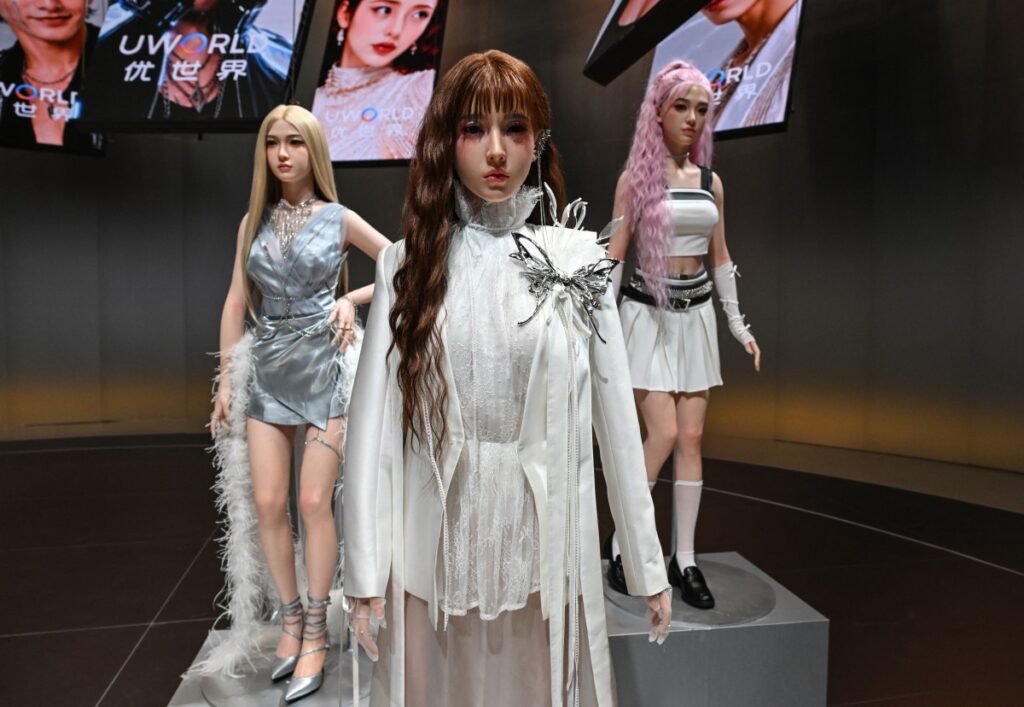
SHENZHEN, China (AFP)—Their metallic frames covered in supple, lifelike skin, a posse of new Chinese robots meant for companionship can offer users AI-generated conversation or a hand to hold, complete with manicured nails.The company UBTech says its U1 robot -- equipped with eye cameras, chest sensors, and listening microphones -- is the world's first full-sized, ultra-realistic humanoid designed for mass production.Touted as an antidote to loneliness, the robots are priced at 119,800 yuan (17,600) for the most basic type and 990,000 yuan (145,700) for an Ultra version with more advanced features.Our bionic robots can accompany you for a lifetime, Michael Tam, head of UBTech's brand UWorld, said Tuesday at a launch event in the southern Chinese tech hub Shenzhen.It will never betray you, will always be loyal to you, and will love you unconditionally.If you pay enough, the androids' hair, face and outfits can be customised to resemble a loved one, a celebrity, or an imaginary character.Male and female U1s can speak through an artificial intelligence tool programmed by the company to offer soothing words if it detects fatigue or stress, and get to know its user over time.The product is mainly aimed at single people and those aged over 60 -- a colossal market in China of around 120 and 320 million respectively, according to Tam.These people have a great need for companionship, he said.UBTech says it has already had more than 13,300 pre-orders, with deliveries due to start in September.- 'Niche market' -Robotics is a booming sector worldwide, and Chinese startups have raced ahead in recent years, helped in part by their access to the country's existing supply chains.The basic U1 can move its head, eyes and mouth, and has a battery life of up to four hours -- but it doesn't do housework or cooking, and its skills do not extend to the bedroom either.It is not designed to offer intimate relations, at least for now, UBTech says.But it can discuss users' daily concerns, remind them to take medication and help spot potential health problems, or even propose watching a World Cup match together.Generative AI is also being deployed elsewhere in an effort to ease loneliness, especially among elderly populations.In South Korea, cuddly ChatGPT-powered dolls are used in some care homes, while a lamp-like AI device called ElliQ offers similar companionship and safety-monitoring services.Lian Jye Su, a Singapore-based chief analyst at Omdia, told AFP that he does see value in a companion robot, albeit in a niche market such as elderly care or mental wellness.But they have to pass the 'uncanny valley' test to appear physically and emotionally acceptable, with current models perhaps too off-putting to sell well, Su said, referring to the phenomenon in which interactions with artificial objects are so human-like it triggers unease.- Sci-fi vibes -The race to develop AI tools that humans trust has raised concerns over data privacy and the risk of becoming emotionally attached to a machine, including accusations that chatbots have encouraged suicides.UBTech says the data processed by its U1 robots is encrypted and will not be used to train its AI models.In Shenzhen on Tuesday, the company did not shy away from sci-fi associations, showing off its ultra-realistic bots with outfits and visuals inspired by video games, and a spaceship on a giant screen.Robots of all shapes and sizes can be seen in many places in China, from hotels to shopping centres and in factories.The country accounted for 85 percent of the world's humanoid installations last year, according to Barclays bank.The government has designated robotics a strategic industry, and says that by last year, more than 140 Chinese companies had already launched more than 330 humanoid robot models.These companies, like their global rivals, are also ploughing resources into the development of physical AI -- technology that allows robots to move and interact with the world autonomously.For now, the scope and performance of real-life use cases for robots that use AI for movement remains limited, however, with most impressive displays pre-programmed or remotely operated.
Narrative Intelligence Brief
This article was published by Jamaica Observer, a source frequently categorized with a Unknown bias based in Jamaica. Our narrative intelligence engine continuously monitors coverage from this outlet to track framing, bias, and rhetorical patterns. Our initial algorithmic scan of this specific piece did not flag high-confidence rhetorical techniques, suggesting a generally straightforward reporting style or neutral framing. By understanding the editorial perspective of Jamaica Observer, readers can better contextualize the information presented and compare it across our broader media matrix to find the real narrative.
More from Jamaica Observer
July 12, 2026
Six dead as driver rams into crows at Chilean festival
July 12, 2026
Remittances to Jamaica up 3.8 per cent in 2025, says PIOJ
July 12, 2026
Inner Circle’s ‘Sweat (A La La La La Long)’ platinum in UK
July 12, 2026
Jamaica continues dominance at NACAC
July 12, 2026
Dwayne Vaz steps down as Deputy Spokesperson
Analysis Methodology
This narrative analysis was generated using the CoDataLab Global Intelligence Engine. Our proprietary AI scans thousands of cross-border sources to identify sentiment patterns, framing techniques, and potential media bias. While AI provides the data-driven foundation, our objective is to empower readers with additional context beyond the standard headline.The content displayed above is a structured summary designed for rapid information processing. For the full original report, please visit the source outlet.More Coverage
Discussion
"lindsey graham"
Kash Patel stuns with weird response to Lindsey Graham's death: 'Why is the FBI involved?'

Lindsey Graham death and World Cup semis | Reuters World News

"No Conspiracy": Former Israeli Consul Dismisses Conspiracy Theories about Lindsey Graham's Death

How other outlets are covering this story
Compare narratives across 6 related reports from 6 sources. Real Narrative News aggregates the coverage spectrum so you can see who emphasises what — bias tags reflect the outlet, not the story.
Coverage bias distribution
6 sources
Left 17%
Center 50%
Right 17%
South China Morning Post
· Jul 1, 2026
UBTech’s lifelike humanoid robots built for companionship arriving in homes across China
UBTech Robotics, the world’s first publicly traded humanoid robot maker, has launched a consumer humanoid designed for personal companionship, featuring lifelike silicone skin and emotional artificial intelligence, as Chinese tech firms increasingly transition robots from the factory floor to the family living room. The U1, unveiled on Tuesday in Shenzhen, comes in male and female versions, standing 183cm and 168cm tall, respectively. The model is available in Lite, Pro and Ultra variants,...
TechNode
· Jul 1, 2026
UBTECH unveils consumer humanoid robot U1, says orders secure 11,000 ahead of first deliveries
Chinese robotics company UBTECH on Tuesday unveiled its first full-sized consumer humanoid robot, the U1 Series, marking a major push into the home robotics market as demand for AI-powered companions gains momentum. The launch event, held in Shenzhen, introduced the U1 Series under UBTECH’s new consumer brand, UWorld. More than 50 robot models with different []
Digital Trends
· Jul 1, 2026
China’s UBTech unveils eerily lifelike companion robots, and yes, they want to move in with you
UBTech's new Uworld U1 humanoid robots are designed to live alongside people, learning routines, recognizing emotions, and holding natural conversations. The company even envisions customized versions that can recreate a person's face and voice.
Independent Online
· Jul 1, 2026
PICS: Chinese firm sells hyper-real, 'always loyal' humanoid robots for R2.3m
PICS: Chinese firm sells hyper-real, 'always loyal' humanoid robots for R2.3m
Seeking Alpha
· Jun 25, 2026
Agility Robotics: The First Listed U.S. Pure-Play Humanoid Company
Agility Robotics: The First Listed U.S. Pure-Play Humanoid Company
ANTARA News
· Jun 23, 2026
Techman Robot Targets Southeast Asian Smart Manufacturing Markets at Thailand Automation Show
Techman Robot, a global leader in collaborative robots and AI vision technology, will showcase its latest innovations ...
Topics:
Related coverage for "Chinese company UBTech launches hyper-real humanoid robots for lonely people": South China Morning Post — UBTech’s lifelike humanoid robots built for companionship arriving in homes across China. TechNode — UBTECH unveils consumer humanoid robot U1, says orders secure 11,000 ahead of first deliveries. Digital Trends — China’s UBTech unveils eerily lifelike companion robots, and yes, they want to move in with you. Independent Online — PICS: Chinese firm sells hyper-real, 'always loyal' humanoid robots for R2.3m. Seeking Alpha — Agility Robotics: The First Listed U.S. Pure-Play Humanoid Company. ANTARA News — Techman Robot Targets Southeast Asian Smart Manufacturing Markets at Thailand Automation Show