
Today in News History
On June 26, several notable moments in the history of News stand out. In 1933, Claudio Abbado, Italian conductor (died 2014) was born. In 1970, Adam Ndlovu, Zimbabwean footballer (died 2012) was born. In 1983, Vinícius Rodrigues Almeida, Brazilian footballer was born. In 1988, Oliver Stang, German footballer was born. In 1991, Diego Falcinelli, Italian footballer was born. In 1997, Don Hutson, American football player and coach (born 1913) passed away. In 2003, Marc-Vivien Foé, Cameroon footballer (born 1975) passed away. In 2007, Joey Sadler, New Zealand rugby player (born 1914) passed away. In 2014, Bill Frank, American-Canadian football player (born 1938) passed away. In 2015, Five different terrorist attacks in France, Tunisia, Somalia, Kuwait, and Syria occurred on what was dubbed Bloody Friday by international media. Upwards of 750 people were either killed or injured in these uncoordinated attacks. Together, these milestones provide historical context for today's news news and ongoing narratives.
World Cup coaches are worried about yellow cards this week. Here’s what to know
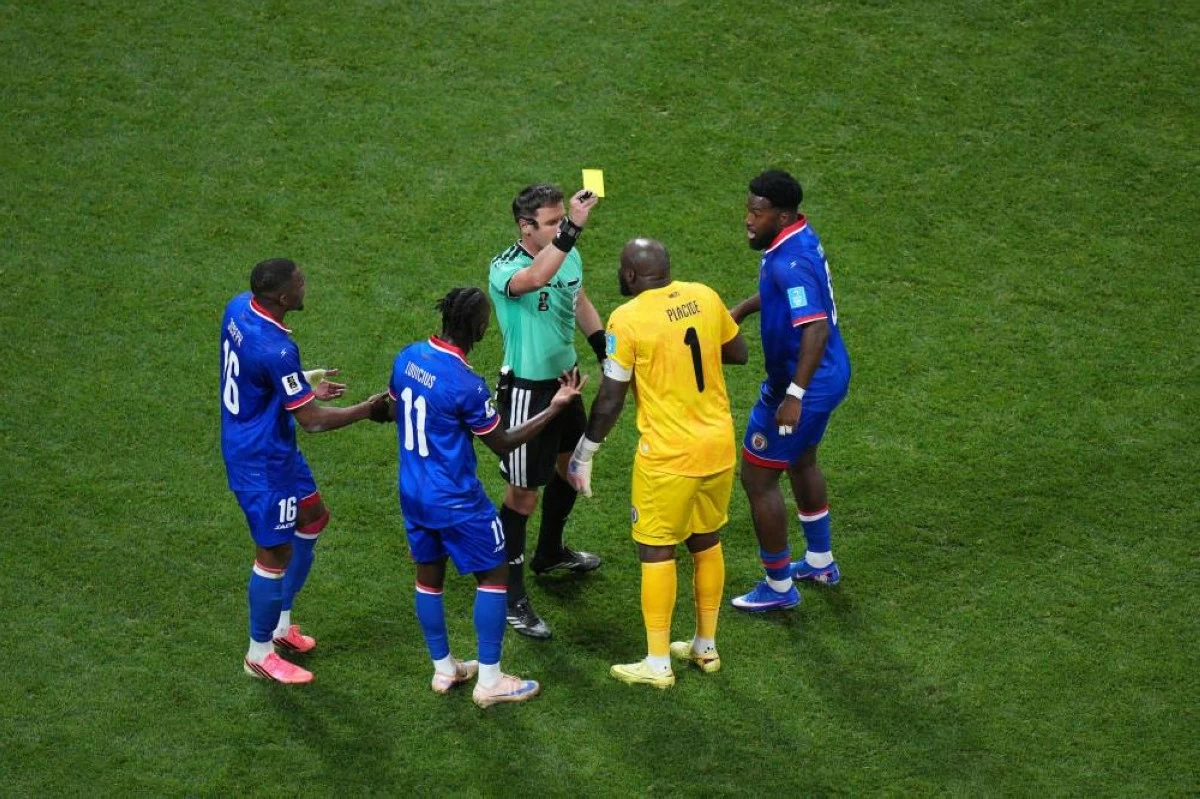
Some countries have already earned their place in the knockout rounds of the World Cup. Others are still fighting for position as they head into the final matches of group play.Every coach trying to get their team into the next round and beyond now must balance the high risk, high reward scenarios of using key players who already have a yellow card on their record and the chance that another one could knock them out of the next match, or sit him.For example, the United States had already clinched it's group before Thursday night's match with Turkey, but had four players already carrying yellow cards. That left coach Mauricio Pochettino with a decision whether to sit several of his star players.At this stage, a referee's whistle and move to his pocket is the stuff of nightmares for fans, players and coaches. A player already given a yellow in the first two games would be automatically suspended for the next match in the elimination rounds if he gets another.A red card? Even worse. That results in immediate removal from the match, automatic suspension from the next match, and possible further discipline if the foul is determined serious enough.But there's a lifeline and some breathing room for teams who are already through to the next round. Stay clean in these final group matches and players carrying yellow cards from the early games will have their record wiped clean for the start of the elimination rounds.A yellow card is a warning for a range of fouls including reckless challenges, wasting time, excessive celebrations and arguing with game officials. Persistent fouling or denying a goal-scoring opportunity in the penalty area is another quick way to earn a yellow card.A lot is left to the referee's discretion in the heat of play.Red cards are more rare and usually result from more serious penalties, such as dangerous tackles, violent play, spitting, biting, offensive language and denying a clear goal-scoring opportunity.A new rule this year allows a red card if a player covers his mouth to disguise what he says during a confrontation with another player. That happened to Paraguay midfielder Miguel Almiron in the second round.A player who earns two yellow cards in a single game also results in a red card, and they are sent off and suspended for the next match.The yellow card/red card factor can become a dilemma for coaches. A team still fighting for a spot in the next round will need its best players on the field even if they have a previous yellow card.Coaches of teams already through to the next round are more likely to sit players with yellow cards on their record.The U.S. had four starters who earned yellow cards in the first two matches, including two earned by striker Folarin Balogun and defender Chris Richards late in the Americans' 2-0 win over Australia.It’s unnecessary to take a risk to pick up another yellow card and not be available for the next round, Pochettino said Wednesday.Other top teams with multiple players carrying yellow cards into their final group matches include Portugal (four) and the Netherlands (three).The expansion of the World Cup this year from 32 teams to 48 created more games and more chances a player can earn yellow and red cards.Because of that, FIFA created two amnesty” periods for accumulated yellow cards. The first comes after the group stage, the second comes after the quarterfinals.And the expanded tournament means several third-place teams will advance out of the group stage. And buried deep in the tiebreaker system is a team's conduct score” that takes into account accumulated yellow and red cards. Too many will risk getting eliminated from the tournament.
Narrative Intelligence Brief
This article was published by Emirates 24/7, a source frequently categorized with a lean right bias based in United Arab Emirates. Our narrative intelligence engine continuously monitors coverage from this outlet to track framing, bias, and rhetorical patterns. Our initial algorithmic scan of this specific piece did not flag high-confidence rhetorical techniques, suggesting a generally straightforward reporting style or neutral framing. By understanding the editorial perspective of Emirates 24/7, readers can better contextualize the information presented and compare it across our broader media matrix to find the real narrative.
More from Emirates 24/7
June 26, 2026
False missile alert: Technical malfunction in early warning system resulted in incorrect alert
June 26, 2026
Tallest building in Beijing is damaged after small airplane reportedly crashed into it
June 26, 2026
Trump adviser-turned-critic John Bolton to plead guilty in classified info case
June 26, 2026
Abdullah bin Zayed receives phone call from Iranian Foreign Minister
June 26, 2026
Easier deportations and Green Card removals: US Supreme Court advances Trump’s restrictive immigration agenda
Analysis Methodology
This narrative analysis was generated using the CoDataLab Global Intelligence Engine. Our proprietary AI scans thousands of cross-border sources to identify sentiment patterns, framing techniques, and potential media bias. While AI provides the data-driven foundation, our objective is to empower readers with additional context beyond the standard headline.The content displayed above is a structured summary designed for rapid information processing. For the full original report, please visit the source outlet.More Coverage
Discussion


