
Today in News History
On June 26, several notable moments in the history of News stand out. In 1860, George Montgomery White, American politician (born 1828) passed away. In 1938, Neil Abercrombie, American sociologist and politician, 7th Governor of Hawaii was born. In 1943, Warren Farrell, American author and educator was born. In 1945, Issa al-Haadi al-Mahdi (Dwight York), American criminal, black supremacist, pedophile, convicted child molester, and musician was born. In 1993, William H. Riker, American political scientist and academic (born 1920) passed away. In 1997, The U.S. Supreme Court rules that the Communications Decency Act violates the First Amendment to the United States Constitution. In 2003, The U.S. Supreme Court rules in Lawrence v. Texas that sex-based sodomy laws are unconstitutional. In 2013, The U.S. Supreme Court ruled, 5-4, that Section 3 of the Defense of Marriage Act is unconstitutional and in violation of the Fifth Amendment to the United States Constitution. In 2015, The U.S. Supreme Court ruled, 5-4, that same-sex couples have a constitutional right to marriage under the 14th Amendment to the United States Constitution. In 2024, Julian Assange, founder of WikiLeaks, returns to Australia after pleading guilty to one charge of espionage in a Saipan court and subsequently being released by the United States Department of Justice. Together, these milestones provide historical context for today's news news and ongoing narratives.
Easier deportations and Green Card removals: US Supreme Court advances Trump’s restrictive immigration agenda
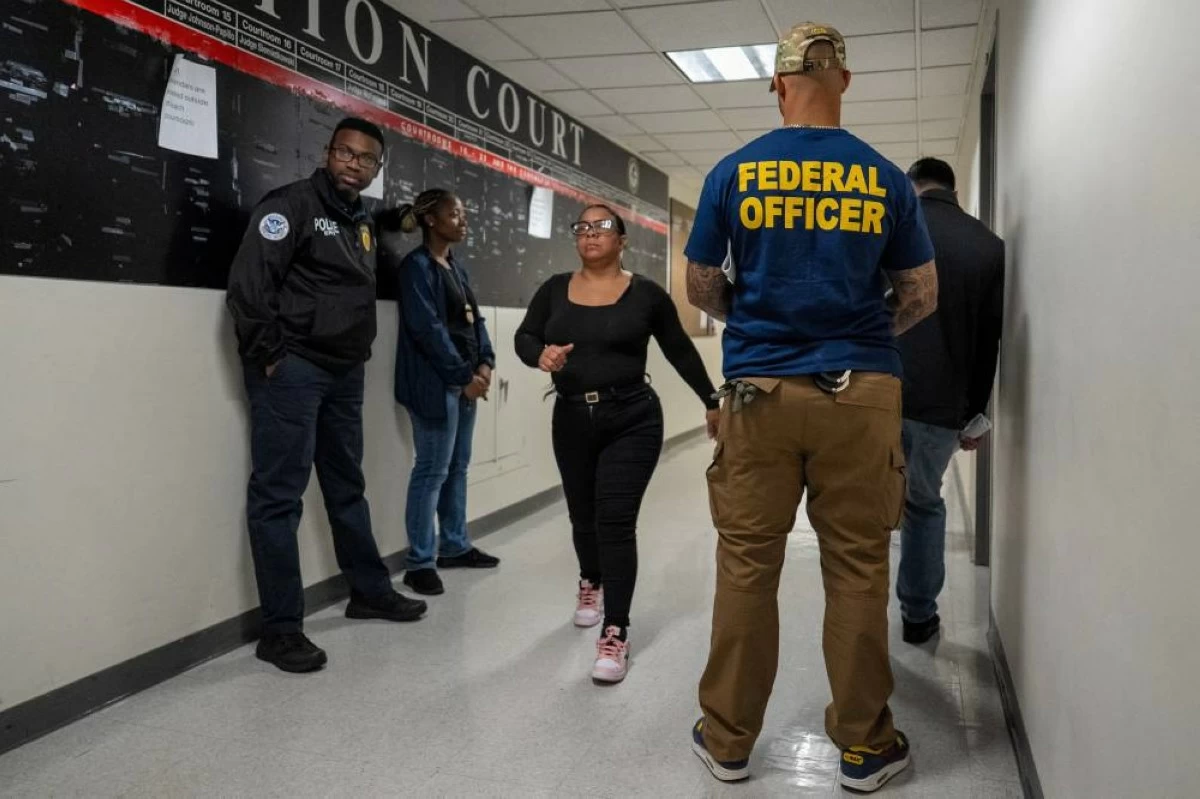
It is now easier to remove lawful permanent residents - also known as green-card holdersWASHINGTON: Since Donald Trump returned to the presidency last year promising to aggressively crack down on immigration and pursue a campaign of mass deportation, the conservative-majority U.S. Supreme Court has, for the most part, smoothed the way.In case after case, the court, which has a 6-3 conservative majority, has green-lighted the Republican president's policies targeting both legal and illegal immigration with few exceptions, while its three liberal justices have objected to most of his actions.The latest examples came this week, when the court gave Trump and his administration three victories - all in cases decided along ideological lines - that make it easier to deport people, or refuse them entry, including those who have legal status in the United States.The Trump administration has turned the immigration system into a deportation machine, said Elora Mukherjee, director of the Immigrants' Rights Clinic at Columbia Law School in New York.In most cases, the Supreme Court has been a rubber stamp for Trump's mass deportation agenda, Mukherjee added.The court in a 6-3 decision on Thursday let the administration strip hundreds of thousands of Haitian and Syrian immigrants of their Temporary Protected Status.This humanitarian designation under U.S. law lets migrants from nations stricken by war or catastrophe live and work in the United States while it is unsafe for them to return to their home countries.People hold placards during a rally with immigration advocates, on the day of the U.S. Supreme Court ruling allowing the Trump administration to strip Temporary Protected Status (TPS) protections from hundreds of thousands of Haitian and Syrian migrants, in New York City, U.S., June 25, 2026. REUTERSLegal experts said the practical effect is grim for immigrants now losing their status as they face a choice of staying and risking detention, or returning to countries that the U.S. State Department warns against any travel to due to widespread violence, crime, terrorism and kidnapping.These are not conditions to which people should be returned, Tirana Hassan, CEO of the group Doctors Without Borders USA, said on Thursday, referring to Haiti.Ahilan Arulanantham, an immigration law expert at UCLA and lawyer for the Syrian plaintiffs in the TPS dispute, said, The Supreme Court has consistently ruled against the rights of immigrant communities in important cases in the last several years, and this case fits that pattern.The decision hands to the administration, and to the far right wing of the anti-immigrant movement, an important victory that they have been unable to obtain through Congress for a number of years, Arulanantham added.The court also on Thursday ruled 6-3 to back the government's authority to turn away asylum seekers when officials deem U.S.-Mexico border crossings overburdened, by physically blocking them from entering the United States. Trump's administration has said it may seek to revive the policy, known as metering, after it was dropped by his Democratic predecessor Joe Biden.On Tuesday, again in a 6-3 split, the court made it easier to remove lawful permanent residents - also known as green-card holders - ruling that border agents do not need to meet the high standard of clear and convincing evidence that such an individual has committed a crime before refusing to allow them back into the country after a trip abroad.'The rule of law'These three rulings are all victories for the rule of law and common sense, said Department of Homeland Security General Counsel James Percival, adding that Temporary Protected Status was always supposed to be temporary.Thanks to these decisions, we now have several more important tools to continue securing our borders, Percival added. Since Trump returned to office in January 2025, the court has largely acceded to his demands to implement policies bolstering his drive to step up deportations when they have been impeded by lower courts, while legal challenges to them play out.These decisions have been issued on an emergency basis on the Supreme Court's so-called shadow docket in which the justices can make highly consequential decisions outside their regular process, without extensive briefing or oral arguments. For instance, the court has let Trump deport migrants to countries where they have no ties, carry out aggressive immigration raids that can target individuals based on their race or language, and to end humanitarian protections including TPS and another form of protection called parole for hundreds of thousands of immigrants.Immigrants' rights activists and demonstrators attend a rally outside the U.S. Supreme Court, as justices were scheduled to hear arguments on whether the administration of U.S. President Donald Trump can end the Temporary Protected Status (TPS) of Syrian and Haitian nationals, in Washington, D.C., U.S., April 29, 2026. REUTERSAshley Sanchez, director of the Immigration Clinic at the University of Notre Dame's law school, said that while immigration laws have not substantially changed, Trump's administration is choosing to apply them in a way to limit both legal and illegal immigration as much as possible.The court has had its current ideological makeup since October 2020, when Trump appointed conservative Justice Amy Coney Barrett to succeed the late liberal Justice Ruth Bader Ginsburg.The existence of this conservative supermajority has been pivotal in immigration rulings, Sanchez said.This more conservative group appears much more willing to side with the president, Sanchez added. Sanchez pointed to the court's June 2020 decision, during Trump's first term as president, to block his bid to end a program that protects from deportation hundreds of thousands of migrants - often called Dreamers - who entered the United States illegally as children.The court had a 5-4 conservative majority at the time, but conservative Chief Justice John Roberts joined with the court's liberal members in the decision.It's hard to imagine this current court coming to that same decision, Sanchez said. The court has pushed back against Trump in some instances. In certain cases, for example, the justices have ruled that the administration must treat migrants fairly, as required under the U.S. Constitution's promise of due process. Last year, the justices twice placed limits on the administration's attempt to implement Trump's invocation of a 1798 law called the Alien Enemies Act, which historically has been employed only in wartime, to swiftly deport Venezuelan migrants who it accused of being members of the Tren de Aragua gang.An Immigration Customs Enforcement officer patrols the hallway at immigration court in Manhattan, New York City, U.S., June 24, 2026. REUTERSBirthright citizenshipThe court is almost at the end of its current term, but has not yet ruled in a major case involving perhaps the most audacious piece of Trump's restrictive immigration agenda. Based on questions asked by the justices during arguments in the case in April, the court may hand Trump a defeat by ruling against his executive order that would deny birthright citizenship to hundreds of thousands of babies born each year on U.S. soil.Trump's order instructed U.S. agencies not to recognize the citizenship of children born in the United States if neither parent is an American citizen or legal permanent resident, also called a green card holder.The lower court found Trump's order to be inconsistent with the Constitution's 14th Amendment, which long has been interpreted as granting citizenship to virtually anyone born on U.S. soil, with some narrow exceptions including the children of foreign diplomats or members of an enemy occupying force.The 14th Amendment's provision at issue, called the Citizenship Clause, states: All persons born or naturalized in the United States, and subject to the jurisdiction thereof, are citizens of the United States.A decision could come as soon as Monday.
Narrative Intelligence Brief
This article was published by Emirates 24/7, a source frequently categorized with a lean right bias based in United Arab Emirates. Our narrative intelligence engine continuously monitors coverage from this outlet to track framing, bias, and rhetorical patterns. Our initial algorithmic scan of this specific piece did not flag high-confidence rhetorical techniques, suggesting a generally straightforward reporting style or neutral framing. By understanding the editorial perspective of Emirates 24/7, readers can better contextualize the information presented and compare it across our broader media matrix to find the real narrative.
More from Emirates 24/7
June 26, 2026
“Without bees, we cannot survive”: How Dubai schools are helping protect our food future
June 26, 2026
Ahmed bin Mohammed approves new media platform 'Dubai Business'
June 26, 2026
Ahmed bin Mohammed approves new media platform Dubai Business
June 26, 2026
Ahmed bin Mohammed approves new media platform Dubai Economy
June 26, 2026
Travelling to India from the UAE? You will need to fill out Air Suvidha health declaration form
Analysis Methodology
This narrative analysis was generated using the CoDataLab Global Intelligence Engine. Our proprietary AI scans thousands of cross-border sources to identify sentiment patterns, framing techniques, and potential media bias. While AI provides the data-driven foundation, our objective is to empower readers with additional context beyond the standard headline.The content displayed above is a structured summary designed for rapid information processing. For the full original report, please visit the source outlet.More Coverage
Discussion
"venezuela"
More than 30,000 missing and 188 dead after Venezuela’s worst earthquake in a century

Forty seconds of chaos that wrecked Venezuela’s comeback

Catastrophic Damage: Deadly Venezuela Quake Marks Country’s Most Powerful Seismic Event Since 1900
