
Today in News History
On June 26, several notable moments in the history of News stand out. In 1786, Sunthorn Phu, Thai poet (died 1855) was born. In 1914, Sultan Ahmad Nanupuri, Bangladeshi Islamic scholar and teacher (died 1997) was born. In 1918, J. B. Fuqua, American entrepreneur and philanthropist (died 2006) was born. In 1919, Donald M. Ashton, English art director (died 2004) was born. In 1925, Jean Frydman, French resistant and businessman (died 2021) was born. In 1948, Cold War: The first supply flights are made in response to the Berlin Blockade. In 1948, Shirley Jackson's short story The Lottery is published in The New Yorker magazine. In 1994, Jahanara Imam, Bangladeshi author and activist (born 1929) passed away. In 1995, Hamad bin Khalifa Al Thani deposes his father Khalifa bin Hamad Al Thani, the Emir of Qatar, in a bloodless coup d'état. In 2015, Five different terrorist attacks in France, Tunisia, Somalia, Kuwait, and Syria occurred on what was dubbed Bloody Friday by international media. Upwards of 750 people were either killed or injured in these uncoordinated attacks. Together, these milestones provide historical context for today's news news and ongoing narratives.
“Without bees, we cannot survive”: How Dubai schools are helping protect our food future
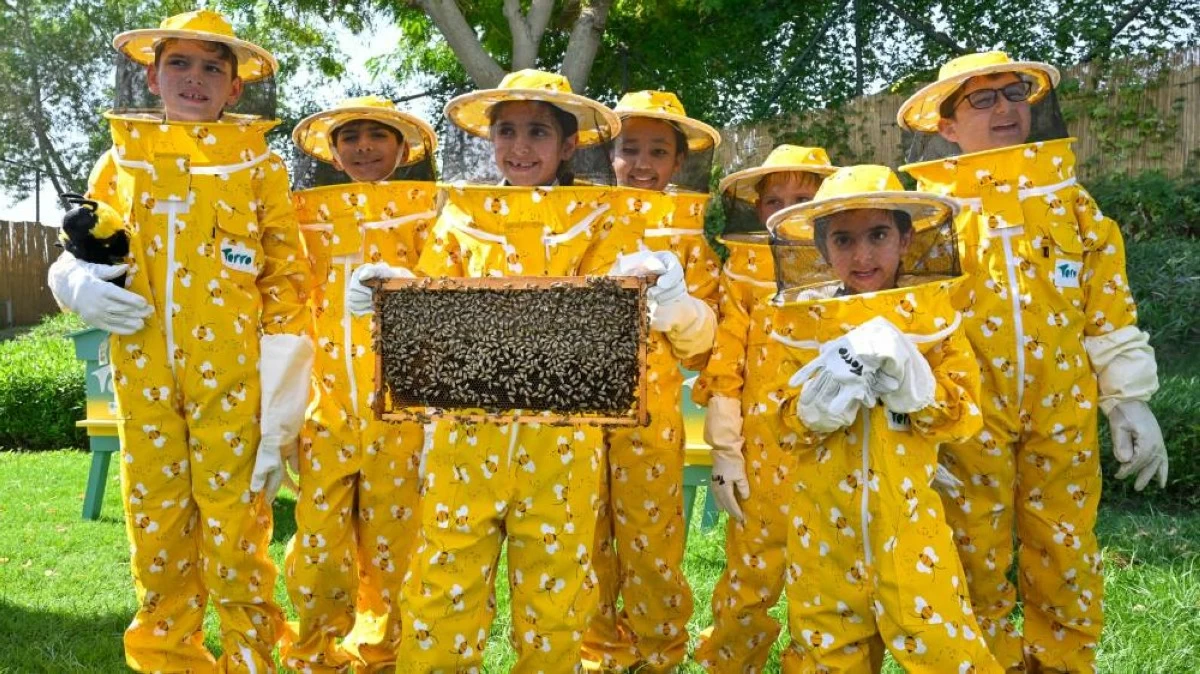
Dubai: Did you know that there are about 20,000 species of bees in the world? Just seven of them make honey. The rest are primarily pollinators – making sure you get food on your table.“When we think about bees, we think about honey. But just seven out of the 20,000 bee species make honey,” Dr Meriem Hammal, manager of the Pollinator Programme at Terra Expo City, told Emirates 24|7.“All the others are there purely for the pollination process. Even though we have other pollinators, like bats, butterflies, wasps and lady bugs. But bees pollinate 75-80 per cent of the food we consume as humans. So basically, without them, we cannot survive,” she added.She was speaking as part of the Hundred Hives Initiative, where the first beehive was installed at a school in Dubai – the Deira International School.Terra, the Sustainability Pavilion at Expo City Dubai, has launched the initiative as a school-focused pollinator programme, designed to help students develop a deeper connection with nature through hands-on learning and environmental stewardship.At the event, held at the school on June 26, a partnership agreement was signed by Marjan Faraidooni, Chief of Education and Culture at Expo City Dubai, and Mira Al Futtaim, Chief Future Education Officer, Al-Futtaim Education Foundation, marking the school's official entry into the Hundred Hives initiative.Marjan Faraidooni, Chief of Education and Culture at Expo City Dubai (left) and Mira Al Futtaim, Chief Future Education Officer, Al-Futtaim Education Foundation (right) during the official signing ceremony. Photo by Ashok VermaAs part of the initiative, not only were teachers trained to become professional beekeepers, but students, too, got the opportunity to understand the critical role bees play, how they function and why preserving the bee population is important.As part of the activities, students got a chance to name the Queen Bee of their school hive (they chose Beyoncé) and take part in a beeswax candle-making workshop.ASV5026062026 Bee Hive TerraTiny insects, huge impactBees play a critical role in global food production, with pollinators like the honey bees, native bees and flies contributing between 235 billion and 577 billion annually to global food production. Approximately 35 of global crop production by volume relies on pollinators, making them the backbone of global food security.But the pollinators are under threat, and that has a direct impact on food security.Dr Meriem spoke about the ‘Colony Collapse Disorder’, first discovered in 2015, with bee population dwindling because of overuse in food production. As beehives were moved to different fields for the purposes of cross-pollination, the stress on the hives made them vulnerable to diseases.“We also have climate change, which affects the blooming season of flowers. When that changes, bees that are genetically used to leaving the hive at certain times of the year do not get their food outside,” she said.Dr Meriem HammalBut the biggest threat, according to Dr Meriem, is the combination of a lack of awareness, genetic pollution and pesticides.“Our fear of bees is feeding massive use of pesticides,” she said.Terra’s 100 Hives initiative, along with ‘Bee Kind’, its corporate outreach programme, and the ‘Dr. Jane Goodall pollinator garden’ at the sustainability pavilion, all aim to address these issues, by fostering sustainable habitats, preserving local flora and fauna, and creating a model for ecological resilience in urban environments.The pollinator programme focuses specifically on native bees in the region, to promote their growth within the local ecosystem.Learning from beesFor Dr Meriem, bees, which are one of the busiest animals on the planet, can teach children a lot more than just about how they impact food security.A self-confessed ‘accidental beekeeper’, the veterinary doctor only chose to do her training in beekeeping because it would fit in with her additional education pursuits of getting a business degree while completing her veterinary course.But her first experience with bees left her humbled.The man training her was someone who had never been to school himself, but she entered his apiary on her first day of training, she saw him open the box of bees, and soon the hive immediately leaving the box to welcome him, buzzing around him in an embrace.“When you enter an apiary for the first time, you have that fear that you might get stung. You have all these misconceptions. What I saw threw me off, but in a nice way. He didn’t even have a veil. It was just me, him, and the box of the bees. I felt completely disconnected from what was happening outside of that,” she said.ASV3026062026 Bee Hive Terra ASV2826062026 Bee Hive Terra ASV3926062026 Bee Hive Terra ASV3126062026 Bee Hive Terra When she asked her trainer, who would go on to become her mentor, he explained things in extreme detail.“He started talking about genetics, about Gregor Mendel [a world-renowned beekeeper, apiologist and in many ways a founder of genetics], about his bee selection plan, native species and the importance of bringing them back. It was a wake-up call,” she said.That was the spark that ignited Dr Meriem’s love for bees and beekeeping.Today, as the manager of the Pollinator Programme at Terra Expo City, she hopes the beehives being installed at schools in Dubai will spark the same curiosity and help children learn not just about the impact bees have on the environment and our lives, but also the soft skills the busy workers can teach.“Children learn how to work as a team and how to manage their time, because bees will not wait for you. They develop many other soft skills that will help them in the future. Bees aren’t just important because they are pollinators, these children can study bees in art, looking at how they make their honeycomb, about mathematics and how the bees measure each cell of the honeycomb, to get the exact 7mm measurement for each hexagonal cell,” Dr Meriem said.A learning experienceThe children who participated in the initiative also went away with some fascinating facts from the world of bees.For nine-year-old Musa Ibrahim Ahmed, the biggest takeaway was how the male bees – called drones – don’t actually do the work in the hives.Musa Ibrahim Ahmed“The most interesting thing I learned today is that males don't have stingers, and also, they’re not allowed to fly in the hives. They have wings, and they fly all the time, but the location they are in the most, they're not allowed to do what they do most,” he said.Learning about the roles different bees play in the bee world was one of the biggest learning experience for the children, according to Saira Ali, a primary school teacher at Deira International School, who received her training as a professional beekeeper.“When we were explaining the roles of the bees to the children, they found out that it is the female bees that do all the work within the hive, and the children found that really fascinating. For them to realise all the different roles and that togetherness of the hive working together, it was great,” she said.Saira Ali“With festooning, bees make a line by linking their legs, and that's how they measure to make their hives. If there’s a threat, they work together to eliminate it, they can increase or decrease the temperature of the hive by working together. It's just amazing how they do this instinctively. And yet, you know, humans struggle so much to work with one another. So, it's definitely a message we can take from the bees to work in harmony for the good of our world, our hive,” she added.How UAE schools can participate in the 100 Hives initiativeSchools interested in joining the initiative can email education@expocitydubai.ae to learn more about the programme. The initiative is open to schools looking to introduce beehives on campus and incorporate biodiversity, pollinator conservation and environmental stewardship into their educational activities.
Narrative Intelligence Brief
This article was published by Emirates 24/7, a source frequently categorized with a lean right bias based in United Arab Emirates. Our narrative intelligence engine continuously monitors coverage from this outlet to track framing, bias, and rhetorical patterns. Our initial algorithmic scan of this specific piece did not flag high-confidence rhetorical techniques, suggesting a generally straightforward reporting style or neutral framing. By understanding the editorial perspective of Emirates 24/7, readers can better contextualize the information presented and compare it across our broader media matrix to find the real narrative.
More from Emirates 24/7
June 26, 2026
Tallest building in Beijing is damaged after small airplane reportedly crashed into it
June 26, 2026
Trump adviser-turned-critic John Bolton to plead guilty in classified info case
June 26, 2026
Abdullah bin Zayed receives phone call from Iranian Foreign Minister
June 26, 2026
Easier deportations and Green Card removals: US Supreme Court advances Trump’s restrictive immigration agenda
June 26, 2026
Ahmed bin Mohammed approves new media platform 'Dubai Business'
Analysis Methodology
This narrative analysis was generated using the CoDataLab Global Intelligence Engine. Our proprietary AI scans thousands of cross-border sources to identify sentiment patterns, framing techniques, and potential media bias. While AI provides the data-driven foundation, our objective is to empower readers with additional context beyond the standard headline.The content displayed above is a structured summary designed for rapid information processing. For the full original report, please visit the source outlet.More Coverage
Discussion
"venezuela"
More than 30,000 missing and 188 dead after Venezuela’s worst earthquake in a century
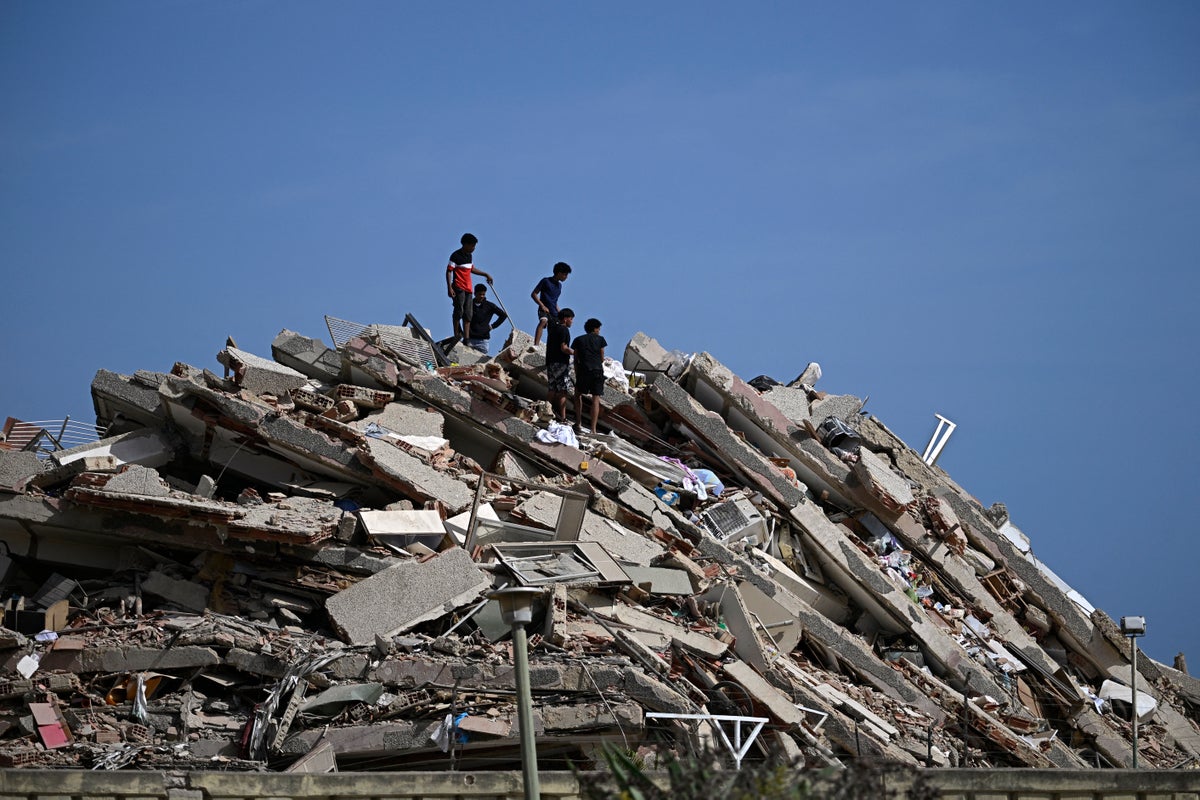
Forty seconds of chaos that wrecked Venezuela’s comeback
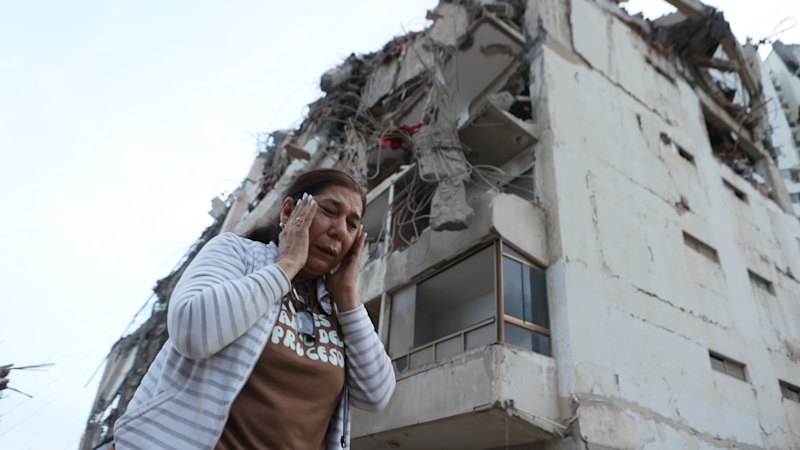
Desperate Search For Quake Survivors in Venezuela’s La Guaira
