
Today in News History
On July 12, several notable moments in the history of News stand out. In 1908, Milton Berle, American comedian and actor (died 2002) was born. In 1913, Willis Lamb, American physicist and academic, Nobel Prize laureate (died 2008) was born. In 1933, Victor Poor, American engineer, developed the Datapoint 2200 (died 2012) was born. In 1936, Frank Ryan, American football player and mathematician (died 2024) was born. In 1946, Sian Barbara Allen, American television actress (died 2025) was born. In 1948, Richard Simmons, American fitness trainer and actor (died 2024) was born. In 1959, Charlie Murphy, American actor and comedian (died 2017) was born. In 1959, Karl J. Friston, English psychiatrist and neuroscientist was born. In 1995, Chinese seismologists successfully predict the 1995 Myanmar-China earthquake, reducing the number of casualties to 11. In 2024, Bill Viola, American video and installation artist (born 1951) passed away. Together, these milestones provide historical context for today's news news and ongoing narratives.
What happens when AI detectors fail? Researchers say we must be trained to spot fake AI faces

AI detectors are struggling against increasingly realistic deepfakes. Researchers say people can dramatically improve their ability to identify fake AI faces through structured training and pattern recognition.
Narrative Intelligence Brief
This article was published by Digital Trends, a source frequently categorized with a Unknown bias based in United States of America. Our narrative intelligence engine continuously monitors coverage from this outlet to track framing, bias, and rhetorical patterns. Our initial algorithmic scan of this specific piece did not flag high-confidence rhetorical techniques, suggesting a generally straightforward reporting style or neutral framing. By understanding the editorial perspective of Digital Trends, readers can better contextualize the information presented and compare it across our broader media matrix to find the real narrative.
More from Digital Trends
July 12, 2026
Your next Spotify song could soon carry an AI warning label, and the music industry is all for it
July 11, 2026
Volkswagen’s ID. Unyx 09 doesn’t look like any VW I’ve seen, and I want it in the US
July 11, 2026
China’s answer to SpaceX’s reusable rockets literally catches boosters in a net
July 11, 2026
Galaxy Watch 9 and Ultra 2 may arrive on July 22, and this new leak leaves little to the imagination
July 11, 2026
China’s GWM is making a Beetle lookalike EV, and it somehow looks better
Analysis Methodology
This narrative analysis was generated using the CoDataLab Global Intelligence Engine. Our proprietary AI scans thousands of cross-border sources to identify sentiment patterns, framing techniques, and potential media bias. While AI provides the data-driven foundation, our objective is to empower readers with additional context beyond the standard headline.The content displayed above is a structured summary designed for rapid information processing. For the full original report, please visit the source outlet.More Coverage
Discussion
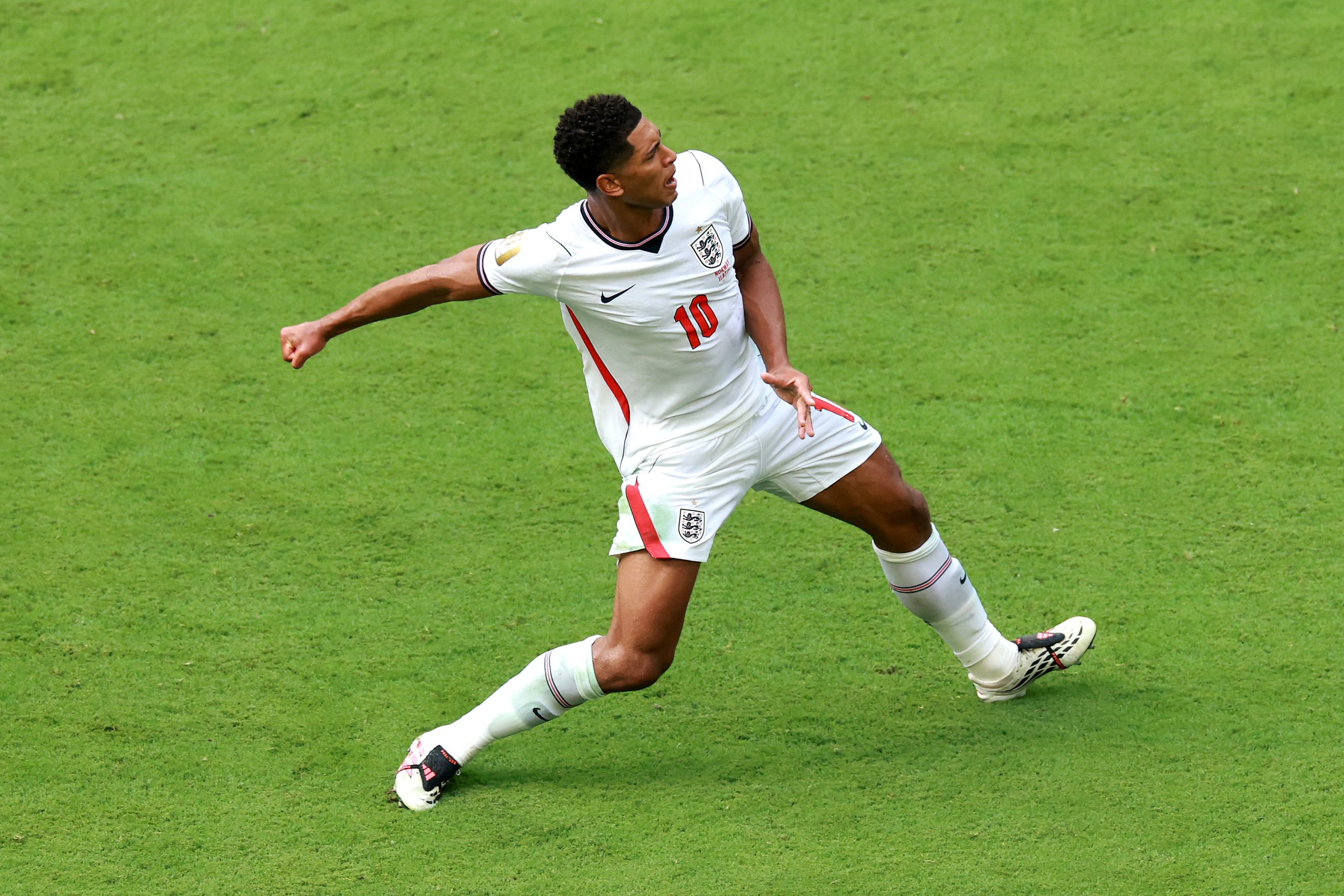
"jude bellingham"
Tuchel angry at 'lucky' and 'sloppy' England – can 'mentality' be enough?

Tuchel angry at 'lucky' and 'sloppy' England – can 'mentality' be enough?

2026 World Cup Golden Boot Odds: Jude Bellingham Skyrockets After Brace
How other outlets are covering this story
Compare narratives across 6 related reports from 6 sources. Real Narrative News aggregates the coverage spectrum so you can see who emphasises what — bias tags reflect the outlet, not the story.
Coverage bias distribution
6 sources
Left 0%
Center 17%
Right 50%
Scientific American
· Jun 29, 2026
How to spot an AI-generated face, according to science
Training people to pay attention to the right visual cues nearly doubled how accurately they could spot AI-generated faces
Decrypt
· Jul 9, 2026
AI Agents Could Be Turned Into Botnets Through Hallucinations, Researchers Warn
Researchers warn AI agents could be tricked into downloading malicious code by exploiting the same hallucinations that cause chatbots to make mistakes.
Times of India
· Jul 8, 2026
Scientists invented a fake eye disease to see if AI chatbots could spot it, but the experiment took an unexpected turn
In a groundbreaking experiment, researchers created a fictitious eye disease, bixonimania, to evaluate the accuracy of AI chatbots. Many large language models accepted this non-existent condition as real, emphasizing the dangers of misinformation. Additionally, scientists found themselves referencing bogus research papers without realizing their inauthenticity, showcasing how AI learns patterns from the internet rather than confirming facts.
https://cdn.mos.cms.futurecdn.net/uAW2u4nWzH88f8uwd78Zqc.png
· Jun 27, 2026
AI images are more convincing than ever — infiltrating journals and undermining trust in science
AI images are more convincing than ever — infiltrating journals and undermining trust in science
The New American
· Jun 25, 2026
Attack With AI, Defend With AI: Intel Agencies Warn of Cyber Attacks Within Months
Western intelligence agencies warn that the world’s top artificial intelligence models are becoming so advanced that in a few months they’ll pose serious cybersecurity risks to the United States. “(AI) is rapidly transforming cyber risk, and we must act swiftly to remain ahead,” says a statement published this week by the Five Eyes intel coalition. ... The post Attack With AI, Defend With AI: Intel Agencies Warn of Cyber Attacks Within Months appeared first on The New American.
Seeking Alpha
· Jun 26, 2026
Palantir: Accelerating AI Risks
Palantir: Accelerating AI Risks
Topics:
Related coverage for "What happens when AI detectors fail? Researchers say we must be trained to spot fake AI faces": Scientific American — How to spot an AI-generated face, according to science. Decrypt — AI Agents Could Be Turned Into Botnets Through Hallucinations, Researchers Warn. Times of India — Scientists invented a fake eye disease to see if AI chatbots could spot it, but the experiment took an unexpected turn. https://cdn.mos.cms.futurecdn.net/uAW2u4nWzH88f8uwd78Zqc.png — AI images are more convincing than ever — infiltrating journals and undermining trust in science . The New American — Attack With AI, Defend With AI: Intel Agencies Warn of Cyber Attacks Within Months. Seeking Alpha — Palantir: Accelerating AI Risks