
Today in News History
On July 12, several notable moments in the history of News stand out. In 1875, H. M. Brock, British painter and illustrator (died 1960) was born. In 1905, Betty Allan, Australian statistician and biometrician (died 1952) was born. In 1927, Theodore Maiman, American-Canadian physicist and engineer (died 2007) was born. In 1963, Lisa Rinna, American actress and talk show host was born. In 1968, Michael Geist, Canadian journalist and academic was born. In 1987, Avi Ran, Israeli footballer (born 1963) passed away. In 2006, Bronwyn Oliver, Australian sculptor (born 1959) passed away. In 2008, Michael E. DeBakey, American surgeon and educator (born 1908) passed away. In 2013, Emik Avakian, Iranian-American inventor (born 1923) passed away. In 2015, Satoru Iwata, Japanese game programmer and businessman (born 1959) passed away. Together, these milestones provide historical context for today's news news and ongoing narratives.
How to spot an AI-generated face, according to science
Training people to pay attention to the right visual cues nearly doubled how accurately they could spot AI-generated faces
Narrative Intelligence Brief
This article was published by Scientific American, a source frequently categorized with a Unknown bias based in United States of America. Our narrative intelligence engine continuously monitors coverage from this outlet to track framing, bias, and rhetorical patterns. Our initial algorithmic scan of this specific piece did not flag high-confidence rhetorical techniques, suggesting a generally straightforward reporting style or neutral framing. By understanding the editorial perspective of Scientific American, readers can better contextualize the information presented and compare it across our broader media matrix to find the real narrative.
More from Scientific American
July 11, 2026
How a 1,900-year-old latrine helps explain why Roman concrete lasts
July 11, 2026
Wimbledon 2026 opened with a 148 mph serve—here’s how tennis players brains track such fast balls
July 10, 2026
Odds of a Super El Niño are rising, and that could have deadly consequences
July 10, 2026
China’s Long March 10B rocket successfully launches—and lands—in a global spaceflight milestone
July 10, 2026
How could loosened radiation exposure rules affect public health?
Analysis Methodology
This narrative analysis was generated using the CoDataLab Global Intelligence Engine. Our proprietary AI scans thousands of cross-border sources to identify sentiment patterns, framing techniques, and potential media bias. While AI provides the data-driven foundation, our objective is to empower readers with additional context beyond the standard headline.The content displayed above is a structured summary designed for rapid information processing. For the full original report, please visit the source outlet.More Coverage
Discussion
"england"
Tuchel angry at 'lucky' England - but Bellingham defends players

Tuchel angry at 'lucky' England - but Bellingham defends players
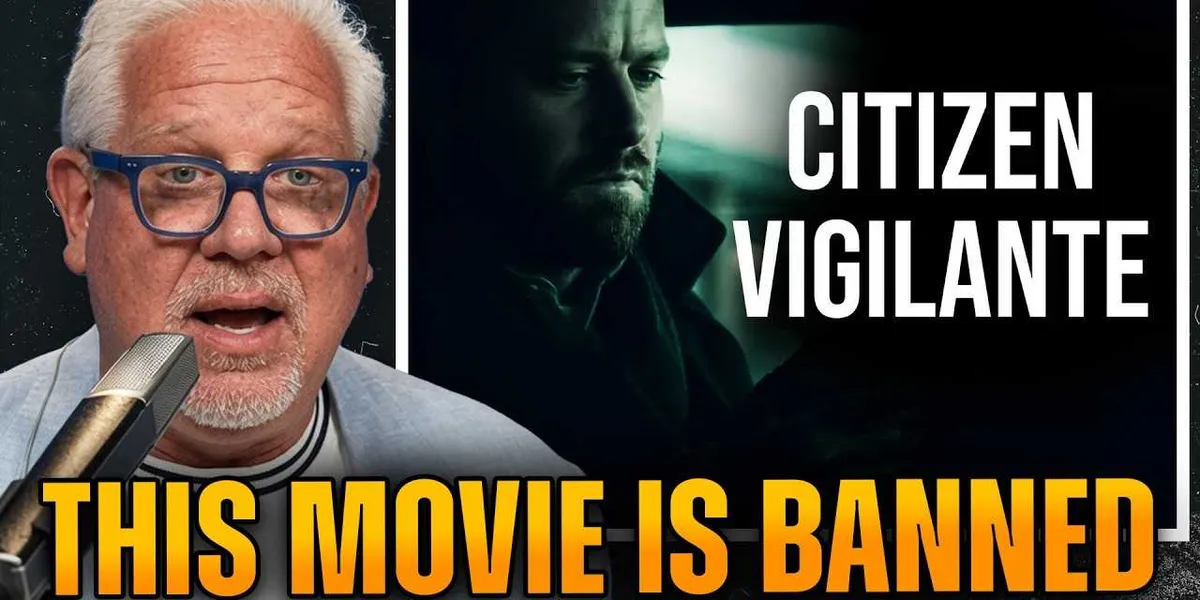
‘A dangerous movie’: Glenn Beck warns ‘Citizen Vigilante’ signals a dark moral shift after Germany bans it
How other outlets are covering this story
Compare narratives across 6 related reports from 6 sources. Real Narrative News aggregates the coverage spectrum so you can see who emphasises what — bias tags reflect the outlet, not the story.
Coverage bias distribution
6 sources
Left 17%
Center 67%
Right 17%
BBC News
· Jul 11, 2026
See if you can spot an AI deepfake with our test
Researchers in Aberdeen have been finding out if you can train people to identify computer-generated facial images.
Inc.com
· Jul 9, 2026
A Teenager Just Turned Eye Scans Into an AI Test for Autism and ADHD
From school project to breakthrough: how a teenager built an AI tool that reads the eye to detect autism and ADHD.
Camille Styles Blog
· Jul 3, 2026
A Brow Expert Taught Me This Face Mapping Trick—and Now I’ll Never Tweeze Without It
The three-point technique that finally explains your best brow shape—plus expert rules, common mistakes, and the products worth buying. The post A Brow Expert Taught Me This Face Mapping Trick—and Now I’ll Never Tweeze Without It appeared first on Camille Styles.
Modern Diplomacy
· Jun 22, 2026
How Could Trump Give Americans a Stake in AI Companies?
U.S. President Donald Trump has said he is exploring ways to ensure Americans benefit directly from the rapid growth of artificial intelligence, raising the possibility of the government acquiring stakes in leading AI companies. The idea comes as firms such as OpenAI and Anthropic pursue valuations that could make them among the most valuable companies [] The post How Could Trump Give Americans a Stake in AI Companies? appeared first on Modern Diplomacy.
Enrique Dans
· Jul 2, 2026
La inteligencia artificial no despide a nadie: lo hacen idiotas con hojas de cálculo
Hay una forma especialmente torpe de adoptar la inteligencia artificial: sentar a alguien ante un organigrama, enseñarle una demo brillante y pedirle que señale nombres. “Lo que hace este lo puede hacer una inteligencia artificial, lo que hace este también, este otro de aquí sobra”. Es la vieja reducción de costes de siempre, envuelta en
BoingBoing
· Jun 29, 2026
Real Image Alphabet spells names using photos of ice, bugs, and trees
This fun website called Real Image Alphabet uses images from nature to spell out your name. Simply type your name (or someone else's) and click reload. You can see various designs for the same name by reloading until you're satisfied with the results. — Read the rest The post Real Image Alphabet spells names using photos of ice, bugs, and trees appeared first on Boing Boing.
Topics:
Related coverage for "How to spot an AI-generated face, according to science": BBC News — See if you can spot an AI deepfake with our test. Inc.com — A Teenager Just Turned Eye Scans Into an AI Test for Autism and ADHD. Camille Styles Blog — A Brow Expert Taught Me This Face Mapping Trick—and Now I’ll Never Tweeze Without It. Modern Diplomacy — How Could Trump Give Americans a Stake in AI Companies?. Enrique Dans — La inteligencia artificial no despide a nadie: lo hacen idiotas con hojas de cálculo. BoingBoing — Real Image Alphabet spells names using photos of ice, bugs, and trees