Today in News History
On June 17, several notable moments in the history of News stand out. In 1843, The Wairau Affray, the first serious clash of arms between Māori and British settlers in the New Zealand Wars, takes place. In 1888, Heinz Guderian, German general (died 1954) was born. In 1919, John Moffat, Scottish lieutenant and pilot (died 2016) was born. In 1940, World War II: RMS Lancastria is attacked and sunk by the Luftwaffe near Saint-Nazaire, France. At least 3,000 are killed in Britain's worst maritime disaster. In 1942, Doğu Perinçek, Turkish lawyer and politician was born. In 1943, Burt Rutan, American engineer and pilot was born. In 1948, United Airlines Flight 624, a Douglas DC-6, crashes near Mount Carmel, Pennsylvania, killing all 43 people on board. In 1966, Mohammed Ghazy Al-Akhras, Iraqi journalist and author was born. In 1967, Nuclear weapons testing: China announces a successful test of its first thermonuclear weapon. In 1992, A "joint understanding" agreement on arms reduction is signed by U.S. President George Bush and Russian President Boris Yeltsin (this would be later codified in START II). Together, these milestones provide historical context for today's news news and ongoing narratives.
We did nothing wrong, say British yacht couple fired at by Russian warship
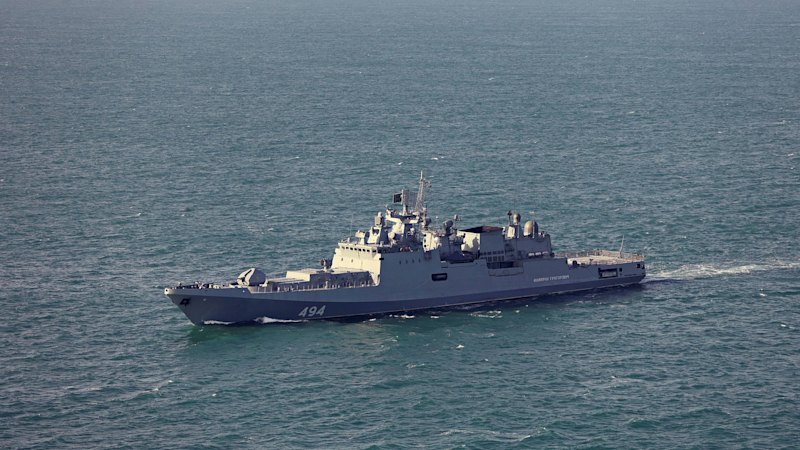
A seafaring husband and wife said they had planned to steer well clear of the Russian frigate, which they said gave no warning before firing warning shots at them in the English Channel.
Narrative Intelligence Brief
This article was published by The Age, a source frequently categorized with a lean left bias based in Australia. Our narrative intelligence engine continuously monitors coverage from this outlet to track framing, bias, and rhetorical patterns. Our initial algorithmic scan of this specific piece did not flag high-confidence rhetorical techniques, suggesting a generally straightforward reporting style or neutral framing. By understanding the editorial perspective of The Age, readers can better contextualize the information presented and compare it across our broader media matrix to find the real narrative.
More from The Age
June 17, 2026
How much more you need to earn to afford the mortgage on a home in Perth
June 17, 2026
Sam Walker stars again for Queensland
June 17, 2026
GetUp stunt at Hanson speech referred to police as One Nation says leader’s safety compromised
June 17, 2026
Finding the foundations for making a choice at the ballot box
June 17, 2026
Ollie Demspey on a wing and prayer
Analysis Methodology
This narrative analysis was generated using the CoDataLab Global Intelligence Engine. Our proprietary AI scans thousands of cross-border sources to identify sentiment patterns, framing techniques, and potential media bias. While AI provides the data-driven foundation, our objective is to empower readers with additional context beyond the standard headline.The content displayed above is a structured summary designed for rapid information processing. For the full original report, please visit the source outlet.More Coverage
Discussion