
Warren Buffett’s Berkshire Hathaway makes bold housing market wager: Acquiring Taylor Morrison and becoming America’s 4th largest builder
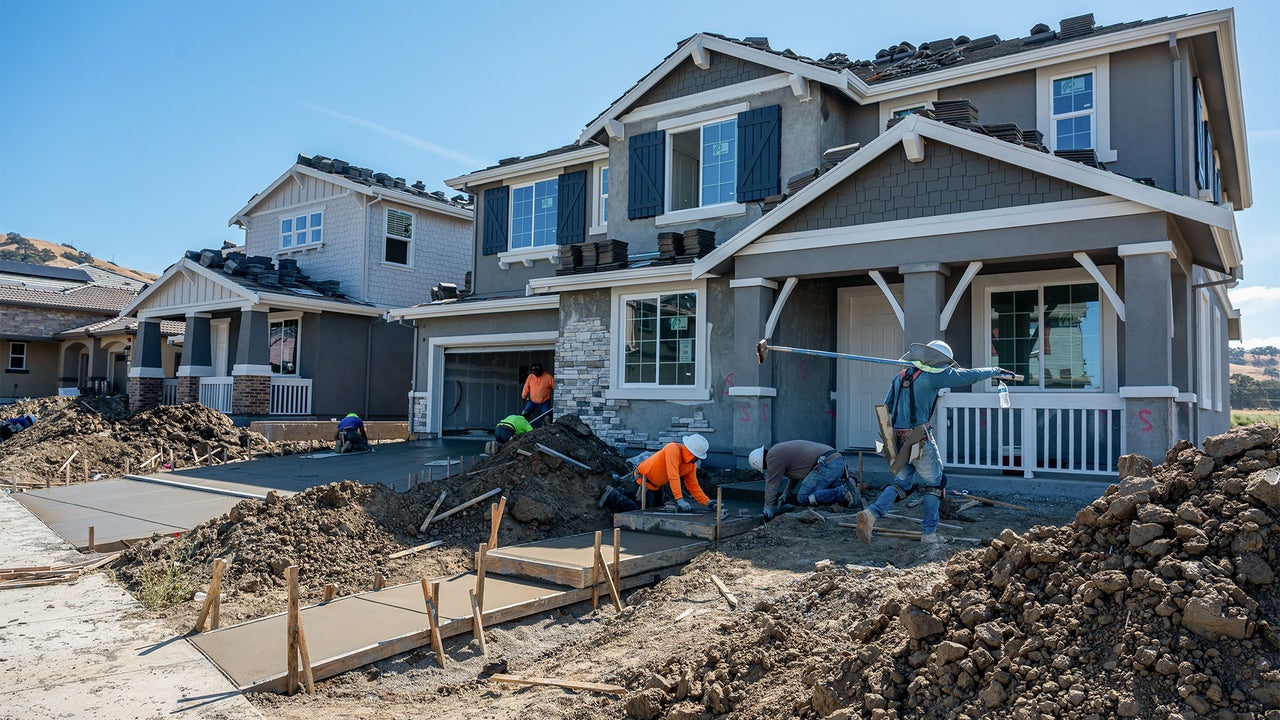
Want more housing market stories from Lance Lambert’s ResiClub in your inbox? Subscribe to the ResiClub newsletter. Greg Abel—who became president and CEO of Berkshire Hathaway on January 1, 2026, succeeding Warren Buffett, who remains chairman of the board—made one of his first major splashes Sunday: announcing an agreement to acquire America’s No. 6 largest homebuilder Taylor Morrison for 8.5 billion in an all-cash deal. The offer values Taylor Morrison at 72.50 per share, a 24 premium to the company’s closing price of 58.50 on May 29, 2026. The transaction implies an equity value of approximately 6.8 billion and a total enterprise value of roughly 8.5 billion. The deal is expected to close in the second half of 2026, pending shareholder and regulatory approvals, after which Taylor Morrison will be taken private and delisted from the New York Stock Exchange. On Sunday, Berkshire Hathaway signaled that a broader consolidation of its residential construction assets is also in the works. More on that below. Taylor Morrison: The nation’s No. 6 homebuilder Taylor Morrison is no small bet. Currently ranked No. 467 on the Fortune 500, the Scottsdale, Arizona-based builder is America’s sixth-largest homebuilder, with 12,997 new home closings in 2025. The homebuilder operates more than 350 communities across 21 markets in 12 states, serving entry-level, move-up, and resort lifestyle buyers under the Taylor Morrison and Esplanade brands and developing build-to-rent (BTR) communities under the Yardly brand. It also offers in-house mortgage, title, escrow, and homeowners insurance services. As the map above illustrates, Taylor Morrison’s footprint is concentrated in high-growth population Sun Belt markets. Berkshire already owns America’s No. 12 largest homebuilder This isn’t Berkshire’s first rodeo in homebuilding. The conglomerate already owns Clayton Properties Group—America’s 12th largest homebuilder—which recorded 9,953 new builds in 2025. But Clayton Properties is a fundamentally different animal than Taylor Morrison. While Taylor Morrison is a traditional site-built homebuilder serving entry-level through luxury resort buyers across 21 major metros, Clayton Properties skews toward scattered-site manufactured and modular housing. Clayton Homes was acquired by Berkshire in 2003 for 1.7 billion. Clayton’s geographic stronghold is the Southeast—in particular in the Carolinas. Combined: Berkshire would become America’s No. 4 homebuilder Put it all together, and Berkshire’s housing platform becomes formidable. With Taylor Morrison’s 12,997 closings and Clayton Properties’ 9,953 closings, combined that’s roughly 22,950 closings in 2025—which, by ResiClub‘s back-of-the-envelope analysis, would make Berkshire Hathaway the No. 4 largest homebuilder in the United States, leapfrogging multiple established players (including NVR) and trailing only D.R. Horton, Lennar, and PulteGroup. Will Berkshire Hathaway combine Taylor Morrison and Clayton Homes? The company says that’s the plan. Here’s what Berkshire Hathaway CEO Greg Abel wrote in a May 31, 2026 press release: “We are excited to welcome Taylor Morrison into Berkshire’s portfolio, reflecting our long-standing commitment to housing, exemplified by Clayton Homes and our other building products businesses. Over time, we expect to unify our site-built homebuilding operations into a combined platform enabling us to deliver the dream of homeownership to more Americans.” A bold bet made during a cyclical cooling period The timing of this deal is notable. U.S. homebuilders have been navigating a cyclical cooling period following the white-hot Pandemic Housing Boom of summer 2020 to summer 2022. As housing demand has come down and mortgage rates have remained elevated, many of the nation’s largest builders have had to compress their margins—offering larger buyer incentives, mortgage rate buydowns, and price concessions—to keep sales volumes from falling harder. In that environment, scale matters more than ever. Larger builders have more capital to deploy incentives, more leverage with land sellers/suppliers, and more capacity to vertically integrate their supply chains. Berkshire—with its famously patient, long-term capital allocation—is arguably better positioned to absorb the cyclical headwinds. Here’s what Taylor Morrison CEO Sheryl Palmer wrote in a May 31, 2026 press release: “Berkshire Hathaway’s long-term orientation is uniquely well-suited to the multi-year investment cycle of homebuilding, and this combination will allow us to scale the Taylor Morrison platform in ways that would not be possible as a standalone company.” A homebuilding industry in consolidation overdrive The Berkshire-Taylor Morrison deal doesn’t arrive in a vacuum. The U.S. homebuilding industry is in the midst of a consolidation wave that has accelerated dramatically in 2026. Japanese firms have been particularly aggressive. In a remarkable five-week window this spring, four different U.S. homebuilders were acquired by Japanese companies. Sumitomo Forestry completed its 4.5 billion acquisition of Tri Pointe Homes—a publicly traded builder—in May, making Sumitomo the equivalent of the fifth-largest U.S. homebuilder. Also this spring, Stanley Martin Homes (owned by Japan’s Daiwa House since 2017) agreed to acquire United Homes Group for 221 million, Daiwa House’s subsidiary Trumark Homes acquired Pacific Northwest builder JK Monarch, and Japan’s Iida Group Holdings (through its subsidiary Hajime Construction) acquired a majority stake in Utah-based Wright Homes. According to ResiClub‘s analysis, Japanese-owned builders now account for close to 6 of U.S. single-family home construction—up from essentially zero market share a decade ago. Meanwhile, on the domestic front, Dream Finders Homes has made no fewer than three separate all-cash offers to acquire Beazer Homes—at 28.50, 29.00, and most recently 25.75 per share (a 40 premium to Beazer’s May 5 price)—going public with its pursuit in May after Beazer’s board repeatedly declined to engage. If that deal happens, the combined entity would be the nation’s No. 6 largest U.S. homebuilder. Now add the Berkshire-Taylor Morrison deal to the mix, and it’s clear: the post-Pandemic homebuilding landscape is being reshuffled fast, and the big are getting bigger.
Narrative Intelligence Brief
This article was published by Fast Company, a source frequently categorized with a lean left bias based in United States of America. Our narrative intelligence engine continuously monitors coverage from this outlet to track framing, bias, and rhetorical patterns. Our initial algorithmic scan of this specific piece did not flag high-confidence rhetorical techniques, suggesting a generally straightforward reporting style or neutral framing. By understanding the editorial perspective of Fast Company, readers can better contextualize the information presented and compare it across our broader media matrix to find the real narrative.
Explore related topics: Stay informed with Real Narrative News as we track unfolding stories. Dive deeper into our coverage of pivotal topics including serena williams, earnings transcript, iran suspends, roland garros, nba finals, حزب الله, donald trump, jill biden, peace talks, and جنوب لبنان. Our intelligence streams continuously monitor these keywords to bring you unbiased analysis and real-time updates on topics like "Warren Buffett’s Berkshire Hathaway makes bold housing market wager: Acquiring Taylor Morrison and becoming America’s 4th largest builder".
More from Fast Company
June 1, 2026
Anthropic stock listing date nears as Claude AI maker gears up for one of the year’s most anticipated IPOs
June 1, 2026
AI’s reality check has finally arrived
June 1, 2026
Why Google wants to release 32 million mosquitoes in California and Florida
June 1, 2026
Warren Buffett’s Berkshire Hathaway makes bold housing market wager: Acquiring Taylor Morrison and becoming America’s 4th largest builder
June 1, 2026
The myth of the hero’s journey—and why it’s killing change in your organization
Analysis Methodology
This narrative analysis was generated using the CoDataLab Global Intelligence Engine. Our proprietary AI scans thousands of cross-border sources to identify sentiment patterns, framing techniques, and potential media bias. While AI provides the data-driven foundation, our objective is to empower readers with additional context beyond the standard headline.The content displayed above is a structured summary designed for rapid information processing. For the full original report, please visit the source outlet.More Coverage
Discussion