Today in News History
On June 29, several notable moments in the history of News stand out. In 1170, A major earthquake hits Syria, badly damaging towns such as Hama and Shaizar and structures such as the Krak des Chevaliers and the cathedral of St. Peter in Antioch. In 1457, The Dutch city of Dordrecht is devastated by fire. In 1922, Ralph Burns, American songwriter, bandleader, composer, conductor, arranger and pianist (died 2001) was born. In 1950, Korean War: U.S. President Harry S. Truman authorizes a sea blockade of Korea. In 1956, The Federal Aid Highway Act of 1956 is signed by U.S. President Dwight D. Eisenhower, officially creating the United States Interstate Highway System. In 2002, Naval clashes between South Korea and North Korea lead to the death of six South Korean sailors and sinking of a North Korean vessel. In 2006, Hamdan v. Rumsfeld: The U.S. Supreme Court rules that President George W. Bush's plan to try Guantanamo Bay detainees in military tribunals violates U.S. and international law. In 2007, Fred Saberhagen, American soldier and author (born 1930) passed away. In 2012, A derecho sweeps across the eastern United States, leaving at least 22 people dead and millions without power. In 2014, The Islamic State of Iraq and the Levant self-declares its caliphate in Syria and northern Iraq. Together, these milestones provide historical context for today's news news and ongoing narratives.
U.S.-Iran ceasefire could go up in flames

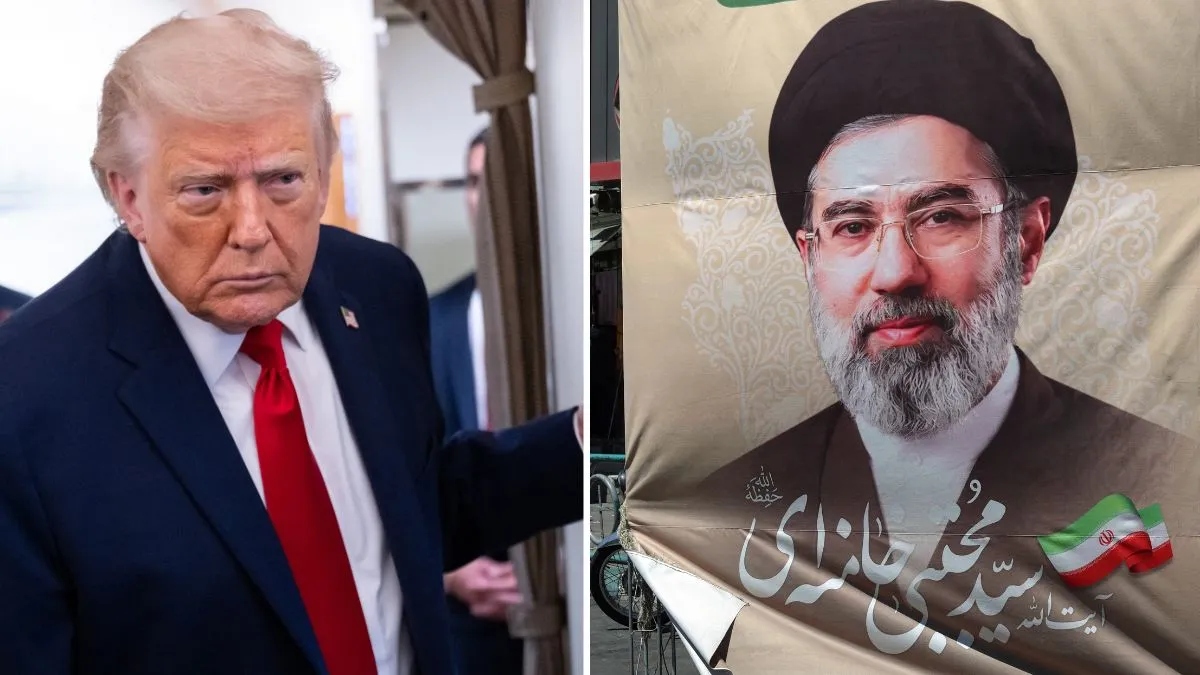
This is more fire than cease: Over the past few days, tension between the U.S. and Iran has been escalating with another exchange of strikes on Saturday. President Trump threatened on Truth Social to resume the war and complete the job.Why it matters: The U.S. and Iran are bombing each other again, putting the tenuous ceasefire in doubt again.Between the lines: One reason for the renewed fighting seems to be different interpretations of the memorandum of understanding (MOU) to end the war that was signed 10 days ago — especially when it comes to the Strait of Hormuz.With the situation escalating by the day, it isn't clear if the next round of negotiations between the U.S. and Iranian technical teams planned for Tuesday in Switzerland will actually take place.Catch up quick: As part of the MOU, Iran committed to make its best efforts to allow safe passage of commercial vessels through the strait. In return, the U.S. lifted its blockade on Iranian ports.During negotiations in Switzerland last week, the U.S. delegation — headed by Vice President Vance — agreed with Iran to establish a hotline between the U.S. military and the IRGC (Islamic Revolutionary Guard Corps), Iran's military command, to coordinate traffic in the strait.As of Saturday, the hotline still wasn't operational. The situation has been escalating as Iran started claiming, again, that ships need to coordinate passage.On Saturday evening, the U.S. military struck Iranian targets in retaliation for an attack Saturday morning on a commercial tanker.It was the second wave of U.S. strikes in Iran in 24 hours.The latest: Iran responded with drone and missile attacks on U.S. bases in Kuwait and Bahrain, according to the IRGC.Iranian state media quoted the IRGC as threatening more forceful attacks on ships in the Strait of Hormuz, raising the prospect of the peace process coming to a halt.Earlier Saturday, the IRGC launched an attack drone at the Panama-flagged M/T Kiku tanker, which was passing through the strait with more than 2 million barrels of crude oil, U.S. Central Command (CENTCOM) said.The incident happened several hours after the U.S. struck Iranian targets, in retaliation for another attack on a commercial ship on Thursday. In addition to the tanker strike, Iran retaliated by attacking targets in Bahrain early Saturday.CENTCOM said in a statement that U.S. aircraft targeted Iranian military surveillance infrastructure, communication systems, air defense sites, drone storage facilities and minelaying capabilities.What they're saying: Trump, in a Truth Social post Saturday evening, confirmed the strikes and threatened more.There may come a point when we are no longer able to be reasonable, and will be forced to militarily complete the job that we very successfully started, he wrote. If that happens, the Islamic Republic of Iran will no longer exist!Go deeper: Trump's messy path to peace.
Narrative Intelligence Brief
This article was published by Axios, a source frequently categorized with a center bias based in United States of America. Our narrative intelligence engine continuously monitors coverage from this outlet to track framing, bias, and rhetorical patterns. Our initial algorithmic scan of this specific piece did not flag high-confidence rhetorical techniques, suggesting a generally straightforward reporting style or neutral framing. By understanding the editorial perspective of Axios, readers can better contextualize the information presented and compare it across our broader media matrix to find the real narrative.
More from Axios
June 28, 2026
Tension with unions shadows Moore's run-up to 2028
June 28, 2026
Tension with unions shadow Moore's run-up to 2028
June 28, 2026
Trump sets Sept. 1 start for overhaul of "run down" D.C. golf course
June 28, 2026
U.S. and Iran agree to halt strikes and meet this week, U.S. official says
June 28, 2026
Behind the scenes: How shared fear of Iran led to an Israel-Lebanon deal
Analysis Methodology
This narrative analysis was generated using the CoDataLab Global Intelligence Engine. Our proprietary AI scans thousands of cross-border sources to identify sentiment patterns, framing techniques, and potential media bias. While AI provides the data-driven foundation, our objective is to empower readers with additional context beyond the standard headline.The content displayed above is a structured summary designed for rapid information processing. For the full original report, please visit the source outlet.More Coverage
Discussion
"iran agree"
US and Iran Agree to Halt Attacks Ahead of Talks
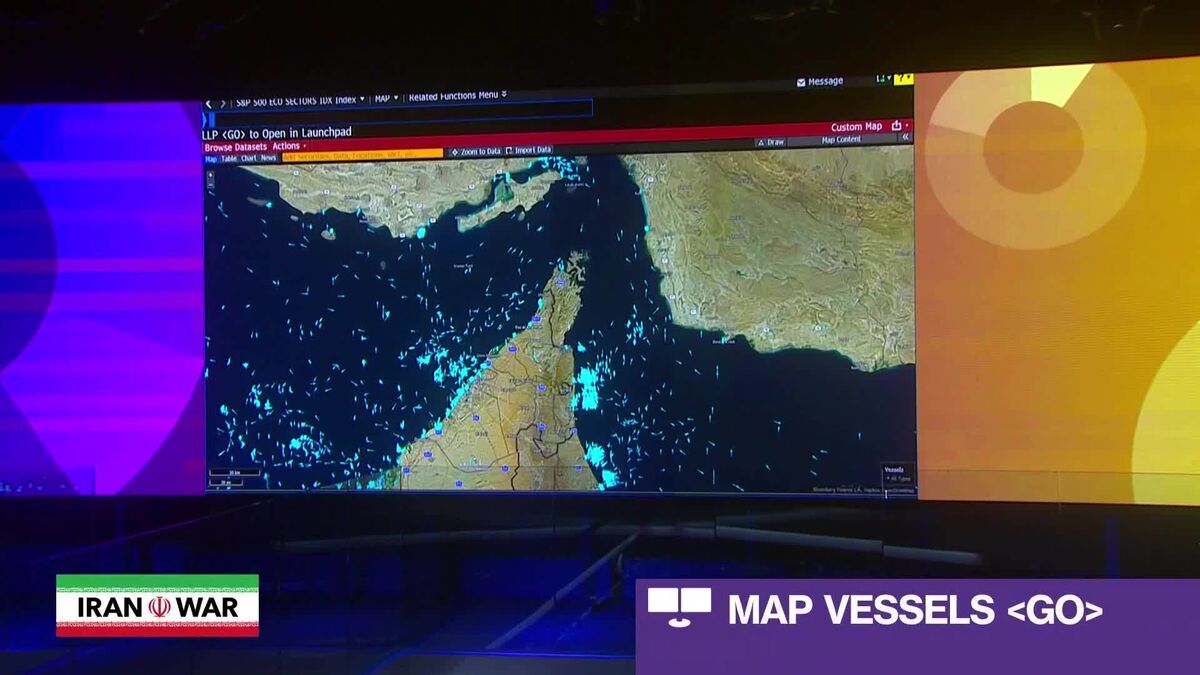
US, Iran agree to 'stand down for now,' resume peace talks: Official

US and Iran agree to halt strikes, hold talks in Doha over Strait of Hormuz this week: Report