Today in News History
On June 23, several notable moments in the history of News stand out. In 1907, James Meade, English economist and academic, Nobel Prize laureate (died 1995) was born. In 1912, Alan Turing, English mathematician and computer scientist (died 1954) was born. In 1931, Wiley Post and Harold Gatty take off from Roosevelt Field, Long Island in an attempt to circumnavigate the world in a single-engine plane. In 1954, Salih Omurtak, Turkish general (born 1889) passed away. In 1969, IBM announces that effective January 1970 it will price its software and services separately from hardware thus creating the modern software industry. In 1972, Watergate scandal: U.S. President Richard M. Nixon and White House Chief of Staff H. R. Haldeman are taped talking about illegally using the Central Intelligence Agency to obstruct the Federal Bureau of Investigation's investigation into the Watergate break-ins. In 1994, NASA's Space Station Processing Facility, a new state-of-the-art manufacturing building for the International Space Station, officially opens at Kennedy Space Center. In 2012, James Durbin, English economist and statistician (born 1923) passed away. In 2013, Bobby Bland, American singer-songwriter (born 1930) passed away. In 2015, Nirmala Joshi, Indian nun, lawyer, and social worker (born 1934) passed away. Together, these milestones provide historical context for today's news news and ongoing narratives.
UN chief urges AI companies to ‘come clean’ about the pollution they generate
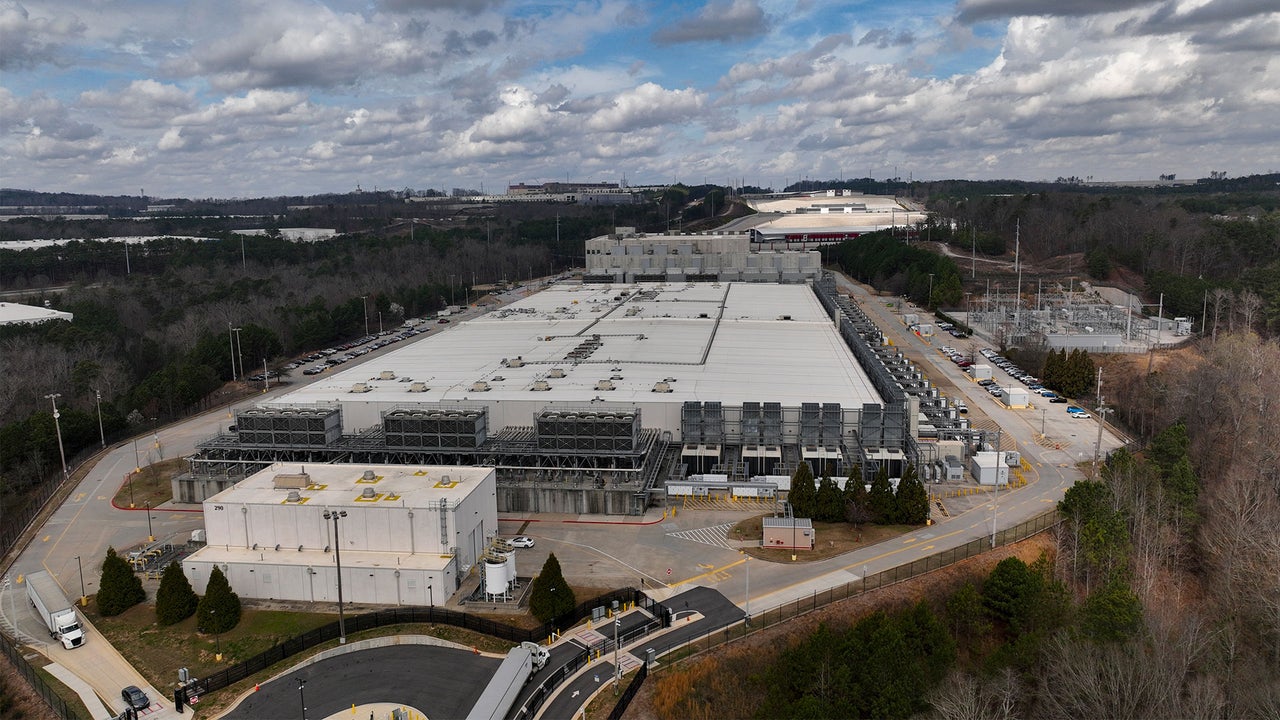
United Nations Secretary-General António Guterres on Tuesday called on AI companies to release information about the carbon pollution they create, along with the water and land used to power their operations.In an address at London Climate Action Week, Guterres proposed the AI Environmental Transparency Initiative, arguing artificial intelligence companies should measure and disclose the impact of their technology—impact that opponents cite as a reason to curb the rapid growth of data centers. Both national governments and local authorities in areas with data centers that support AI are exerting pressure on these companies for more transparency and more standardized reporting across the industry.Guterres said AI companies should also commit to powering their facilities with electricity produced with renewable technologies, such as wind and solar, by 2030.“No more hidden costs,” Guterres said at Europe’s largest independent climate conference. “No more shifting the burden onto those least able to bear it. It is time to come clean.” AI’s needs are growing Many big tech companies have vowed to power their operations using cleaner sources, some by the end of the decade. Some plan to do so especially using solar and nuclear, including Amazon and Google.But the race to deploy AI has complicated those commitments and increased greenhouse gas emissions, which come from the burning of fuels like oil, coal and gas, and heat the planet. Regulatory barriers have also hindered climate-friendly projects.Coal provides about 30 of the electricity consumed by data centers globally, according to the International Energy Agency. Renewable energy—primarily wind, solar, and hydro—supplies about 27; natural gas, 26; and nuclear, 15. Renewables are expected to meet just half of the demand over the next five years.As AI booms, many, including Guterres, have touted its ability to accelerate climate solutions. It could improve energy efficiency and reduce pollution and emissions.At the same time, the environmental footprint of data centers already rivals some of the world’s largest countries, according to a U.N. report released earlier this month.That report also said the water and energy use and pollution associated with AI will double in just four years. Data centers needed to fuel AI accounted for about 1.5 of the world’s electricity consumption in 2025, and will account for nearly 3 of projected electricity use by 2030.“Despite these obvious concerns, communities are often left in the dark about the environmental impact of the infrastructure rising around them,” Guterres said in his remarks. The UN continues to sound urgent alarms The U.N. chief has long urged the world to take serious climate action, and will once again convene leaders at the annual Conference of Parties, this year in Turkey, to negotiate plans.On Tuesday, addressing AI was just a number of steps he said needed to be taken to keep the world below the warming limit of 1.5 degrees Celsius (2.7 degrees Fahrenheit) above preindustrial times, a goal set by the 2015 Paris Agreement.Last year was the first time that the three-year temperature average broke through that threshold.“Every major emitter must accelerate action,” Guterres said. “And every country must overdeliver on its commitments.”He called for cutting methane, a powerful greenhouse gas that is responsible for around one-third of global warming and is significantly more potent than carbon dioxide, though it doesn’t linger as long in the atmosphere. He also called for a reduction in dependence on coal, oil, and gas. Renewables progress seen around the globe but challenges remain Guterres noted positive developments in renewable energy, as scale drives down the costs of the technologies and adoption increases.Clean power generation—largely driven by solar and wind—exceeded overall global electricity demand growth last year. The share of renewables also hit more than one-third of the world’s electricity mix for the first time in modern history in 2025, and coal power saw its share fall below one-third of global generation.China continues to drive the world’s clean energy transition, and in Europe, fossil generation is generally trending down.But the United States under President Donald Trump has embraced coal, oil, and gas and slashed support for renewables and broader climate action—all amid the global energy crisis exacerbated by the U.S. war in Iran, which Guterres called “the mother of all energy shocks.”Guterres referred to the state of the world as “A Tale of Two Crises,” a nod to the Charles Dickens novel, “A Tale of Two Cities.” “For the climate agenda, this is indeed the best of times and the worst of times,” he said. “The worst—because climate impacts are intensifying, tipping points are looming, and the energy crisis has exposed the deep risks of dependence on fossil fuels. But also the best—because the renewables revolution is well underway.” Alexa St. John is an Associated Press climate reporter. Follow her on X: @alexa_stjohn. Reach her at ast.john@ap.org. Read more of AP’s climate coverage. The Associated Press’ climate and environmental coverage receives financial support from multiple private foundations. AP is solely responsible for all content. Find AP’s standards for working with philanthropies, a list of supporters and funded coverage areas at AP.org. —Alexa St. John, Associated Press
Narrative Intelligence Brief
This article was published by Fast Company, a source frequently categorized with a lean left bias based in United States of America. Our narrative intelligence engine continuously monitors coverage from this outlet to track framing, bias, and rhetorical patterns. Our initial algorithmic scan of this specific piece did not flag high-confidence rhetorical techniques, suggesting a generally straightforward reporting style or neutral framing. By understanding the editorial perspective of Fast Company, readers can better contextualize the information presented and compare it across our broader media matrix to find the real narrative.
More from Fast Company
June 23, 2026
There’s a deadly heat wave in Europe. Experts are begging media outlets to stop making it look fun
June 23, 2026
This iconic Paris landmark is now a ‘surreal’ homage to the material that built the city
June 23, 2026
Is ambition just insecurity in disguise?
June 23, 2026
Oracle layoffs: 21,000 jobs cut, software giant trades human talent for AI tech amid the SaaSpocalypse
June 23, 2026
Peek inside the archives of a titan of 20th century architecture
Analysis Methodology
This narrative analysis was generated using the CoDataLab Global Intelligence Engine. Our proprietary AI scans thousands of cross-border sources to identify sentiment patterns, framing techniques, and potential media bias. While AI provides the data-driven foundation, our objective is to empower readers with additional context beyond the standard headline.The content displayed above is a structured summary designed for rapid information processing. For the full original report, please visit the source outlet.More Coverage
Discussion
"trump"
Dead Duck Count Mounts Around Trump’s Green Slime Lagoon

Trump, US receive overwhelmingly negative reviews in new Pew global survey

Chicago Mayor ignores another bloody weekend to focus on something called a, quote, “Transfemicide State of Emergency"