Today in News History
On June 23, several notable moments in the history of News stand out. In 1909, David Lewis, Russian-Canadian lawyer and politician (died 1981) was born. In 1940, George Feigley, American sex cult leader and two-time prison escapee (died 2009) was born. In 1967, Cold War: U.S. President Lyndon B. Johnson meets with Soviet Premier Alexei Kosygin in Glassboro, New Jersey for the three-day Glassboro Summit Conference. In 1972, Watergate scandal: U.S. President Richard M. Nixon and White House Chief of Staff H. R. Haldeman are taped talking about illegally using the Central Intelligence Agency to obstruct the Federal Bureau of Investigation's investigation into the Watergate break-ins. In 1985, A terrorist bomb explodes at Narita International Airport near Tokyo, killing two and injuring four. An hour later, the same group detonates a second bomb aboard Air India Flight 182, bringing the Boeing 747 down off the coast of Ireland killing all 329 aboard. In 1989, Jordan Nolan, Canadian ice hockey player was born. In 2012, James Durbin, English economist and statistician (born 1923) passed away. In 2013, Militants storm a high-altitude mountaineering base camp near Nanga Parbat in Gilgit-Baltistan, Pakistan, killing ten climbers and a local guide. In 2014, The last of Syria's declared chemical weapons are shipped out for destruction. In 2017, A series of terrorist attacks take place in Pakistan, resulting in 96 deaths and wounding 200 others. Together, these milestones provide historical context for today's news news and ongoing narratives.
Trump DOJ's plot to imprison ICE protesters for life hit by last-minute blow
Narrative Analysis: Name Calling
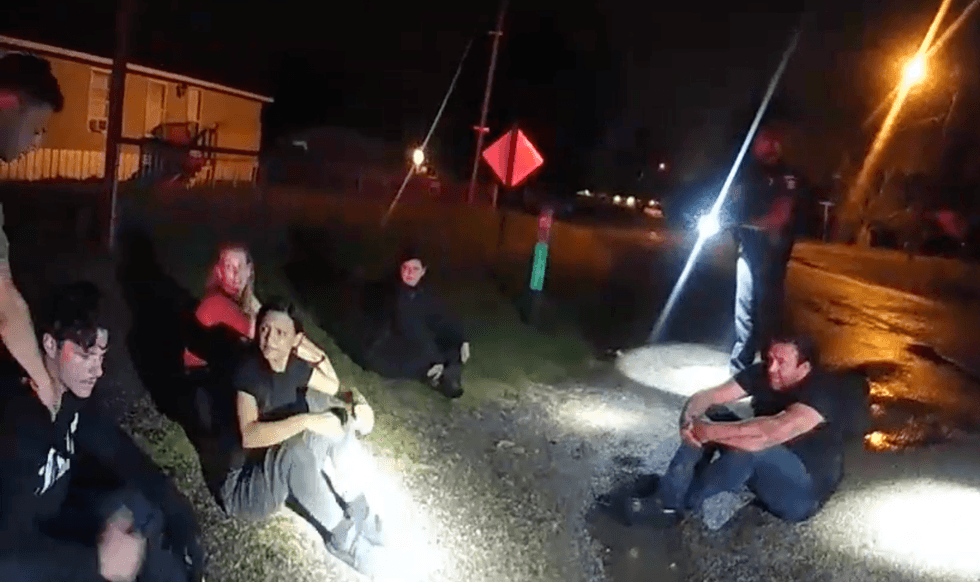
Eight activists convicted of terrorism-related charges and rioting for their role in a noise demonstration outside an ICE facility, at which a local police officer was shot, face up to life in prison when they go before a federal judge in Fort Worth, Texas, for sentencing on Tuesday.Another, the last of the nine convicted in March, will be sentenced on July 1.The Trump administration has hailed the case as a watershed in its campaign to dismantle “antifa” as a domestic terrorist threat. But as they await sentencing, the defendants are seeking to overturn the convictions based on the claim that the government suppressed evidence showing that the officer drew first, and based on potential juror misconduct.Defendants have also argued that they should be acquitted or granted new trials because the evidence shows they went to the Prairieland Immigration and Customs Enforcement detention facility on July 4 last year to set off fireworks and cheer up the detainees. They argue there was no riot and no violence, with the exception of one or two individuals who committed vandalism at their own initiative — and the exchange of gunfire when the police showed up.“They weren’t doing anything wrong, Amber Lowrey, the sister of one of the defendants, told Raw Story. They’re just human beings. Some of them knew each other, and some didn’t. They did similar volunteer work. People say, ‘It won’t happen to me, because I’m not involved with groups like that.’ Oh, but it will!The first to respond to the scene when detention officers called to report a disturbance with fireworks on July 4, 2025 was Lt. Thomas Gross with the Alvarado Police Department. Gross’ dash camera, which was reviewed by Raw Story, shows him accelerating down the lane towards the facility. As he approaches the entrance, two figures in black can be seen running past the guardhouse, which is defaced with graffiti reading, “F--- ICE.”“Hey, stop!” Gross yelled.His body-worn camera video shows that he jumped out of his car and pursued the individuals on foot.Almost immediately, gunfire erupted and a bullet grazed Gross’ neck.“F---!” he said as his body landed on the wet pavement. “I’m hit.” Additional footage shows Gross seated in the back of a police vehicle as other officers arrive on the scene. “I’m hit — my back,” Gross says as another officer renders first aid.Later, as Johnson County Sheriff’s deputies arrived on the scene and searched defendant Meagan Morris’ car, they discovered a rifle and ammunition.“This is like a straight coordinated terror attack on Prairieland,” one of the officers commented.One of the first of the protesters to be arrested was Nathan Baumann, one of the men Gross had seen running past the guardhouse.“If there’s anything y’all need, like, listen, I’m all for peaceful protest — if you want me to point out people’s vehicles to you, anybody doing dumb s---, I got you, sir,” Baumann said as an officer adjusted his handcuffs and detained him in the back seat of a cruiser.The charges against defendants linked to the noise demonstration initially focused on the shooting, although the shooter remained at large.Benjamin Song, a former Marine who provided firearms training to left-wing activists in the Dallas-Fort Worth area, would not be apprehended for another 11 days.The assassination of conservative activist Charlie Kirk on Sept. 10 — more than two months later — brought the government’s case into focus.Later that month, President Donald Trump issued an executive order naming “antifa” as a domestic terrorist organization, followed by National Security Presidential Memorandum/NSPM-7, which described “antifascism” as an “umbrella” for “recurrent motivations and indicia uniting” a “pattern of violent and terrorist activities.” The memo runs down a laundry list of characteristics commonly associated with the left, including “support for the overthrow of the United States government” and “extremism on migration, race and gender.”The Prairieland defendants, who were protesting federal immigration policies and two of whom are transgender, appeared to present the Trump administration with an embodiment of the new threat straight out of central casting.When a new indictment was returned in October 2025, it described the defendants as members of an “antifa cell” and “militant enterprise.”As evidence that the defendants were planning violent action at the ICE facility, the government highlighted a statement by Song in a Signal planning chat: “Cops are not trained or equipped for more than one rifle so it tends to make them back off.”Last week, when the White House announced an indictment against 15 “antifa” defendants in Minneapolis for conspiracy to obstruct immigration enforcement, it cited the Prairieland case as part of its “relentless campaign to eradicate Antifa’s domestic terrorism threat.”The indictment against the Minneapolis 'antifa' defendants reflects a precedent set by the Prairieland case, Xavier T. de Janon, an attorney with the National Lawyers Guild, told Raw Story. By declaring that the defendants were members of a 'North Texas antifa cell,' and then obtaining a verdict, the government created a playbook for future prosecutions of anti-Trump protesters, he said.The White House said the Prairieland defendants, described as “members of a North Texas antifa cell,” were convicted of terrorism-related charges “for their violent, armed ambush on an ICE detention facility.”But motions for acquittal and for a new trial filed by the defendants challenge the Trump administration’s characterization.Maricel Rueda, one of the defendants, argues in her motion that the government’s case “relies on association, speculation, and the independent actions of others” rather than proof of the defendants’ “individual conduct and intent.”Even Judge Mark Pittman questioned the government’s effort to use the defendants’ alleged antifascist beliefs to prove criminal misconduct.“Whether it’s antifa or the Methodist Women’s Auxiliary of Weatherford, why does it matter?” he reportedly asked prosecutors before giving jury instructions.Ines Soto, another defendant, said in his motion that he showed up at the noise demonstration with two other defendants, his wife Elizabeth Soto and Savanna Batten, about 15 minutes late, and left as soon as ordered to do so by corrections staff.“Soto was not part of the ‘core chat’ that planned the noise demonstration, he was not present for the ‘gear check’ the night before, he was not in the ‘affinity group,’ he did not purchase fireworks, he did not shoot fireworks,” the motion reads. “He was — at best — merely present for the fireworks.”Batten similarly argues in her motion that “she did not participate in key preparatory activities, including the alleged ‘gear check,’ and did not engage in any relevant group communications.” The fact that she was the backseat passenger in the Sotos’ vehicle can’t be considered an overt act in furtherance of a riot, the motion argues.The government argues in response that by shutting off her phone when she arrived at the protest, Batten demonstrated “extreme operational security measures,” or “opsec,” that prove she was trying to hide her identity, and planning an involvement in an “attack.”Batten’s motion for a new trial cites “potential juror misconduct and irregularities” that she argues “compromised the integrity of the verdict and deprived her of a fair trial.”The motion alleges that members of the public overheard jurors shouting over one another on the final day of deliberations, adding that “there is reason to believe that jurors engaged in a heated confrontation inside the jury room and that certain jurors may have been subjected to intimidation or coercion during deliberations.”The government has dismissed the claim as “speculation,” while noting that none of the jurors reported being coerced or intimidated while the judge polled them individually after reading the verdict.Rueda’s motion argues that the only evidence presented by the government showed that she used a megaphone to communicate with the detainees. Rueda’s motion asserts that “the shooting was carried out independently by Mr. Song to the surprise of all witnesses.”Baumann, the activist who offered to help the police identify other protesters’ vehicles when he was arrested, pleaded guilty to material support to terrorists while the other defendants went to trial.Baumann testified during the trial, according to Rueda’s motion, “that his vandalism was spontaneous and undertaken on his own initiative.”Rueda and Batten, along with five other defendants, face sentences ranging from 10 to 60 years in prison.Daniel Rolando Sanchez Estrada, Rueda’s partner, was convicted of corruptly concealing a document or record by transporting a box of zines described as “antifa materials” that the government contends were evidence of an insurrectionary plan. Sanchez Estrada faces up to 40 years in prison.Lowrey, Batten’s sister, told Raw Story she expects the sentences to have a chilling effect on dissent against the Trump administration, adding that it's up to every person individually to determine how much they allow the government to make them afraid.“They’re going to get a publicity bump,” she said, “and people are going to see how terrible the sentences are. And it will make people afraid to stand up to the Trump administration.”From the start, Song’s role in the events at Prairieland on July 4, 2025 has been the most controversial.When the trial began on Feb. 23, it had been less than a month since two U.S. Customs and Border Patrol officers fatally shot Alex Pretti, an intensive care nurse protesting immigration enforcement in Minneapolis. Pretti had been legally carrying a firearm, and Department of Homeland Security officials claimed that the officers shot Pretti because they feared for their lives, in contradiction to video evidence, while White House aide Stephen Miller described Pretti as a “domestic terrorist.”Midway through the Prairieland trial, Judge Mark Pittman issued an order barring self-defense claims in relation to Song’s shooting of Gross.But under cross-examination, Gross reportedly admitted that he may have drawn his firearm before Song raised his rifle.Song is challenging his conviction for attempted murder by arguing in a motion for acquittal that the government failed to produce any evidence that he or anyone else intended to take Gross’ life.Song’s motion claims that the government failed to share evidence with him that Gross admitted he was the first to draw his weapon. Song also claims that he fired into the ground, and the bullet ricocheted before striking Gross in the neck. His motion argues that the government failed to turn over “pictures taken of the ground-strikes on the concrete.”The government doesn’t dispute that the evidence Gross drew his weapon first wasn’t disclosed until the trial, while arguing that Song “has only himself and his counsel to blame for failing” to examine crime scene photos and learn for himself that the investigators didn’t take any photos that would show ground-strikes.Song faces a sentence ranging from 20 years to life in prison.Lowrey believes that had Song not fired, Gross would have fatally shot Baumann and the other protester running from the scene.“They told you that Renee Good and Alex Pretti were domestic terrorists,” Lowrey said on the 817 Podcast. “And you know what? They would have done the same thing to these guys if they could have caught them that night. If Ben Song hadn’t been there, two families would have buried their sons. And however you feel about having guns at a protest, I’m sorry, but in the end it feels to me that that was what the Second Amendment was made for.”As the defendants await sentencing at the Eldon B. Mahon courthouse in Fort Worth on Tuesday morning, the court has not ruled on the defendants’ motions for acquittal and for new trials. That contrasts with a similar case in Spokane, Washington, in which a judge scheduled hearings on post-verdict motions, de Janon said. To get to sentencing without an order is challenging, to say the least, because the motions are challenging the verdict, and the defendants have to go to sentencing against this very verdict, he said. To ask that you argue against your punishment is hard, because then you're giving validity to your verdict. Meanwhile, Pittman, the judge who presided over the trial in February and March, issued an order last week reassigning the cases to another judge, without offering any explanation.The factors in sentencing are all based on the trial, so a judge having only a trial transcript to consider the facts and evidence to determine the punishment is another concerning aspect of this case, de Janon said. It's a parade of horrors.
Narrative Intelligence Brief
This article was published by Raw Story, a source frequently categorized with a left bias based in United States of America. Our narrative intelligence engine continuously monitors coverage from this outlet to track framing, bias, and rhetorical patterns. In this specific piece, our systems detected the potential use of the "Name Calling" technique. This narrative approach is often used to shape reader perception by highlighting specific emotional or rhetorical angles. By understanding the editorial perspective of Raw Story, readers can better contextualize the information presented and compare it across our broader media matrix to find the real narrative.
More from Raw Story
June 23, 2026
MTG spills beans on Trump campaign efforts to sideline MAGA bloc: 'They were embarrassed'
June 23, 2026
Susie Wiles battled Vance over 'unsubstantiated' Trump/Epstein accusations: NYT reporters
June 23, 2026
Iran consolidates control over crucial waterway by sidestepping peace talks: experts
June 23, 2026
Granddaughter of iconic painter claps back at White House for co-opting grandfather's work
June 23, 2026
Trump endorsement no longer a golden ticket in red state: 'Don't think it carries weight'
Reliability Insights
P
Technique: Name Calling
System analysis detected use of specific narrative techniques in this piece.Analysis Methodology
This narrative analysis was generated using the CoDataLab Global Intelligence Engine. Our proprietary AI scans thousands of cross-border sources to identify sentiment patterns, framing techniques, and potential media bias. While AI provides the data-driven foundation, our objective is to empower readers with additional context beyond the standard headline.The content displayed above is a structured summary designed for rapid information processing. For the full original report, please visit the source outlet.More Coverage
Discussion
"prime"
‘The Big Short’ investor issues a dire warning about Nvidia. Here’s why he believes an ‘aggressive fall’ is coming, and how businesses can avoid the same fate
Romania’s Crisis Deepens as Parliament Rejects PM-Designate’s Government

Keir Starmer has gone but Britain’s crisis is about to get even worse