Today in News History
On June 23, several notable moments in the history of News stand out. In 1907, James Meade, English economist and academic, Nobel Prize laureate (died 1995) was born. In 1913, William P. Rogers, American commander, lawyer, and politician, 55th United States Secretary of State (died 2001) was born. In 1923, Jerry Rullo, American professional basketball player (died 2016) was born. In 1940, Wilma Rudolph, American runner (died 1994) was born. In 1951, The ocean liner SS United States is christened and launched. In 1965, Sylvia Mathews Burwell, American government and non-profit executive was born. In 1978, Matt Light, American football player and sportscaster was born. In 1993, Marvin Grumann, German footballer was born. In 2012, James Durbin, English economist and statistician (born 1923) passed away. In 2014, Paula Kent Meehan, American businesswoman, co-founded Redken (born 1931) passed away. Together, these milestones provide historical context for today's news news and ongoing narratives.
Trump endorsement no longer a golden ticket in red state: 'Don't think it carries weight'
Narrative Analysis: Transfer
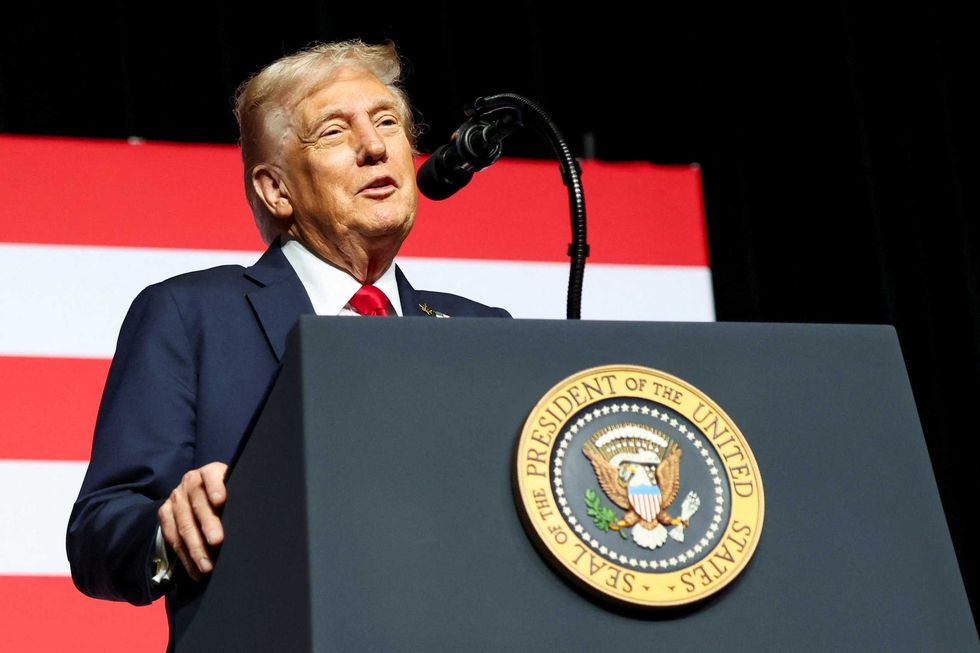
In most Republican primaries, President Donald Trump's endorsement settles the race. In one state, it barely moves the needle.The 80-year-old president has backed Rep. Celeste Maloy on Truth Social — the same blanket endorsement he gave two other Utah GOP incumbents, one of whom doesn't even have a primary opponent, but Brigham Young University political scientist told NPR the backing won't hurt those candidates but won't provide the decisive advantage it might have elsewhere.There's many Republican voters in Utah who have sort of made their peace with Donald Trump enough to vote for him, said Chris Karpowitz, a BYU political science professor. But that doesn't mean they necessarily support either his style of politics or some of the policies that he pursues.They are loyal to the party, not the president, he added.Utah gave Trump his narrowest margin of any Republican state in 2016, under 50 percent, and even after gains in 2020 and 2024, he's never cracked 60 percent there. By April, his approval rating in the state had fallen to an all-time low of 44 percent, with support among Utah Republicans specifically dropping 10 points.Voters have made peace with Trump enough to back him at the ballot box, but that tolerance doesn't extend to embracing his style or his signature policies — particularly on immigration and his past remarks about Islam and other faiths, which have grated in a state shaped by the Church of Jesus Christ of Latter-day Saints and its history of religious-freedom advocacy.That dynamic is playing out directly in Utah's new 3rd Congressional District primary, where Maloy faces Phil Lyman, a Trump-pardoned former state legislator running as an anti-establishment, Freedom Caucus-aligned candidate. Both men are unquestionably Trump supporters, but neither is running on it.Maloy touts her work on tax cuts and committee assignments without invoking the president's own branding for the legislation; Lyman centers his campaign on rooting out government corruption and decentralizing power, not on MAGA loyalty.Utah State University political scientist Damon Cann described the pattern as a careful balancing act: Republicans there run as Republicans who happened to have had Trump's support, not as Trump Republicans, and not as candidates hostile to him either.The result is a primary fight that doubles as a test case for the party's future. As national Republicans eventually confront life after Trump, Utah suggests one possible shape that takes a base still nominally loyal to the president, but one whose actual allegiance, when push comes to shove, belongs to the party brand he temporarily leads.Republicans in Utah are ambivalent enough about Donald Trump that I don't think it carries quite the same weight that it might in other states, Karpowitz said.
Narrative Intelligence Brief
This article was published by Raw Story, a source frequently categorized with a left bias based in United States of America. Our narrative intelligence engine continuously monitors coverage from this outlet to track framing, bias, and rhetorical patterns. In this specific piece, our systems detected the potential use of the "Transfer" technique. This narrative approach is often used to shape reader perception by highlighting specific emotional or rhetorical angles. By understanding the editorial perspective of Raw Story, readers can better contextualize the information presented and compare it across our broader media matrix to find the real narrative.
More from Raw Story
June 23, 2026
Parents ditch the name 'Donald' in historic numbers amid Trump's tanking favorability
June 23, 2026
Trump speculation swirls as one 79-year-old patient given unapproved powerful obesity drug
June 23, 2026
Ex-UN delegate thrown in social media 'jail' for flagging Trump ally's Epstein ties: claim
June 23, 2026
Stephen Miller in peril as uncovered FBI docs put his secret deeds in judge's crosshairs
June 23, 2026
MTG spills beans on Trump campaign efforts to sideline MAGA bloc: 'They were embarrassed'
Reliability Insights
P
Technique: Transfer
System analysis detected use of specific narrative techniques in this piece.Analysis Methodology
This narrative analysis was generated using the CoDataLab Global Intelligence Engine. Our proprietary AI scans thousands of cross-border sources to identify sentiment patterns, framing techniques, and potential media bias. While AI provides the data-driven foundation, our objective is to empower readers with additional context beyond the standard headline.The content displayed above is a structured summary designed for rapid information processing. For the full original report, please visit the source outlet.More Coverage
Discussion
"trump"
Dead Duck Count Mounts Around Trump’s Green Slime Lagoon

You Can Now Be Arrested For Sticking Your Hand In Donald Trump’s Disgusting Reflecting Pool
Chicago Mayor ignores another bloody weekend to focus on something called a, quote, “Transfemicide State of Emergency"