Today in News History
On June 27, several notable moments in the history of News stand out. In 1957, Hurricane Audrey makes landfall near the Texas-Louisiana border, killing over 400 people, mainly in and around Cameron, Louisiana. In 1962, Sunanda Pushkar, India-born Canadian businesswoman (died 2014) was born. In 1965, S. Manikavasagam, Malaysian politician and social activist was born. In 1981, The Central Committee of the Chinese Communist Party issues its "Resolution on Certain Questions in the History of Our Party Since the Founding of the People's Republic of China", laying the blame for the Cultural Revolution on Mao Zedong. In 1984, Khloé Kardashian, American model, businesswoman, and radio host was born. In 1988, Villa Tunari massacre: Bolivian anti-narcotics police kill nine to 12 and injure over a hundred protesting coca-growing peasants. In 1993, Johanna Talihärm, Estonian biathlete was born. In 2008, In a highly scrutinized election, President of Zimbabwe Robert Mugabe is re-elected in a landslide after his opponent Morgan Tsvangirai had withdrawn a week earlier, citing violence against his party's supporters. In 2017, A series of powerful cyberattacks using the Petya malware target websites of Ukrainian organizations and counterparts with Ukrainian connections around the globe. In 2018, Joe Jackson, American manager, father of Michael Jackson and Janet Jackson (born 1928) passed away. Together, these milestones provide historical context for today's news news and ongoing narratives.
Troubling Signal: 'Fast-Food Index' Of Consumer Sentiment Is Falling Fast
Narrative Analysis: Bandwagon
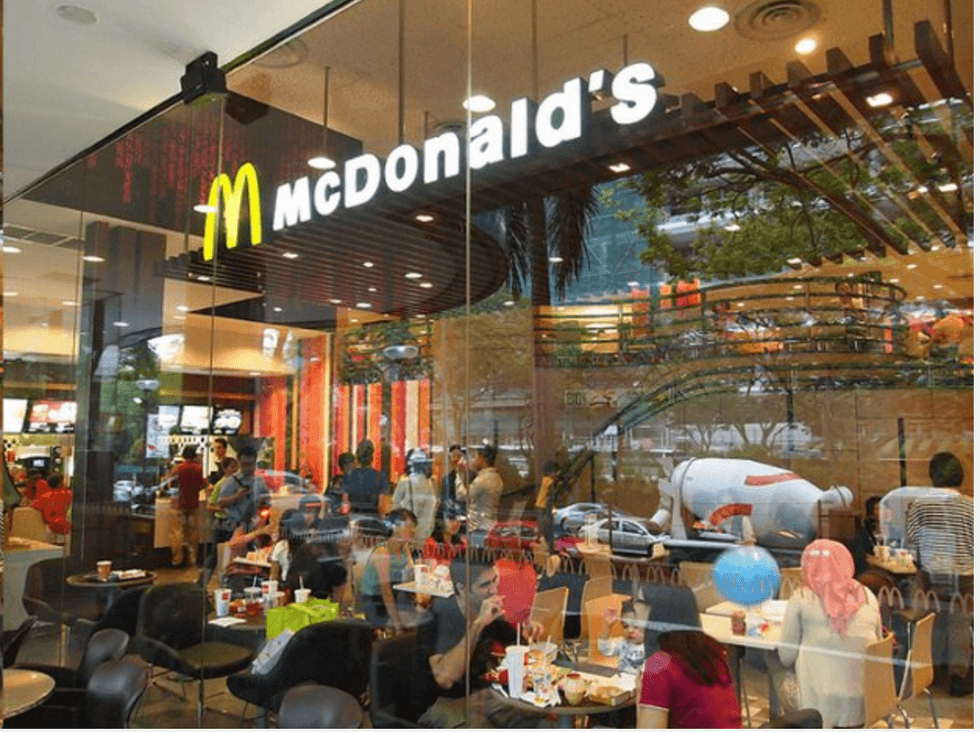
For the last several years, I’ve been using real spending at fast food restaurants as a gauge for assessing how the non-rich are feeling about their personal finances. The logic is that it is a type of discretionary spending where people can easily make cutbacks if they are feeling squeezed.Also, it should not be affected much by the spending of the rich. It’s not likely that Elon Musk eats more Big Macs when his wealth increases or he cuts back when SpaceX’s stock plunges.And to be clear, I’m not saying the rich don’t eat fast food. I’m sure they do. The claim is just that their consumption of fast food is not affected much by changes in their short-term financial situation.Anyhow, the story the index has been telling us in the last year is not a good one. After rising at a healthy pace through 2023 (the January number was an upward blip), spending had been largely flat through 2024 and the first half of 2025. It then rose in the summer and peaked at an annual rate of 386.2 billion in September. Since then, it has fallen sharply, hitting 366.8 billion in May, a decline of just over 4.0 percent from its peak.That would seem to indicate that people are feeling pretty bad about their economic situation. This is consistent with the bad numbers being reported in the consumer confidence indexes.I’ve had people suggest to me that this decline could be driven by the increased use of Ozempic or related drugs. This would be a positive spin, since it would probably be good for people’s health if they consumed less fast food.Unfortunately, that does not seem likely to explain this sort of decline. By 2024, 12 percent of the adult population was already taking a GLP-1 drug. The increase in usage did not prevent fast-food consumption from rising rapidly in 2023 and at least staying flat in 2024.The number of people using these drugs has undoubtedly continued to rise, but probably not by enough to explain the sharp drop in consumption over the last 8 months. The drop in spending is likely giving us bad news about the state of the economy, not good news on public health.People’s negative assessments of the economy continue to be somewhat of a mystery. The recent run-up in gas prices and inflation more generally is unambiguously bad news, but is this the worst economy ever, as some of the consumer confidence measures have been showing? Real income for those at the middle and bottom has generally been rising by standard measures, so it seems that we’re missing something, and I’m not sure any of us have figured out what.The fast-food index is telling us what people do and not just what they say. And what they do is telling us that they don’t feel very good about the economy.Dean Baker is a senior economist at the Center for Economic and Policy Research and the author of the 2016 book Rigged: How Globalization and the Rules of the Modern Economy Were Structured to Make the Rich Richer. Please consider subscribing to his Substack.
Narrative Intelligence Brief
This article was published by The National Memo, a source frequently categorized with a left bias based in United States of America. Our narrative intelligence engine continuously monitors coverage from this outlet to track framing, bias, and rhetorical patterns. In this specific piece, our systems detected the potential use of the "Bandwagon" technique. This narrative approach is often used to shape reader perception by highlighting specific emotional or rhetorical angles. By understanding the editorial perspective of The National Memo, readers can better contextualize the information presented and compare it across our broader media matrix to find the real narrative.
More from The National Memo
June 26, 2026
Supreme Court Majority Endorses Trump's Racist Assault On Haitian Refugees
June 25, 2026
Texas GOP Just Voted To Impose Life Sentence Or Death On Women For Abortion
June 26, 2026
Retired Military Leaders Warn: Trump Purge Of Top Ranks Endangers The Nation
June 26, 2026
Dismal Turnout For 'Massive' Trump Rally Dims Fox's 'Freedom 250' Propaganda Push
June 26, 2026
Mocking Watergate Scandal, Vance Unveils Corrupt Cynicism Of Trump White House
Reliability Insights
P
Technique: Bandwagon
System analysis detected use of specific narrative techniques in this piece.Analysis Methodology
This narrative analysis was generated using the CoDataLab Global Intelligence Engine. Our proprietary AI scans thousands of cross-border sources to identify sentiment patterns, framing techniques, and potential media bias. While AI provides the data-driven foundation, our objective is to empower readers with additional context beyond the standard headline.The content displayed above is a structured summary designed for rapid information processing. For the full original report, please visit the source outlet.More Coverage
Discussion