Today in News History
On June 27, several notable moments in the history of News stand out. In 1497, Michael An Gof, rebel leader passed away. In 1911, Marion M. Magruder, American Marine officer, commander of the VMF(N)-533 squadron (died 1997) was born. In 1950, The United States decides to send troops to fight in the Korean War. In 1956, Heiner Dopp, German field hockey player and politician was born. In 1974, U.S. president Richard Nixon visits the Soviet Union. In 1980, The 'Ustica massacre': Itavia Flight 870 crashes in the sea while en route from Bologna to Palermo, Italy, killing all 81 on board. In 2002, Robert L. J. Long, American admiral (born 1920) passed away. In 2004, George Patton IV, American general (born 1923) passed away. In 2007, The Brazilian Military Police invades the favelas of Complexo do Alemão in an episode which is remembered as the Complexo do Alemão massacre. In 2024, U.S. president Joe Biden debates former U.S president Donald Trump. The debate leads to Biden's withdrawal from the election on July 21. Together, these milestones provide historical context for today's news news and ongoing narratives.
Retired Military Leaders Warn: Trump Purge Of Top Ranks Endangers The Nation
Narrative Analysis: Appeal to Fear
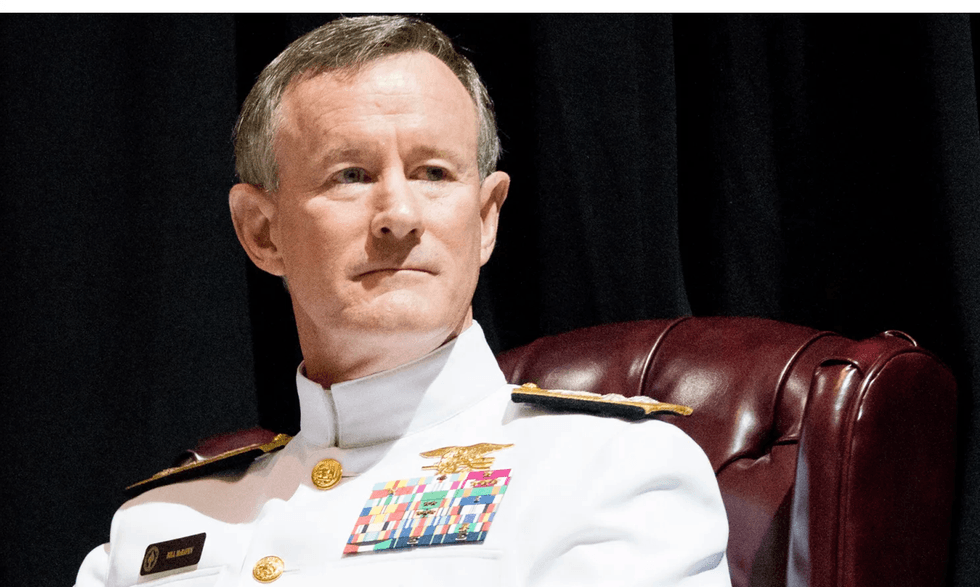
Retired Lt. Gen. Mark Hertling, a former U.S. Army Europe commander, is warning that President Donald Trump and Defense Secretary Pete Hegseth — by forcing seasoned military figures out of leadership roles — are promoting instability in the U.S. Armed Forces. But Hertling isn't the only veteran who is sounding the alarm. Retired U.S. Army Adm. William H. McRaven, writing in The Atlantic, emphasizes that the United States needs detailed answers about all the firings and resignations taking place at the Pentagon during Trump's second presidency.Every president and secretary of defense has the right and, moreover, the responsibility to remove officers who are failing to meet the high standards expected of senior leaders, McRaven argues in his Atlantic article. But when crucial decisions regarding the professionalism, effectiveness, or morale of the military are made, the people and their duly elected representatives have a right to know why these decisions were made. In recent months, President Trump, upon advice from Secretary of Defense Pete Hegseth, has relieved or forced the retirement of some of the finest officers that have ever served this nation. I have personally worked with most of them in combat.McRaven continues, I can tell you from experience that Generals C. Q. Brown, Randy George, Jim Mingus, J. P. McGee, Dave Hodne, Jim Slife, and Joe Berger and Admirals Lisa Franchetti and Jamie Sands were war fighters through and through. And this week, in an egregious decision, the president forced Gen. Chris Donahue to step down from his position in command of U.S. Army Europe.Hertling, on the conservative website The Bulwark, found the forced resignation of Donahue especially troubling — as Donahue, Hertling argued, brings a wealth of military expertise to the table.McRaven, similarly, writes, Donahue is without question one of the most brilliant officers I know. He is strategically focused, tactically aggressive, personally courageous, exceptionally thoughtful in his planning and execution, and compassionate with his troops. What is particularly concerning about these firings is the effect the dismissals will have on the officer ranks.The Trump/Hegseth firings at the Pentagon, according to McRaven, raise a real risk that senior officers will be overly cautious about providing their best advice and, therefore, that the chance for military miscalculation will grow dramatically.If Secretary Hegseth is trying to 'revive the warrior ethos and restore trust in our military,' as he has said, then the unplanned departure of these senior leaders will do just the opposite and may leave the president and the secretary without the experienced voices they need to make the best military decisions, the retired U.S. Navy admiral says. Members of Congress should demand answers. The American people should demand answers. The future of our national security depends on it.Reprinted with permission from Alternet
Narrative Intelligence Brief
This article was published by The National Memo, a source frequently categorized with a left bias based in United States of America. Our narrative intelligence engine continuously monitors coverage from this outlet to track framing, bias, and rhetorical patterns. In this specific piece, our systems detected the potential use of the "Appeal to Fear" technique. This narrative approach is often used to shape reader perception by highlighting specific emotional or rhetorical angles. By understanding the editorial perspective of The National Memo, readers can better contextualize the information presented and compare it across our broader media matrix to find the real narrative.
More from The National Memo
June 26, 2026
Supreme Court Majority Endorses Trump's Racist Assault On Haitian Refugees
June 25, 2026
Texas GOP Just Voted To Impose Life Sentence Or Death On Women For Abortion
June 26, 2026
Troubling Signal: 'Fast-Food Index' Of Consumer Sentiment Is Falling Fast
June 26, 2026
Dismal Turnout For 'Massive' Trump Rally Dims Fox's 'Freedom 250' Propaganda Push
June 26, 2026
Mocking Watergate Scandal, Vance Unveils Corrupt Cynicism Of Trump White House
Reliability Insights
P
Technique: Appeal to Fear
System analysis detected use of specific narrative techniques in this piece.Analysis Methodology
This narrative analysis was generated using the CoDataLab Global Intelligence Engine. Our proprietary AI scans thousands of cross-border sources to identify sentiment patterns, framing techniques, and potential media bias. While AI provides the data-driven foundation, our objective is to empower readers with additional context beyond the standard headline.The content displayed above is a structured summary designed for rapid information processing. For the full original report, please visit the source outlet.More Coverage
Discussion