Today in News History
On June 17, several notable moments in the history of News stand out. In 1839, Lord William Bentinck, English general and politician, 14th Governor-General of India (born 1774) passed away. In 1898, Harry Patch, English soldier and firefighter (died 2009) was born. In 1932, John Murtha, American colonel and politician (died 2010) was born. In 1932, Bonus Army: Around a thousand World War I veterans amass at the United States Capitol as the U.S. Senate considers a bill that would give them certain benefits. In 1942, Doğu Perinçek, Turkish lawyer and politician was born. In 1953, Vernon Coaker, English educator and politician, Shadow Secretary of State for Defence was born. In 1966, Tory Burch, American fashion designer and philanthropist was born. In 1997, KJ Apa, New Zealand actor was born. In 2008, Cyd Charisse, American actress and dancer (born 1922) passed away. In 2015, Clementa C. Pinckney, American minister and politician (born 1973) passed away. Together, these milestones provide historical context for today's news news and ongoing narratives.
Top PLA graft-buster urges more loyalty, ‘political rectification’ as training ends
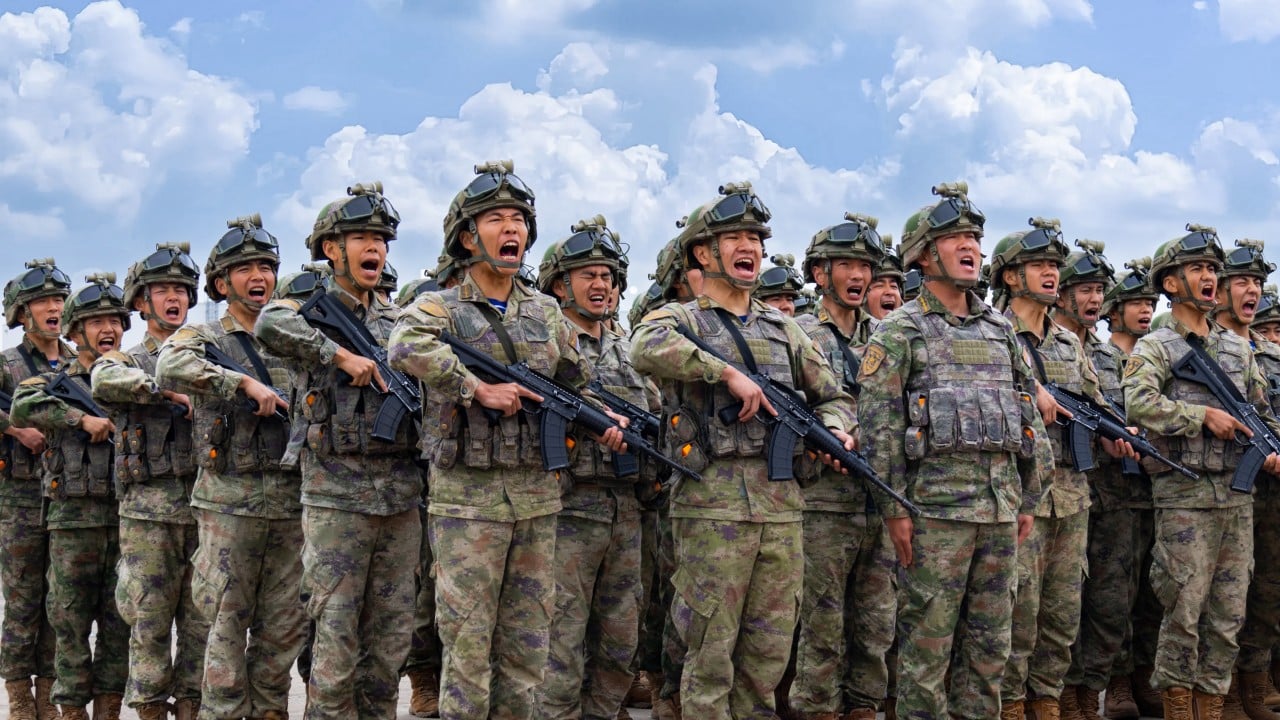
The PLA’s top anti-graft officer concluded unprecedented training for senior military officials in Beijing on Tuesday by urging continuing efforts to boost loyalty to the Communist Party and “political rectification”. Zhang Shengmin, vice-chairman of the Central Military Commission (CMC) – China’s top military decision-making body – said the first-of-its-kind training course had sharpened participants’ ideological transformation and sense of responsibility. “We should greet the 100th anniversary...
Narrative Intelligence Brief
This article was published by South China Morning Post, a source frequently categorized with a lean left bias based in Hong Kong. Our narrative intelligence engine continuously monitors coverage from this outlet to track framing, bias, and rhetorical patterns. Our initial algorithmic scan of this specific piece did not flag high-confidence rhetorical techniques, suggesting a generally straightforward reporting style or neutral framing. By understanding the editorial perspective of South China Morning Post, readers can better contextualize the information presented and compare it across our broader media matrix to find the real narrative.
More from South China Morning Post
June 17, 2026
Can Singapore’s education system take ‘late bloomers’? Harvard speech reignites debate
June 17, 2026
Shooting of Russian artist critical of Putin in Poland likely ‘political murder’: Tusk
June 17, 2026
Is the US warming up to Hong Kong? High-level meeting with business group signals shift
June 17, 2026
China moves to end ‘irrational’ food-delivery subsidies and the sector’s price wars
June 17, 2026
Hong Kong police arrest man, 36, over sexual assaults on 4 male victims
Analysis Methodology
This narrative analysis was generated using the CoDataLab Global Intelligence Engine. Our proprietary AI scans thousands of cross-border sources to identify sentiment patterns, framing techniques, and potential media bias. While AI provides the data-driven foundation, our objective is to empower readers with additional context beyond the standard headline.The content displayed above is a structured summary designed for rapid information processing. For the full original report, please visit the source outlet.More Coverage
Discussion