
Today in News History
On July 12, several notable moments in the history of News stand out. In 1931, Eric Ives, English historian and academic (died 2012) was born. In 1937, Mickey Edwards, American lawyer and politician was born. In 1947, Richard C. McCarty, American psychologist and academic was born. In 1959, David Brown, Australian meteorologist was born. In 1970, Susan Tyler Witten, American politician was born. In 1992, Caroline Pafford Miller, American journalist and author (born 1903) passed away. In 1996, John Chancellor, American journalist (born 1927) passed away. In 2006, The 2006 Lebanon War begins. In 2010, Harvey Pekar, American author and critic (born 1939) passed away. In 2014, Kenneth J. Gray, American soldier and politician (born 1924) passed away. Together, these milestones provide historical context for today's news news and ongoing narratives.
This mind-boggling GOP cover-up will unravel everything America believes
Narrative Analysis: Name Calling
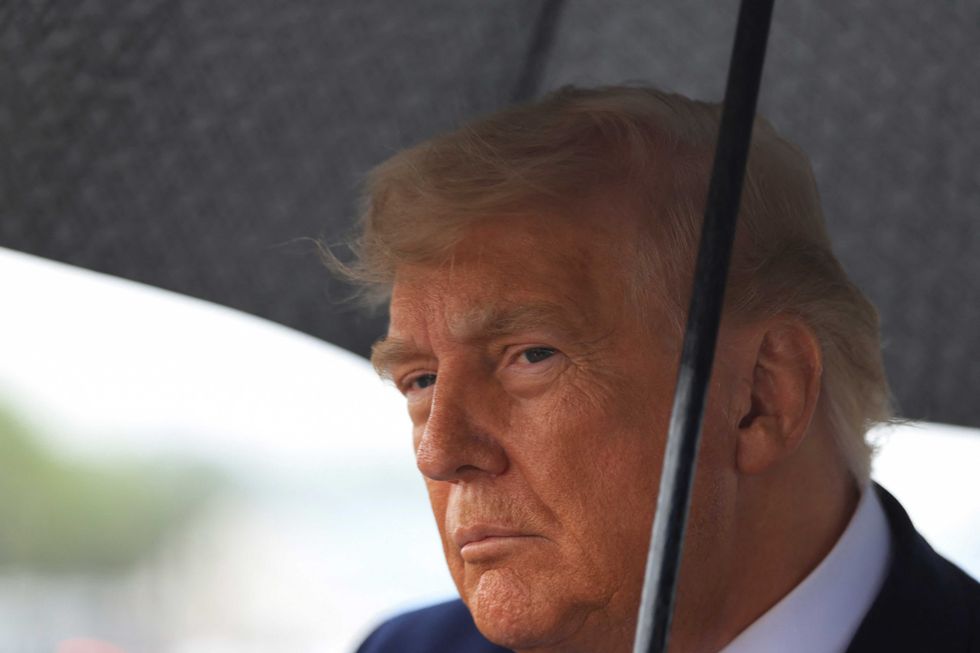
It’s taken me more than a decade, but I think I’ve finally figured Donald Trump out.Basically, whatever Trump says publicly, I’ve taken to assume the precise opposite is true. He says the war in Iran is going well? I’ll know it’s going horribly. He claims to know nothing about the proposed 1.776 billion slush fund? You can bet he plotted the whole thing out from scratch. He boasts that he’s been totally exonerated in the Epstein Files? You can assume he’s up to his eyeballs in guilt.But in fact, this assumption means everything our president is involved in – and by extension the larger Republican Party – remains an uneasy, anxiety-riddled guessing game. As “The X-Files” once teased, “The truth is out there” – but good luck finding it.This chronically unsettling point has been driven home to me this week as everyone sat vigil by Sen. Mitch McConnell’s virtual bedside wondering if he was really at death’s door as the rumor mill claimed. It wasn’t that this was at all difficult to believe, of course. The Kentucky senator’s decline had hardly been a well-kept secret, including his freezes during press conferences and concerns over consistent falls. But it’s wrenching, if not particularly surprising, to learn that not even death can escape politicization in the 21st century. No one trusts the official narrative about McConnell’s condition because there isn’t one. So, media speculation and intense distrust naturally take hold.And of course, it’s hardly limited to McConnell. Our president shows blotchy skin and bruised hands and a propensity to fall asleep during both public and private events, and we’re condemned for daring to question the party line that he’s in perfect health.It’s also not restricted to the Republicans. Joe Biden’s declining mental acuity was studiously covered up two years ago, you may recall, until it all spilled out in one presidential debate.The bottom line is that it’s perfectly understandable to imagine that we don’t really know anything and we’re always being played in one form or another. Is it any wonder we have a professional con artist in charge of things? Trump oversees an administration that’s first and foremost a self-enriching criminal enterprise, and a disturbing percentage of the American people defend it as normal and righteous.We all believe what we want to believe at the end of the day. But during the nightmarish years when Trump has been at the forefront of our consciousness, we are consistently presented a distorted image of reality that leaves us questioning our own sanity.In the process, the standards of behavior we consider acceptable have continued to plummet. How else to explain the choice of Graham Platner as the best the Democrats could put up as a senatorial candidate in Maine? Even before the latest sexual assault allegations that finally drove a fatal nail through his campaign, he managed to explain away a past of PTSD, alcoholism, and issues with women that at the very least rose to the level of disturbing.Oh, and a chest tattoo that Platner claimed not to have known was a Nazi symbol.I’m not saying people don’t deserve a second chance. But those who supported this guy had to look past enough baggage to fill a cargo hold. We still probably don’t know half of Platner’s issues because, again, we are now a society that thrives on murkiness, exclusion, deception – and keeping facts hidden from the light.We are a culture that once seemed to value truthfulness but now favorswell, let’s just say a curated version of reality that keeps anyone who’s paying attention from believing they’re ever seeing a genuine picture.I get that virtually every major institution has incentives to manage its image. Governments work to project competence and stability – at least, they did until this one, which favors chaos and discomfort to achieve its goals. Corporations, universities, nonprofits, sports leagues and media organizations all have reputational interests that generally supersede authenticity. This doesn’t automatically mean they’re fabricating reality, but it does mean they’re rarely neutral parties.Second, we’ve become much more aware of every group’s self-serving incentives and image management. A generation ago, most people consumed information from a handful of newspapers and TV broadcasts. Today, we also see leaked emails, internal memos, whistleblower accounts, court filings, body-camera footage, FOIA releases, social media posts and the occasional journalistic investigation.The public gets to peer behind the curtain and sample the dirt, but from such bits and pieces a consensus rarely emerges. More often, it just creates greater apprehension and confusion.That’s part of the irony. What seems like greater transparency is merely an illusion and actually makes the daily turmoil feel less transparent because we keep discovering that the official story was incomplete, if not totally misleading.Another issue is the way today’s information rewards certainty more than nuance. News organizations like the one I write columns for compete for attention. Politicians compete for votes. Social media rewards compelling narratives. Complex realities are often compressed into stories that are easier to communicate but don’t fully capture what’s going on.It’s not necessarily a matter of everything being fake or orchestrated. Reality is often less conspiratorial and more mundane, and routine doesn’t generate clicks. Thus, it’s no surprise that sensationalism has taken to eclipsing strict accuracy.Artificial Intelligence hasn’t helped. Twenty years ago, a photograph or video carried a strong presumption of legitimacy. That’s no longer the case. The questions now come like machine-gun fire:Was this generated by AI or Photoshop?Was it selectively edited?Is it missing context?Is the source trustworthy?This is a significant shift from the past, because it means seeing is no longer automatically believing. In fact, often the opposite is true. AI doesn’t just increase the amount of false content. It also undermines confidence in true content.But taken as a whole, the crime is that we’ve been conditioned to no longer believe that which once seemed beyond question. And it’s this death of everyday trust that’s most unnerving of all.(Ray Richmond is a longtime journalist/author and an adjunct professor at Chapman University in Orange, CA.)
Narrative Intelligence Brief
This article was published by Raw Story, a source frequently categorized with a left bias based in United States of America. Our narrative intelligence engine continuously monitors coverage from this outlet to track framing, bias, and rhetorical patterns. In this specific piece, our systems detected the potential use of the "Name Calling" technique. This narrative approach is often used to shape reader perception by highlighting specific emotional or rhetorical angles. By understanding the editorial perspective of Raw Story, readers can better contextualize the information presented and compare it across our broader media matrix to find the real narrative.
More from Raw Story
July 12, 2026
History will remember Lindsey Graham sucked up to Trump — nothing else
July 12, 2026
Jim Acosta flags ‘eerie coincidence’ regarding Lindsey Graham: ‘Absolutely jaw-dropping’
July 12, 2026
Kash Patel stuns with weird response to Lindsey Graham's death: 'Why is the FBI involved?'
July 12, 2026
'Even stranger': Trump spills on call with Lindsey Graham held 'minutes before' incident
July 12, 2026
'It's so bad': Ex-prosecutor says Todd Blanche's confirmation hangs on key question
Reliability Insights
P
Technique: Name Calling
System analysis detected use of specific narrative techniques in this piece.Analysis Methodology
This narrative analysis was generated using the CoDataLab Global Intelligence Engine. Our proprietary AI scans thousands of cross-border sources to identify sentiment patterns, framing techniques, and potential media bias. While AI provides the data-driven foundation, our objective is to empower readers with additional context beyond the standard headline.The content displayed above is a structured summary designed for rapid information processing. For the full original report, please visit the source outlet.More Coverage
Discussion
"cup semifinal"
France vs. Spain odds, prediction, time: 2026 World Cup semifinal picks from expert on 19-7 run

[Photo] JUST IN: 🇦🇷 Argentina officially advances to the FIFA World Cup semifinal after defeat [...]

2026 World Cup Semifinal Odds: France, England Favored In Final Four Tilts

How other outlets are covering this story
Compare narratives across 6 related reports from 6 sources. Real Narrative News aggregates the coverage spectrum so you can see who emphasises what — bias tags reflect the outlet, not the story.
Coverage bias distribution
6 sources
Left 50%
Center 17%
Right 33%
Rolling Stone
· Jun 30, 2026
Missing GOP Congressman Says 117-Day Absence Was Due to Depression
Americans finally got an explanation. If only Republicans would stop trying to kill access to mental-health care for everyone else
Right Wing Watch
· Jun 29, 2026
Burn Down The Republican Establishment
Not One There Is No Health Concern Purge The Moderates
Townhall
· Jun 25, 2026
Mike Johnson's Idea Might Be the Only Way to Pass the SAVE America Act
Mike Johnson's Idea Might Be the Only Way to Pass the SAVE America Act
Really America
· Jul 6, 2026
BREAKING: McConnell Brain Dead Claim Rocks Washington
Good evening, this is Really American.
Irish Star
· Jun 29, 2026
Old 'woke' JD Vance Black Lives Matter post comes back to haunt him
Although apparently mocking Democrats and the growing list of liberal complaints about the direction America is heading, some took it at face value
Issues & Insights
· Jun 22, 2026
What We’re Reading: Hormuz Confusion, South America Ditches Socialism, Erasing Men … And More
Headlines that caught our eye.
Topics:
Related coverage for "This mind-boggling GOP cover-up will unravel everything America believes": Rolling Stone — Missing GOP Congressman Says 117-Day Absence Was Due to Depression. Right Wing Watch — Burn Down The Republican Establishment. Townhall — Mike Johnson's Idea Might Be the Only Way to Pass the SAVE America Act. Really America — BREAKING: McConnell Brain Dead Claim Rocks Washington. Irish Star — Old 'woke' JD Vance Black Lives Matter post comes back to haunt him. Issues & Insights — What We’re Reading: Hormuz Confusion, South America Ditches Socialism, Erasing Men … And More