
There’s a looming copper shortage. This South Carolina startup wants to mine it from waste instead of ore
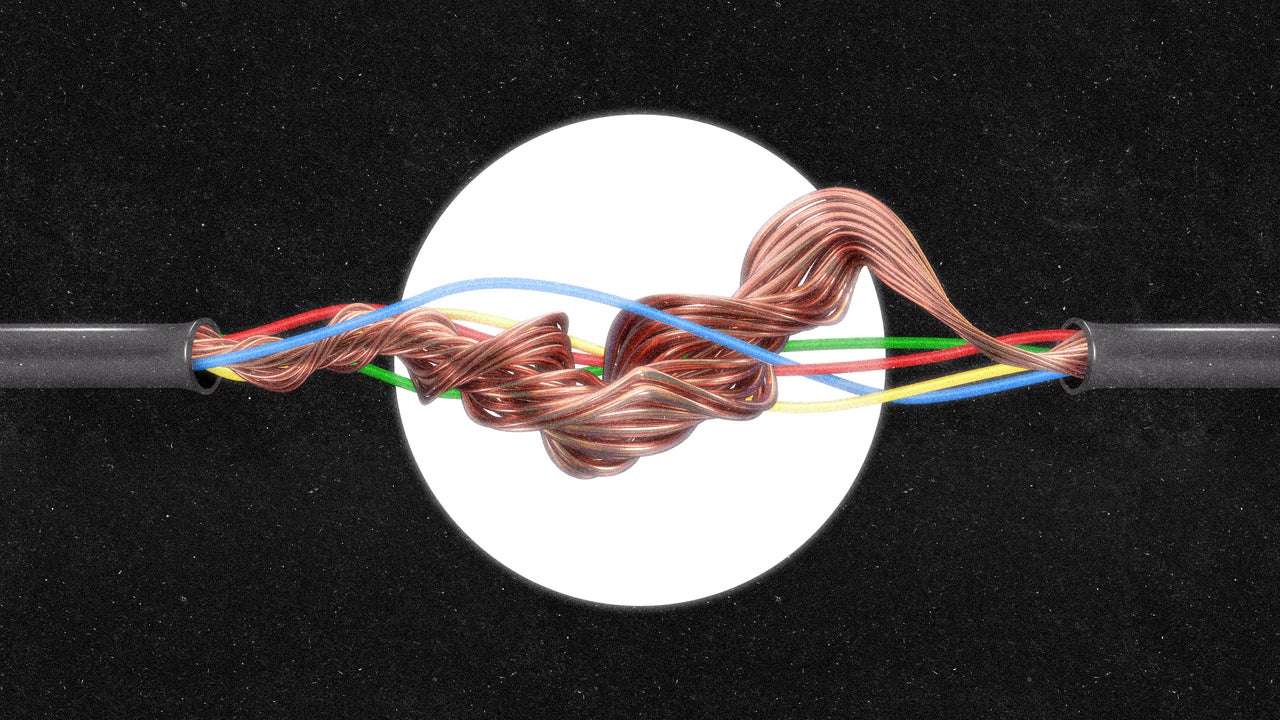
The world faces a looming copper shortage: By 2040, demand could grow by 50, driven by everything from electric cars to the surge in data centers. At the same time, supply is expected to drop, leaving a shortfall of 10 million metric tons, according to an SP analysis. Already, supply shortages have pushed copper prices to record highs this year. In Charleston, South Carolina, a startup called Red Metals is racing to build more American supply through urban mining—pulling copper from old products and scrap rather than extracting the metal from increasingly depleted copper mines. Right now, only around half of the copper in existing products is recovered at their end of life. In the U.S., the scrap that’s recycled is often sent overseas for refining before being sent back. The current system uses “a very fragmented global supply chain,” says Jackson Switzer, founder and CEO of Red Metals. “That, for me as an engineer, is just extremely inefficient.” Switzer previously worked at Redwood Materials, the lithium-ion battery recycling and reuse giant, where he saw both how much copper was available in old products like electric motors, and how much demand for the material was growing. (JB Straubel, the Tesla cofounder who leads Redwood, is an investor in Red Metals.) “Copper is used absolutely everywhere, and it’s so critical to nearly everything,” Switzer says. But, he adds, “the supply chain was designed for a different era.” [Photo: Red Metals] The copper challenge Copper futures hit a new high this week, up 38 over last year, as the supply chain grapples with a range of challenges. A big copper mine in Indonesia is still recovering from a deadly accident last year, and won’t return to full production until 2028. In the Democratic Republic of the Congo, a copper mine shut down temporarily after its wastewater flooded nearby neighborhoods, polluting drinking water and farms. In Chile, another major mine has been affected by labor strikes and an earthquake. And China banned exports of sulfuric acid, a key material in copper mining, after the war in Iran disrupted supply from the Middle East. At the same time, demand is growing throughout the global economy. Transportation is electrifying. Households are electrifying. The number of air conditioners keeps growing as the planet gets hotter. All require copper. And data centers are a massive source of new demand: A single hyperscale data center can use, by one estimate, 50,000 tons of copper in cooling systems and power equipment. “Every quarter there’s more investment in data center infrastructure and all of these are going to need to be connected to the grid or to other power sources, so all of these items are going to require more copper,” says Aurian de La Noue, Executive Director of Critical Minerals Energy Transition Consulting at SP Global Energy, and an author of SP’s recent study, “Copper in the Age of AI.” The report notes that humanoid robots could also be a major new source of demand. In total, the report estimates that copper demand could grow from 28 million metric tons today—already a huge number—to 42 million metric tons by 2040. Copper supply, meanwhile, is on track to peak in 2030 at 33 million metric tons, leaving the world with a major gap. A search for solutions Companies are racing to find ways to meet demand, including going back to mines that had been abandoned. In Arizona, a mine closed in 2010 because there wasn’t enough copper left to make it profitable to extract. But the mine is restarting in a partnership with Rio Tinto’s Nuton venture, which uses microbes to help recover copper from rocks. Endolith, another startup, is also using microbes to mine copper. “Instead of blasting ore with chemicals, we let microbes do the work,” its founder, Liz Dennett, wrote in an op-ed for Fast Company last year. “They break down rock, extract metals, and leave far less waste behind.” Taseko, another mining company, is also working on new ways to mine copper, with an Arizona project that injects acid underground to dissolve the metal and then pumps it up to the surface, rather than blasting and crushing rock. Multiple solutions are necessary, but recycling is also a critical part of the picture. “In our analysis we’re bullish on efforts to recycle more copper,” says de La Noue. “We’re assuming that right now about 4 million tons of copper are recycled this year, and we’re assuming that by 2040 this could reach about 10 million tons, so more than the doubling of the secondary supply.” Until now, recycling American copper scrap has often meant shipping it overseas, where it goes through multiple steps along with copper from mines. But unlike mined copper—which might consist of only 0.6 copper, and 99.4 dirt and other impurities—recycled copper doesn’t need that much processing. “It’s already been dragged through that supply chain once,” says Switzer. “It’s been taken through all those steps, and there’s no need to actually drag it through that supply chain again.” At its 70 million facility under construction in South Carolina, Red Metals will use AI to sort copper from discarded products, from motors to Christmas lights, and turn it into copper rod that customers can use to make products like wire. The process skips several intermediate steps that usually come between recovered copper and rod, including concentrate, matte, anode, and cathode, helping make recycled American copper cost-competitive. [Photo: Red Metals] Switzer compares the process to Nucor, a steel manufacturer that changed how scrap steel could be made directly into new sheets of metal. “They did it at a much smaller scale, and all the major steel producers like U.S. Steel dismissed them, [thinking that] because they’re out there at a small scale there’s no way they can compete,” he says. “Fast forward to now; Nucor is the largest steel producer in the United States and other legacy steel producers have gone bust.” [Photo: Red Metals] Red Metals announced this week that it has raised 10 million in seed funding led by Gigascale Capital. It will use the money to demonstrate this year that its process can produce copper rod. The company is also building its own supply chain for copper scrap, sourcing material from both consumers and large companies such as automakers and data centers. Those companies have an incentive to participate because they also need to buy recycled copper. The potential supply is significant: The U.S. already collects around 1.6 million metric tons of copper scrap annually, while demand for new copper is around 2 million metric tons and is projected to grow to roughly 3 million tons. “There’s no reason why at least half of that couldn’t be met with scrap,” Switzer says.
Narrative Intelligence Brief
This article was published by Fast Company, a source frequently categorized with a lean left bias based in United States of America. Our narrative intelligence engine continuously monitors coverage from this outlet to track framing, bias, and rhetorical patterns. Our initial algorithmic scan of this specific piece did not flag high-confidence rhetorical techniques, suggesting a generally straightforward reporting style or neutral framing. By understanding the editorial perspective of Fast Company, readers can better contextualize the information presented and compare it across our broader media matrix to find the real narrative.
Explore related topics: Stay informed with Real Narrative News as we track unfolding stories. Dive deeper into our coverage of pivotal topics including marjane satrapi, real madrid, مراسل المنار, henry nowak, iran war, war powers, إطلاق النار, جنوب لبنان, nba finals, and mit israel. Our intelligence streams continuously monitor these keywords to bring you unbiased analysis and real-time updates on topics like "There’s a looming copper shortage. This South Carolina startup wants to mine it from waste instead of ore".
More from Fast Company
June 4, 2026
You’ve deployed an AI voice
June 4, 2026
McDonald’s is facing intense pushback after it did what no company should ever do
June 4, 2026
There’s a looming copper shortage. This South Carolina startup wants to mine it from waste instead of ore
June 4, 2026
Melinda Gates pledges another $215 million to improve women’s health around the world
June 4, 2026
Anchor enterprise innovation in purpose, not pressure
Analysis Methodology
This narrative analysis was generated using the CoDataLab Global Intelligence Engine. Our proprietary AI scans thousands of cross-border sources to identify sentiment patterns, framing techniques, and potential media bias. While AI provides the data-driven foundation, our objective is to empower readers with additional context beyond the standard headline.The content displayed above is a structured summary designed for rapid information processing. For the full original report, please visit the source outlet.More Coverage
Discussion