Today in News History
On July 4, several notable moments in the history of News stand out. In 940, Wang Jianli, Chinese general (born 871) passed away. In 945, Zhuo Yanming, Chinese Buddhist monk and emperor passed away. In 1776, American Revolution: The United States Declaration of Independence is adopted by the Second Continental Congress. In 1863, American Civil War: Retreat from Gettysburg: The Confederate Army of Northern Virginia under Robert E. Lee withdraws from the battlefield after losing the Battle of Gettysburg, signaling an end to his last invasion of the North. In 1896, Mao Dun, Chinese journalist, author, and critic (died 1981) was born. In 1903, The Philippine-American War is officially concluded. In 1920, Leona Helmsley, American businesswoman (died 2007) was born. In 1979, Lee Wai Tong, Chinese footballer and manager (born 1905) passed away. In 1991, Victor Chang, Chinese-Australian surgeon and physician (born 1936) passed away. In 1998, Japan launches the Nozomi probe to Mars, joining the United States and Russia as a space exploring nation. Together, these milestones provide historical context for today's news news and ongoing narratives.
The US has failed to understand China
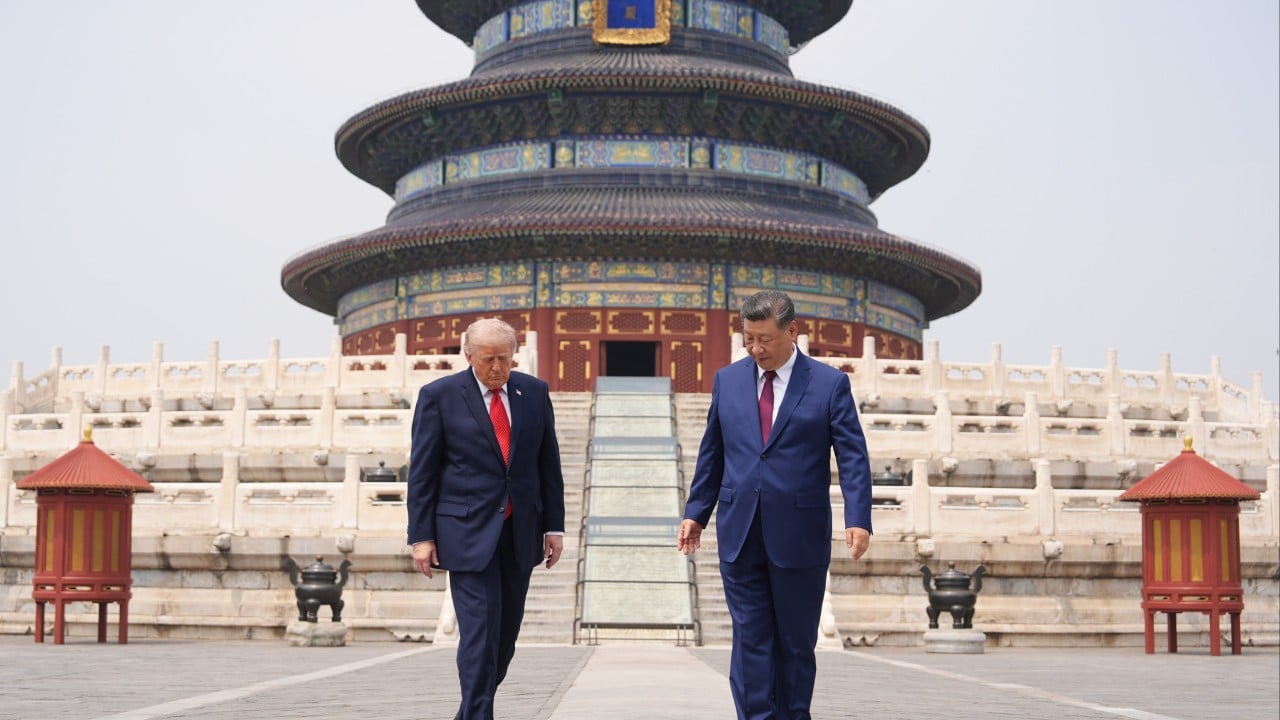
China is such a giant player in the global economy that understanding how the US-China contest of the century for international primacy will evolve has become crucial. Some Westerners, especially those in the United States, feel so threatened that they have resorted to protectionism, with global fragmentation and perhaps even preparations for a third world war already in the cards. Kishore Mahbubani’s book Has China Won? highlighted deep misunderstandings and structural tensions between China...
Narrative Intelligence Brief
This article was published by South China Morning Post, a source frequently categorized with a lean left bias based in Hong Kong. Our narrative intelligence engine continuously monitors coverage from this outlet to track framing, bias, and rhetorical patterns. Our initial algorithmic scan of this specific piece did not flag high-confidence rhetorical techniques, suggesting a generally straightforward reporting style or neutral framing. By understanding the editorial perspective of South China Morning Post, readers can better contextualize the information presented and compare it across our broader media matrix to find the real narrative.
More from South China Morning Post
July 3, 2026
China’s ByteDance discovers new scaling law that could sustain AI boom
July 3, 2026
Can Taiwan fix its military manpower shortage by training reservists in advanced weapons?
July 3, 2026
Celebrities descend on Taylor Swift and Travis Kelce’s wedding at Madison Square Garden
July 3, 2026
Fallout from Venezuela’s quakes turns political, as opposition leader Machado seeks return
July 3, 2026
Europe has replaced most US cuts within Nato, top commander says
Analysis Methodology
This narrative analysis was generated using the CoDataLab Global Intelligence Engine. Our proprietary AI scans thousands of cross-border sources to identify sentiment patterns, framing techniques, and potential media bias. While AI provides the data-driven foundation, our objective is to empower readers with additional context beyond the standard headline.The content displayed above is a structured summary designed for rapid information processing. For the full original report, please visit the source outlet.More Coverage
Discussion
"trump"
🇺🇸 Trump Throws America’s WORST Birthday Party

Trump ‘has not forgotten’ about threats to seize Greenland, U.S. envoy says

Charges laid over Reflecting Pool vandalism as Trump’s crackdown continues in US