Today in News History
On July 4, several notable moments in the history of News stand out. In 1330, Ashikaga Yoshiakira, Japanese shōgun (died 1367) was born. In 1333, Genkō War: Forces loyal to Emperor Go-Daigo seize Tōshō-ji during the Siege of Kamakura. Hōjō Takatoki and other members of the Hōjō clan commit suicide, ending the rule of the Kamakura shogunate. In 1802, The United States Military Academy opens at West Point, New York. In 1903, The Philippine-American War is officially concluded. In 1928, Shan Ratnam, Sri Lankan physician and academic (died 2001) was born. In 1928, Jassem Alwan, Syrian Army Officer (died 2018) was born. In 1951, Cold War: A court in Czechoslovakia sentences American journalist William N. Oatis to ten years in prison on charges of espionage. In 1976, Yonatan Netanyahu, Israeli colonel (born 1946) passed away. In 1979, Lee Wai Tong, Chinese footballer and manager (born 1905) passed away. In 1991, Victor Chang, Chinese-Australian surgeon and physician (born 1936) passed away. Together, these milestones provide historical context for today's news news and ongoing narratives.
Can Taiwan fix its military manpower shortage by training reservists in advanced weapons?
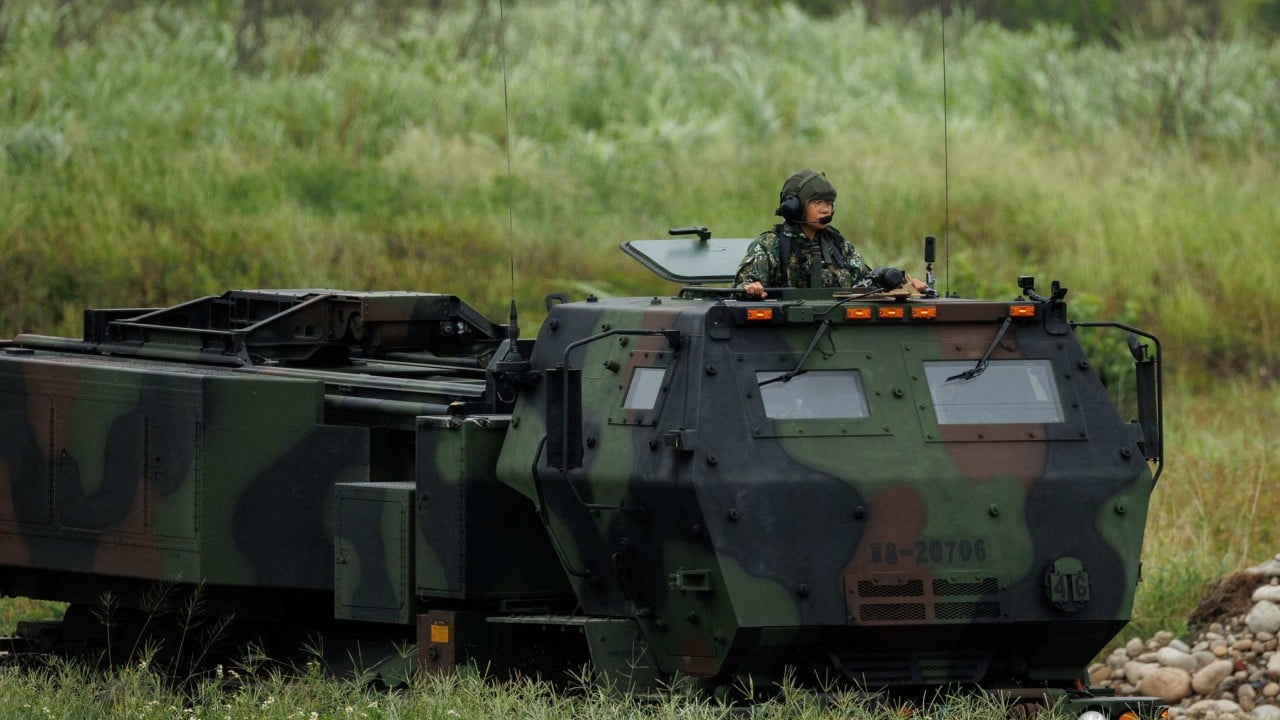
Taiwan is requiring its reservists to train longer and harder, introducing drones and US-made Himars rocket systems into a revamped 14-day call-up programme as it races to offset worsening troop shortages amid a demographic decline. One of the biggest reforms of Taiwan’s reserve force in decades, the overhaul reflects growing concern that a shrinking pool of military-age recruits and mounting pressure from Beijing mean the island can no longer rely solely on its standing military. From this...
Narrative Intelligence Brief
This article was published by South China Morning Post, a source frequently categorized with a lean left bias based in Hong Kong. Our narrative intelligence engine continuously monitors coverage from this outlet to track framing, bias, and rhetorical patterns. Our initial algorithmic scan of this specific piece did not flag high-confidence rhetorical techniques, suggesting a generally straightforward reporting style or neutral framing. By understanding the editorial perspective of South China Morning Post, readers can better contextualize the information presented and compare it across our broader media matrix to find the real narrative.
More from South China Morning Post
July 4, 2026
Hong Kong graduates at crossroads as AI takes over entry-level jobs, experts warn
July 4, 2026
Is super-ageing Singapore headed for population decline?
July 3, 2026
Massive Russian bomb attack kills at least 4 in Ukraine’s Sumy
July 3, 2026
China’s ByteDance discovers new scaling law that could sustain AI boom
July 3, 2026
Taylor Swift and Travis Kelce get married in star-studded Madison Square Garden ceremony
Analysis Methodology
This narrative analysis was generated using the CoDataLab Global Intelligence Engine. Our proprietary AI scans thousands of cross-border sources to identify sentiment patterns, framing techniques, and potential media bias. While AI provides the data-driven foundation, our objective is to empower readers with additional context beyond the standard headline.The content displayed above is a structured summary designed for rapid information processing. For the full original report, please visit the source outlet.More Coverage
Discussion
"trump"
🇺🇸 Trump Throws America’s WORST Birthday Party

Trump ‘has not forgotten’ about threats to seize Greenland, U.S. envoy says

Charges laid over Reflecting Pool vandalism as Trump’s crackdown continues in US