
Today in News History
On July 4, several notable moments in the history of News stand out. In 1054, A supernova, called SN 1054, is seen by Chinese Song dynasty, Arab, and possibly Amerindian observers near the star Zeta Tauri. For several months it remains bright enough to be seen during the day. Its remnants form the Crab Nebula. In 1942, Prince Michael of Kent was born. In 1946, After 381 years of near-continuous colonial rule by various powers, the Philippines attains full independence from the United States. In 1954, Food rationing in Great Britain ends, with the lifting of restrictions on sale and purchase of meat, 14 years after it began early in World War II, and nearly a decade after the war's end. In 1970, Harold Stirling Vanderbilt, American sailor and businessman (born 1884) passed away. In 1973, Gackt, Japanese musician, singer, songwriter, record producer and actor was born. In 1979, Lee Wai Tong, Chinese footballer and manager (born 1905) passed away. In 1984, Jin Akanishi, Japanese singer-songwriter was born. In 1991, Victor Chang, Chinese-Australian surgeon and physician (born 1936) passed away. In 2012, Jeong Min-hyeong, South Korean footballer (born 1987) passed away. Together, these milestones provide historical context for today's news news and ongoing narratives.
Is super-ageing Singapore headed for population decline?
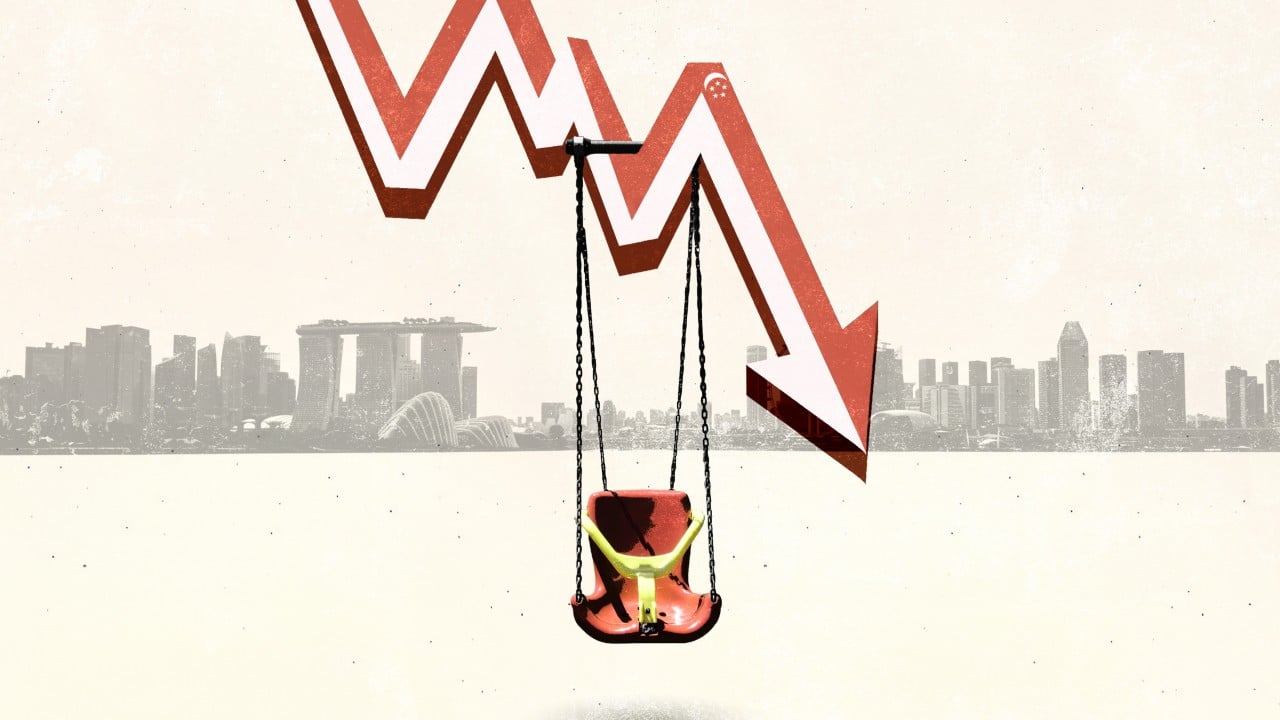
Five years into her marriage to a finance executive, Clare* is still doing the sums on leaving behind a life unencumbered by the high price of parenthood. At 31, the Singaporean doctor instead finds herself wondering if she will feel different about their “dink” (dual income, no kids) lifestyle in another three years. “The thought of having kids also feels more like an obligation just to complete the nuclear family,” she said. “I see so many more disadvantages about having children, rather than...
Narrative Intelligence Brief
This article was published by South China Morning Post, a source frequently categorized with a lean left bias based in Hong Kong. Our narrative intelligence engine continuously monitors coverage from this outlet to track framing, bias, and rhetorical patterns. Our initial algorithmic scan of this specific piece did not flag high-confidence rhetorical techniques, suggesting a generally straightforward reporting style or neutral framing. By understanding the editorial perspective of South China Morning Post, readers can better contextualize the information presented and compare it across our broader media matrix to find the real narrative.
More from South China Morning Post
July 4, 2026
Is ‘no Greenland seafood for China’ the US’ new security doctrine?
July 4, 2026
China delivery rider collapses after entering burning flat 3 times to extinguish flames
July 4, 2026
Hong Kong graduates at crossroads as AI takes over entry-level jobs, experts warn
July 3, 2026
Massive Russian bomb attack kills at least 4 in Ukraine’s Sumy
July 3, 2026
China’s ByteDance discovers new scaling law that could sustain AI boom
Analysis Methodology
This narrative analysis was generated using the CoDataLab Global Intelligence Engine. Our proprietary AI scans thousands of cross-border sources to identify sentiment patterns, framing techniques, and potential media bias. While AI provides the data-driven foundation, our objective is to empower readers with additional context beyond the standard headline.The content displayed above is a structured summary designed for rapid information processing. For the full original report, please visit the source outlet.More Coverage
Discussion
"kelce wedding"
Taylor Swift Hinted at Wearing Dior for Travis Kelce Wedding

Everything we know about the Taylor Swift and Travis Kelce wedding

Taylor Swift under fire for trying to ‘hijack Independence Day’ with Travis Kelce wedding
