
Today in News History
On July 12, several notable moments in the history of News stand out. In 1410, Ottoman Interregnum: Süleyman Çelebi defeats his brother Musa Çelebi outside the Ottoman capital, Edirne. In 1688, Narai, Thai king (born 1629) passed away. In 1893, A revolution led by the liberal general and politician José Santos Zelaya takes over state power in Nicaragua. In 1905, Muhammad Abduh, Egyptian jurist and scholar (born 1849) passed away. In 1950, Pakistan joins the International Monetary Fund and the International Bank. In 1960, Congo Crisis: The State of Katanga breaks away from the Democratic Republic of the Congo. In 1990, Oka Crisis: First Nations land dispute in Quebec begins. In 1992, Mohamed Elneny, Egyptian footballer was born. In 2010, The Islamist militia group Al-Shabaab carries out multiple suicide bombings in Kampala, Uganda, killing 74 people and injuring 85 others. In 2011, Ninety-eight containers of explosives self-detonate killing 13 people in Zygi, Cyprus. Together, these milestones provide historical context for today's news news and ongoing narratives.
The Islamic Republic Is Weaker Than It Wants The World To Believe
The Islamic Republic Is Weaker Than It Wants The World To Believe acabral-sanche Wed, 07/08/2026 - 15:12 SVG Commentary Jul 8, 2026 Radio Free Europe/Radio Liberty The Islamic Republic Is Weaker Than It Wants The World To Believe Zineb Riboua Research Fellow, Center for Peace and Security in the Middle East Zineb Riboua Commentary Caption Iran's Minister of Foreign Affairs Seyyed Abbas Araghchi on June 21, 2026. (Getty Images) Toggle Table of Contents Contents Contents Share to Twitter Twitter Share to Facebook Facebook Share to LinkedIn LinkedIn Share to E-mail E-mail Print Print WASHINGTON—The elaborate state funeral for Ayatollah Ali Khamenei was designed to project continuity and strength. But beneath the carefully choreographed images, questions remain about who now holds power inside Iran. RFE/RL spoke with Zineb Riboua, a research fellow with the Hudson Institute's Center for Peace and Security in the Middle East, about Iran's post-Khamenei power structure, the expanding influence of the Islamic Revolutionary Guards Core (IRGC), and why she believes growing repression reflects weakness rather than confidence. RFE/RL: We've just watched a highly choreographed funeral for Ayatollah Ali Khamenei. Was this a genuine display of regime strength, or an effort to project stability at a moment of unprecedented uncertainty? Zineb Riboua: I truly do think that they had to project some strength, some unity, especially because the survival of the Islamic republic as a project, as a revolutionary state, as a doctrine, but also as a model for the region, is necessary for them. On top of having this grandiose funeral, one of the things they've done is start ramping up condemnations, assassinations, and hangings because they correctly assess that one of the things Operation Epic Fury demonstrated was how weak the regime is, how incapable it is of projecting power. A lot of the proxies they have, have not been helpful, especially the Houthis. They could have easily joined attacks against the United States on an immense scale, and they have not. Hezbollah is trapped in its situation with Israel. Syria is no longer a landscape and a country through which they can do what they've always done in terms of logistics and military projection. So I think there are a lot of soft-power tools that remain -- and it's not a coincidence that this funeral took this shape or that their communications have become much more aggressive than before. They correctly assess that information warfare and the projection of unity are all they have for now. Amplified Role For Revolutionary Guards RFE/RL: If the funeral was meant to send a message of continuity, what did it actually reveal about where power now resides? Many analysts argue that authority has shifted from the clerical establishment toward the Revolutionary Guard. Did we see evidence of that this week? Riboua: I think the most interesting thing is that the IRGC has always played an enormous role in allocating resources, governing, shaping military strategy, especially when it comes to directing the proxies. Qassem Soleimani (senior IRGC commander who was assassinated by the US in 2020) was one of the most important men in the Islamic republic. So the idea that there was fragmentation and that they were not necessarily coordinating, I don't think so. What I do think, however, is that because of the relationship the IRGC has with the current ayatollah, its role has been much more amplified, and it is taking a bigger stake in decision-making. That being said, something interesting was happening while the negotiations back and forth in Pakistan and elsewhere were ongoing. There are different factions inside the IRGC. It was very interesting how [US] President [Donald] Trump would say, We're talking to three groups. [Iranian] President [Masud] Pezeshkian had one position, the IRGC had another. So while the IRGC functions as both a military institution and an economic one, I don't think they have decided yet where they want to take things, who should talk to the United States, and who shouldn't. It was also very interesting that [parliament speaker Mohammad Baqer] Qalibaf took on a larger role. He obviously plays an enormous role when it comes to dealing with the IRGC and in its annual budget. That's very natural. But he might have ambitions that are not necessarily the same as those of his peers inside the IRGC. So while the IRGC has always played an important role and that role has clearly expanded, there is still a question mark over whether it is as unified as before. RFE/RL: Beyond the funeral itself, the guest list also sent a message. Even some of Tehran's closest partners dispatched relatively low-level delegations. Does that suggest Iran is becoming more isolated internationally, or are we seeing a recalibration of its alliances? Riboua: I think the isolation of the Islamic republic is undeniable. They have hit Arab countries. They have hit the UAE more than it hit Israel. They hit Qatar, which was actually very involved in maintaining diplomatic ties with Tehran. They have also targeted Saudi Arabia, even though Saudi Arabia normalized relations with Iran through Beijing. There were different channels Iran could have used to mobilize the Arab street by portraying Israel and the United States as the major aggressors, and it simply didn't happen. We did not see protests in Riyadh or Dubai against the United States or Israel's operation. I think this funeral was really part of a domestic messaging campaign more than an international one. One of the most important things that happened for Iran, apart from the military operation itself, was the January protests and the massive crackdown that followed. They have to respond to that. They understand they have recruitment problems. Even during the war, the IRGC started recruiting children because they couldn't recruit enough young men. The IRGC is struggling to pay its own soldiers. There was also a debate among officers who saw Hezbollah fighters getting paid while they themselves were not. So there are different economic and social problems the Islamic republic is facing. On top of not being able to mobilize Arab countries, Arab governments also see the growing disenchantment of the Iranian population with its own regime. Iran's Economic Woes RFE/RL: Behind those displays of unity lies an economy suffering from soaring inflation, financial hardship, and growing public frustration. How much pressure is the regime really under? Riboua: People often point to countries like Cuba or North Korea and say they survived immense pressure and public dissatisfaction. But Iran is facing two threats. The first is the military pressure from the United States and Israel. The second is that the regime has already exhausted much of its capacity because the population had already risen up in January and two years before. If one looks at the protests, from Mahsa Amini (a Kurdish-Iranian woman whose death in police custody in 2022 sparked a huge protest) to the more recent demonstrations, they're becoming more violent. People are willing to die. I think that's a very good indicator of what the population thinks of the regime. There are also many problems the Islamic republic is not solving, and I don't think it can because of its military defeat. Beyond inflation and the currency crisis, there are serious problems with water management. The government is not delivering basic services. At some point, Iranians see that a lot of their tax money is going to proxies instead of their own basic needs. Because of the priorities of the IRGC, I think the regime is eventually going to hit a ceiling in terms of what it can ask society to sacrifice just to preserve the Islamic republic. RFE/RL: Do you expect the crackdown on dissent to intensify as the leadership consolidates power? Riboua: I definitely think the repression will intensify. We already had a taste of it during the January protests. I think they have no choice. I think the IRGC is willing to sacrifice many people in order to remain in power, and I think it is willing to do so as much as it can. Whether that will actually be effective in preventing the population from rising up again remains an open question, and I think we'll find out very soon. RFE/RL: Is this primarily about enforcing ideology, or preventing another nationwide protest movement? Riboua: I think it's both. It's worth looking at the Middle East today. Armenia and Azerbaijan are moving toward peace, more trade, and modernization. The UAE, Bahrain, Kuwait, and others have ambitious development agendas. Saudi Arabia has Vision 2030. It's true they face economic and fiscal issues, but their leadership is putting forward a strategy that is meant to benefit young Saudis. The Islamic republic looks around and sees that it is not delivering those things. What it is delivering is a constant revolution that many people no longer support. So it is trying to force everyone to comply with the rules and the symbolism because it believes that will satisfy the Iranian population. But I think there is now a generational divide that it is simply not responding to, and I think it lacks the tools to do so. RFE/RL: What more can Washington and its allies do to increase pressure on the regime without hurting ordinary Iranians? Riboua: Putting much greater pressure on China is essential. Ninety percent of Iran's oil goes to China. China has also helped Iran acquire chemical components for ballistic missiles and supported its drone program. One of the best things the administration did was sanction Chinese shipping companies and geospatial firms that provided Iran with targeting data and also supported the Houthis. The US has to recognize the broader role China has played in enabling Iran and make sure Beijing can no longer purchase sanctioned Iranian oil at discounted prices. RFE/RL: Looking ahead, what poses the greatest threat to the Islamic republic: military pressure, difficult negotiations with Washington, economic deterioration, or growing domestic dissent? Riboua: I think it's the combination of military and economic pressure the United States has launched. It was very important to see the US Treasury target the IRGC's shadow banking system operating through Dubai and other financial centers. Every military campaign has to make the damage permanent. When political concessions aren't possible, you have to make sure your enemy cannot rebuild what you've just destroyed. That said, Iran still has a nuclear program. It is buried, yes, but it still poses a threat. There is still the drone program and the missile architecture, much of it directed at Gulf countries. So there is still a great deal left to do. But for a campaign that was this short -- and I consider it a very short campaign given the nature of the region and Iran's geography -- it weakened the regime in a way it simply had not been weakened since its inception. Read in Radio Free Europe/Radio Liberty. Enjoyed this analysis? Subscribe to Hudson’s newsletters to stay up to date with our latest content. Email See more subscription options Foreign Policy
Narrative Intelligence Brief
This article was published by Hudson Institute, a source frequently categorized with a right bias based in United States of America. Our narrative intelligence engine continuously monitors coverage from this outlet to track framing, bias, and rhetorical patterns. Our initial algorithmic scan of this specific piece did not flag high-confidence rhetorical techniques, suggesting a generally straightforward reporting style or neutral framing. By understanding the editorial perspective of Hudson Institute, readers can better contextualize the information presented and compare it across our broader media matrix to find the real narrative.
More from Hudson Institute
July 10, 2026
Japan Should Look to Türkiye the Way Israel Looks to India
July 8, 2026
Local Expansion, Transnational Interests? The Evolution of the Islamic State’s Sahel Province
July 8, 2026
Ukraine Military Situation Report | July 8
July 8, 2026
US Strikes Iran and President Trump Renews Push for Greenland
July 8, 2026
Oil Tanker Struck in the Strait of Hormuz
Analysis Methodology
This narrative analysis was generated using the CoDataLab Global Intelligence Engine. Our proprietary AI scans thousands of cross-border sources to identify sentiment patterns, framing techniques, and potential media bias. While AI provides the data-driven foundation, our objective is to empower readers with additional context beyond the standard headline.The content displayed above is a structured summary designed for rapid information processing. For the full original report, please visit the source outlet.More Coverage
Discussion
"cup semifinal"
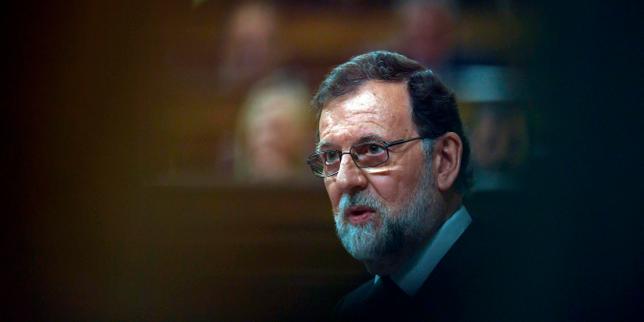
Former Spanish PM Mariano Rajoy makes racist remarks about France's football team
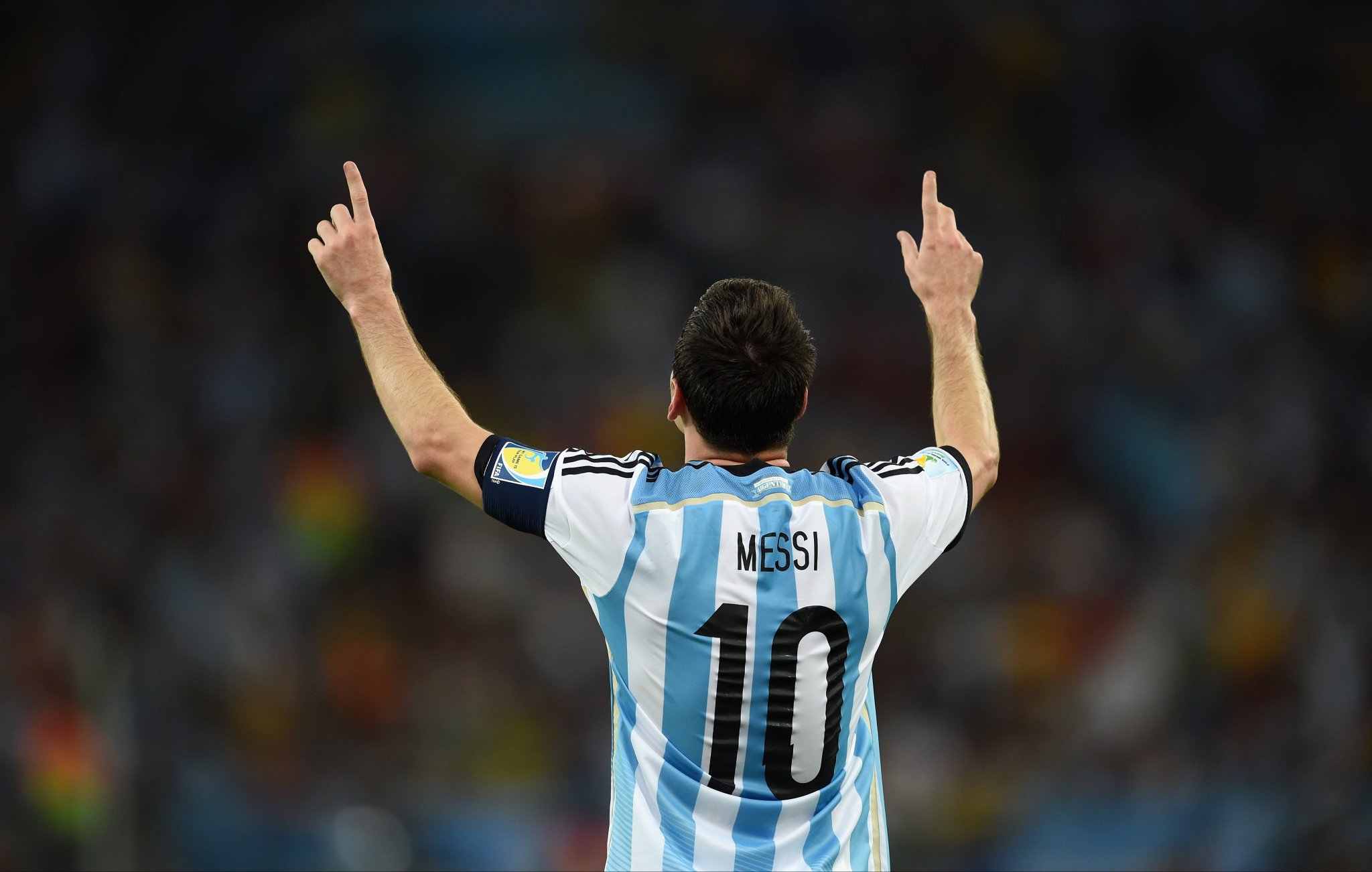
[Photo] JUST IN: 🇦🇷 Argentina officially advances to the FIFA World Cup semifinal after defeat [...]
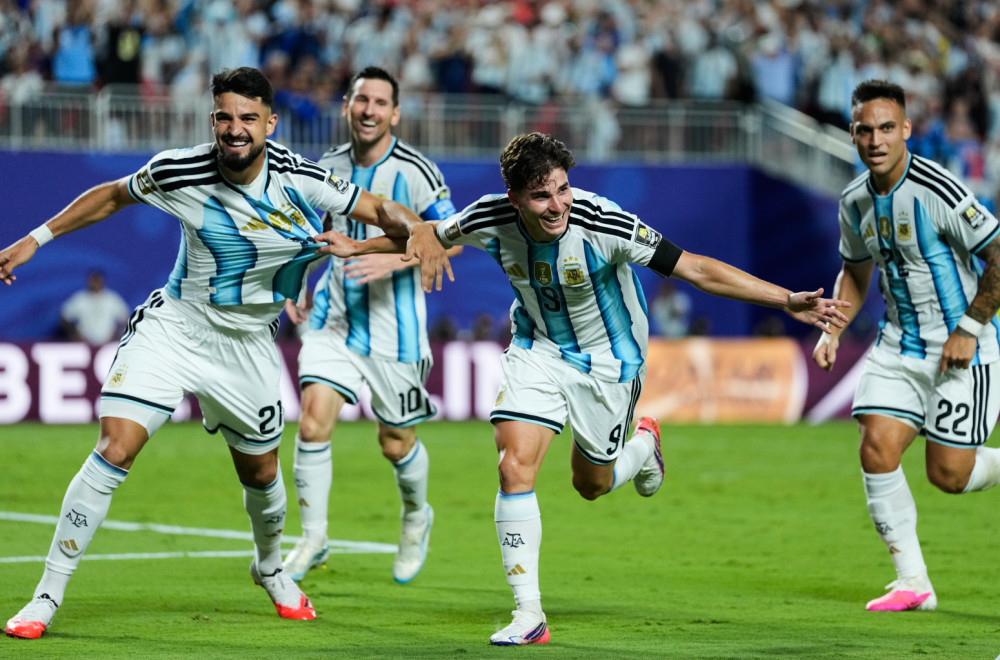
Argentina's hero: "We are just two steps away from the goal"
How other outlets are covering this story
Compare narratives across 6 related reports from 6 sources. Real Narrative News aggregates the coverage spectrum so you can see who emphasises what — bias tags reflect the outlet, not the story.
Coverage bias distribution
6 sources
Left 17%
Center 50%
Right 33%
Al Jazeera
· Jul 5, 2026
What is the religious and political messaging behind Khamenei’s funeral?
The Islamic Republic is leaning into religious imagery to hone its political messages locally and across the region.
Utusan Malaysia
· Jun 26, 2026
Mengangkat semula suara ketamadunan Islam
DUNIA hari ini sedang melalui perubahan besar. Dalam beberapa tahun kebelakangan ini, kebangkitan dunia pelbagai kutub semakin ketara, khususnya melalui kemunculan BRICS+ serta perubahan penting dalam percaturan geopolitik antarabangsa. Namun, perubahan ini bukan sekadar melibatkan geopolitik. Ia turut mencerminkan kebangkitan kesedaran ketamadunan apabila banyak negara mula mentakrifkan diri sebagai negara-tamadun dan pewaris kepada tradisi ketamadunan ... Read more The post Mengangkat semula suara ketamadunan Islam appeared first on Utusan Malaysia.
Jewish News Syndicate
· Jun 21, 2026
Trump warns Iran to rein in Hezbollah or face attack
If the Islamic Republic doesn't stop its proxies, the U.S. will hit it hard, the American president said.
Muslim News Nigeria
· Jun 21, 2026
NAHCON ex-chairman declares banditry, terrorism alien to Islam at MSSN OAU Jihad Week
By Sodiq Lawal, Ife * Urges students not to lose hope over academic, life challenges Former Chairman of the National Hajj Commission of Nigeria (NAHCON), Ustadh Zikrullah Kunle Hassan, has declared that banditry and all forms of terrorism are completely alien to the teachings of Islam, stressing that no true Muslim should be associated with [] The post NAHCON ex-chairman declares banditry, terrorism alien to Islam at MSSN OAU Jihad Week appeared first on Muslim News Nigeria.
National Post
· Jun 30, 2026
Beryl Wajsman: An Iranian embassy would stoke antisemitism in Canada
The Islamic Republic is still the greatest threat to global peace and security
Anadolu Agency
· Jun 21, 2026
Imam attacked outside mosque in Canada in alleged Islamophobic incident
Attack ‘stark reminder of the danger that rising Islamophobia poses to our communities every day,' says Canadian Muslim group
Topics:
Related coverage for "The Islamic Republic Is Weaker Than It Wants The World To Believe": Al Jazeera — What is the religious and political messaging behind Khamenei’s funeral?. Utusan Malaysia — Mengangkat semula suara ketamadunan Islam. Jewish News Syndicate — Trump warns Iran to rein in Hezbollah or face attack. Muslim News Nigeria — NAHCON ex-chairman declares banditry, terrorism alien to Islam at MSSN OAU Jihad Week . National Post — Beryl Wajsman: An Iranian embassy would stoke antisemitism in Canada. Anadolu Agency — Imam attacked outside mosque in Canada in alleged Islamophobic incident